Full article about Casegas: where two rivers whisper through granite
In Covilhã’s shadow, stone bridges, silent elders and Serra da Estrela cheese endure.
Hide article Read full article
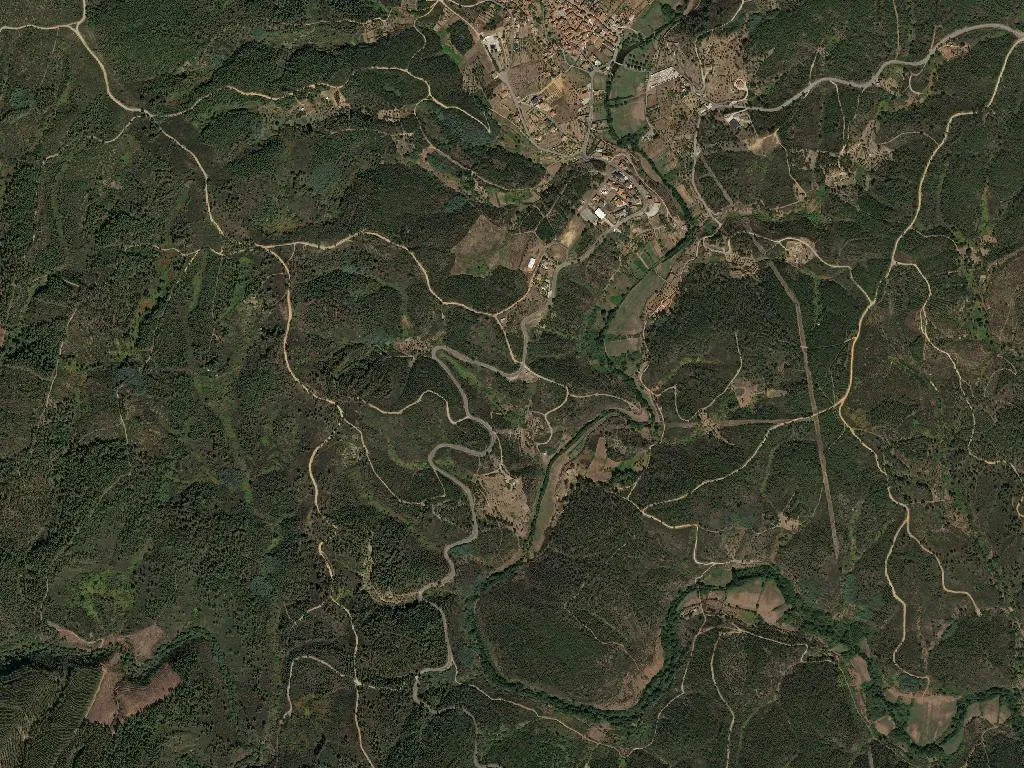
You hear the water before you see it. In the granite throat of the Serra da Estrela, Casegas sits where two streams — the Ribeira de Unhais and the Ribeira de Casegas — slip between schist shoulders and meet at a stone bridge older than any living memory. At 449 m above sea level, the village keeps its own daily rhythm: dawn coolness stored in the walls, midday light that makes the rockfaces glitter, an evening draught that rises from the valley floor like the mountain exhaling.
Three hundred people occupy four thousand hectares. The arithmetic is visible: 145 residents over sixty-five, fourteen under ten. Silence is not absence but a neighbour you grow used to, punctuated by a dog on the opposite slope or a tractor grinding uphill as deliberately as if it were heading to the bar.
Where the map began
In 1561 the royal cartographer Fernando Álvares Seco inked the first recognisably modern map of Portugal. Among the scattered settlements he labelled was “Caregas” — the Latin casus, a lone dwelling. No plaque commemorates the moment, yet the village understands its distinction: it was judged important enough to be fixed in the national imagination before most places had a spelling.
Inside the protected line
Casegas lies wholly within the Serra da Estrela Natural Park and the Geopark Estrela. Translation: granite outcrops are non-negotiable, planning permission is rigorous, and the olive grove your great-grandfather tended survives. The Via Lusitana — the Interior Portuguese route to Santiago — threads through the parish; pilgrims refill bottles at the granite fountain, exchange bom caminho with shepherds, and disappear into chestnut shadow.
Flavours that antedate menus
Serra da Estrela DOP cheese is still matured in ex-wine cellars whose temperature never varies. Requeijão arrives warm, spooned onto bread that releases its own steam. Lamb and kid graze the same heather and broom that flavour their meat; cherries and peaches carry IGP seals the way others carry passports. Olive oil is pressed from trees already ancient when the First World War began. The narrow terraces on south-facing slopes give wines that taste of schist and thin air.
Two small guesthouses open their shutters to the sound of water. At night you sleep with the window ajar; by morning the March air smells of the last log smouldering in the hearth. When elections come, two-thirds of the electorate abstain — a statistic that says more about Portugal than about Casegas itself.
Dusk tilts the light into the valley. Heat lingers in the granite thresholds. Someone latches a gate; the iron catch clangs once, a metallic full stop that travels between houses, confirming the day is done.