Full article about Covilhã & Canhoso: granite stairs between chimneys & sky
Sheepfold turned wool-town turned design-hub, Covilhã and Canhoso climb Serra granite.
Hide article Read full article
A city that tumbles down the mountain
Morning rises like steam from the Carpinteira stream. On the Calçada Romana, bootsoles clack across slabs polished by two millennia of traffic: Legionaries, transhumant shepherds, mill-workers racing the sunrise shift. Covilhã wakes in vertical time; the higher you climb, the later the hour.
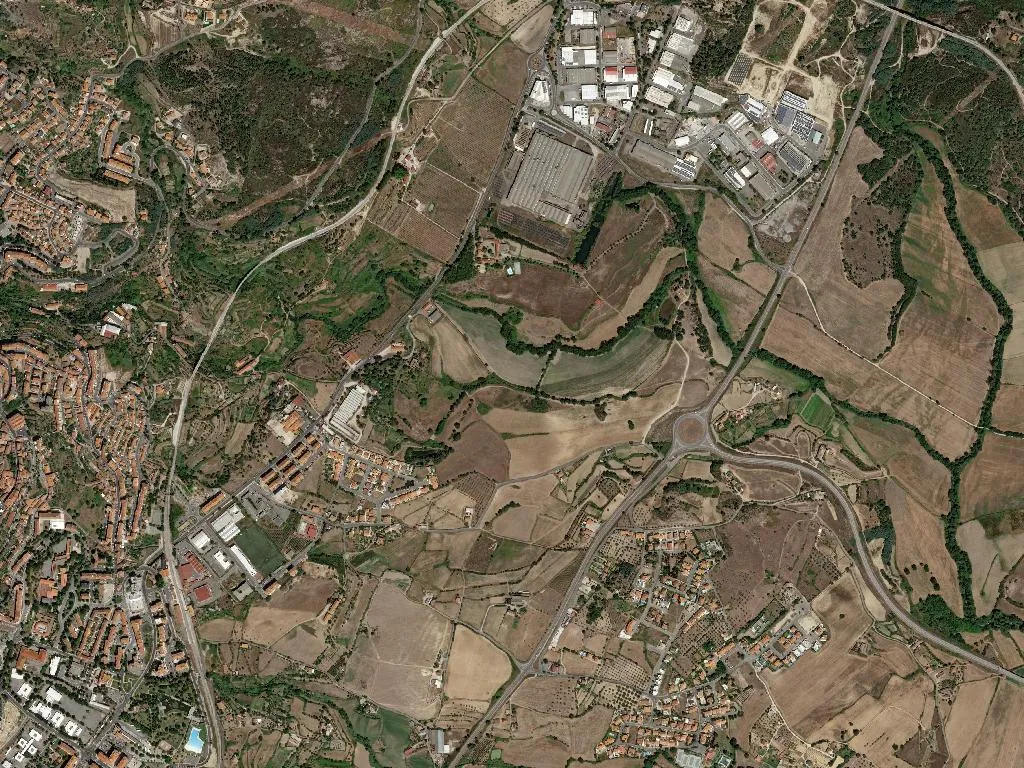
Altitude 455 m, population 18,220, density three times that of Lisbon. The merged parishes of Covilhã and Canhoso occupy a 26 km² granite ramp on the north flank of the Serra da Estrela, where every street is either a staircase or a landing. Granite medieval belfries shoulder against brick mill chimneys; the city was built on wool and gravity.
Looms, steam, dead chimneys
For five centuries fleece travelled in from the high pastures, was scoured, dyed, spun and woven in mills whose chimneys still prick the skyline. The 18th-century Real Fábrica de Panos and the later Lanifícios built streets of workers’ cottages that step up the slope like terraces in a Douro vineyard. When the industry collapsed in the 1970s, the town swapped bobbins for polytechnic departments and kept the silhouette: a saw-tooth horizon of brick stacks now housing design studios and start-ups.
Covilhã first appears in a 1130 charter; the name comes from the Latin coviliana, a sheepfold. Canhoso, mentioned 1243, was absorbed only in 2013, bringing with it orchards and the small white chapel of Nossa Senhora de Fátima.
Eight monuments and one window that tells the story
The historic core is barely four streets square, yet it holds eight classified buildings. Santa Maria Maior’s 16th-century façade is blackened by the same soot that once perfumed the air; Santiago’s tower throws a perfect shadow across the cobbles at 17:03 each winter afternoon. Inside the Manueline window of a house on Rua da Alegria, armillary spheres and twisted ropes recall an age when Covilhã looked east to the wool markets of Flanders rather than west to the sea.
Civil power left its mark too: the Casa dos Magistrados (1740) with its baroque doorway, the municipal chambers on Praça do Município where the clock still strikes shipyard time, and the Casa das Morgadas, a miniature palace built by the royal factor who controlled fleece quotas.
Spoon-cut cheese and cherries that bleed
Breakfast is Serra da Estrela DOP cheese served upright so the centre oozes like fondue; slice off the top and scoop with crusty bread. Requeijão arrives warm, dribbled with local heather honey. Spring brings Cova da Beira cherries, small and almost black, staining fingers and tablecloths like Beaujolais. Lamb and kid roast slowly in wood ovens until the fat turns to brittle bronze; the altitude-warped Beira Interior reds – high-acid, mineral – slice straight through the richness. Finish with a peach so fragrant it tastes like bottled August.
Where the range begins and pilgrims pass
Covilhã is the last urban gasp before the Serra da Estrela Natural Park. From the Portas do Sol belvedere, the Cova da Estrela valley unrolls like an origami of terraces and irrigation channels; in winter, the ski road starts 18 minutes uphill. Inside town, plane-shaded gardens – Lago, Goldra, Alexandre Aibéo – serve as outdoor living rooms for a population that is, statistically, one of the oldest in Portugal.
The Interior Way of the Lusitanian Camino cuts through on its 540 km traverse from Guarda to Santiago. Pilgrims with scallop shells stop at the 17th-century Igreja de São Francisco to stamp credenciales and ask directions to the next albergue.
Bridge over the Carpinteira
Dusk turns the Carpinteira footbridge into a steel harp. Below, water keeps the same whisper it had when Roman wagons forded the ford. Walk Covilhã end to end: downhill from the university laboratories, past chimneys turned into Wi-Fi masts, up again through alleyways where washing flaps like Tibetan prayer flags, until your calves negotiate a truce. The city signs off with that steady river note – a reminder that gravity, like history, only runs in one direction.