Full article about Smoke-Ribboned Orjais: Lamb & Granite Time
Communal ovens, mossy chestnut groves and 500-m silence above Covilhã’s Beira ridges.
Hide article Read full article
Smoke, Stone and Silence
The communal oven’s chimney releases a slow ribbon of smoke into the chill May air, proof that the lamb has been turning since five o’clock. Rosemary and thyme mingle with oak logs, and the small square in Orjais fills with low voices—conversations that stretch between batches of bread while hands warm around glasses of Beira Interior red. At 500 m above sea level, time is measured not by clocks but by the colour of the meat and the shifting light on the hills. When 80-year-old António declares the lamb ready, it is ready. Argue and you’ll lose: he has roasted more goats than you have ever seen.
Granite, water and wool
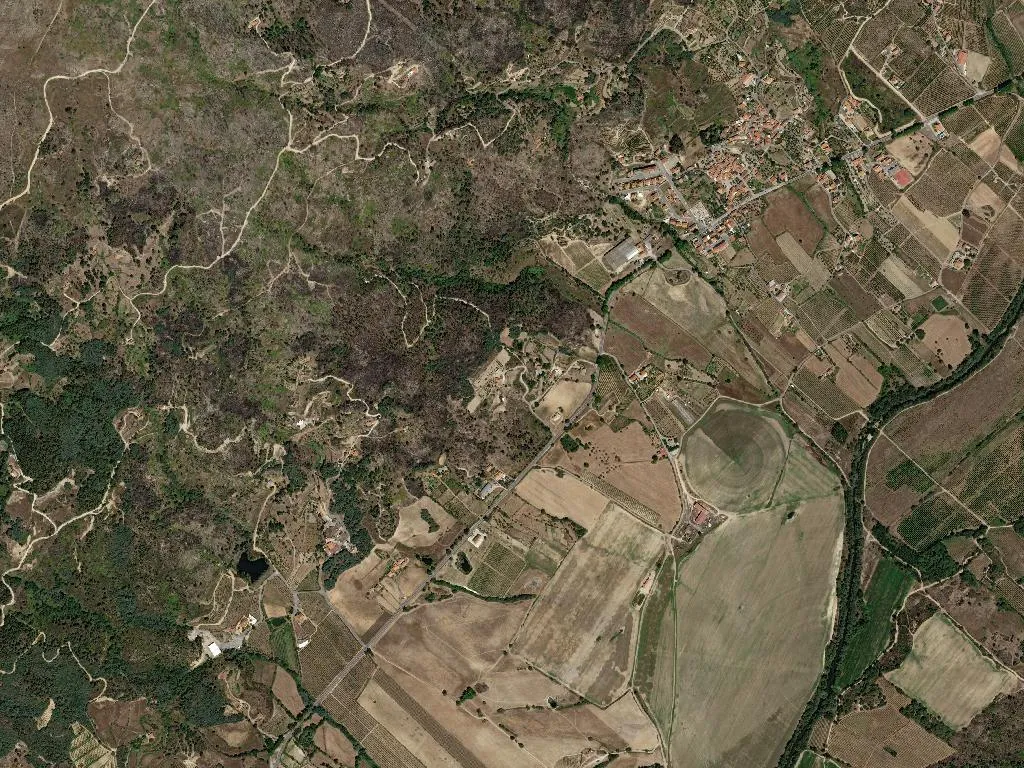
The parish unrolls in scattered hamlets—Valongo, Aldeia Nova, Orjais itself—linked by dirt tracks that skirt 100-year-old olive groves and sweet-chestnut orchards planted in 1892. The trees still yield small, honeyed chestnuts, either fire-roasted or stirred into autumn butter-bean soup. The Orjais stream slides over dark schist, forming glassy pools beside the levadas that once fed village mills. One mill, restored as a picnic spot, still turns its granite grindstones; book ahead and you can feel rye become flour beneath your fingers. Pretty, yes—but drop a couple of euros into Amélia’s tin for the sponge cake or you’ll feel the weight of parish disapproval.
The mother church, limewashed and baroque, keeps its eighteenth-century azulejo panels—biblical scenes in cobalt and white as sharp as the day they left the kiln. Higher up, the chapel of Nossa Senhora do Carmo surveys Aldeia Nova from a knoll; on the first Sunday of September the procession climbs in hushed single file, hymn books and gravel scuffing in unison. Wayside granite crosses wear cushions of moss in their joints; the one at Valongo is the same stone your grandfather leaned against after bringing the goats down. No algorithm reminded you—memory did.
Flavours that climb the ridge
Cooking here is seasoned with Beira Interior DOP olive oil—low acidity, faintly tomato-leaf—and with patience. Kid chanfana stews in a black clay pot inside the wood oven until the meat slips from the bone. Spring brings migas laced with wild asparagus plucked from the pastures, the spears still vivid when they hit the plate. In winter the table turns to Serra da Estrela DOP cheese and warm requeijão made at Quinta do Vale, where you can watch the milk curdle and taste the curd while it is still softly acidic. Blood sausage stuffed with rice hangs from kitchen beams, smoking over chestnut wood, reappearing sliced beside dark corn bread. Ask for Albertina at the dairy—she explains coagulation better than any textbook. Bring a tray or you’ll carry your requeijão home in bare hands.
Trails that remember the silence
Orjais lies inside both the Serra da Estrela Natural Park and the Estrela Geopark, where outcrops of quartzite record the Variscan orogeny—the continental collision that pushed up these mountains 300 million years ago. The circular footpath to Valongo, eight kilometres of gall-oak and olive, ends on a natural balcony over the Cova da Beira: a stepped valley patched green and ochre, white villages glinting like salt grains. Early risers may watch a Bonelli’s eagle circle overhead or catch a Dartford warbler flitting through the lower branches. Come in summer—just bring water. This is not the Algarve; the altitude sun bites. Meet Sr Domingos on the path and he’ll tell you how the route existed long before waymarks spoiled the view.
The Interior Portuguese Caminho de Santiago passes through the parish, linking Covilhã to Unhais da Serra. Pilgrims pause at the Casa do Povo to stamp their credencial, drink from the medieval bridge’s spring—one perfect stone arc over the stream—then follow the track flanked by schist walls where February narcissus flare yellow against grey. Time it right and Rosa will be hauling almond-honey cakes from the oven. You were warned.
Weaving the afternoon
At the Christmas pop-up loom, an old motion is handed on: shuttle, beater, warp. Bright woollen sashes—red, blue, striped—emerge in the same pattern Manuel Matias produced for decades until 2003, a technique now filed away in museums but still clacking here. The frame creaks, the yarn runs through fingers, the pattern repeats—line by line, like days in Orjais. Fancy a go? Be gentle: the loom has no undo button. Dona Lurdes has watched visitors unravel an hour’s work with one over-enthusiastic tug.
Dusk settles. The last pilgrim vanishes round the bend, the oven cools, woodsmoke lingers in your sweater and the stream keeps its low, constant conversation with the stones. Stay after dark and you’ll hear Zé’s dog barking at the moon—the same dog that barked at your grandfather thirty years ago. Some things refuse to change. Gratefully.