Full article about Ourondo: Where Silence Weighs More Than Words
Boot-crunch on schist lanes, warm cheese from a willow basket, Torre looming beyond the last signpos
Hide article Read full article
Footsteps on the Hard Earth
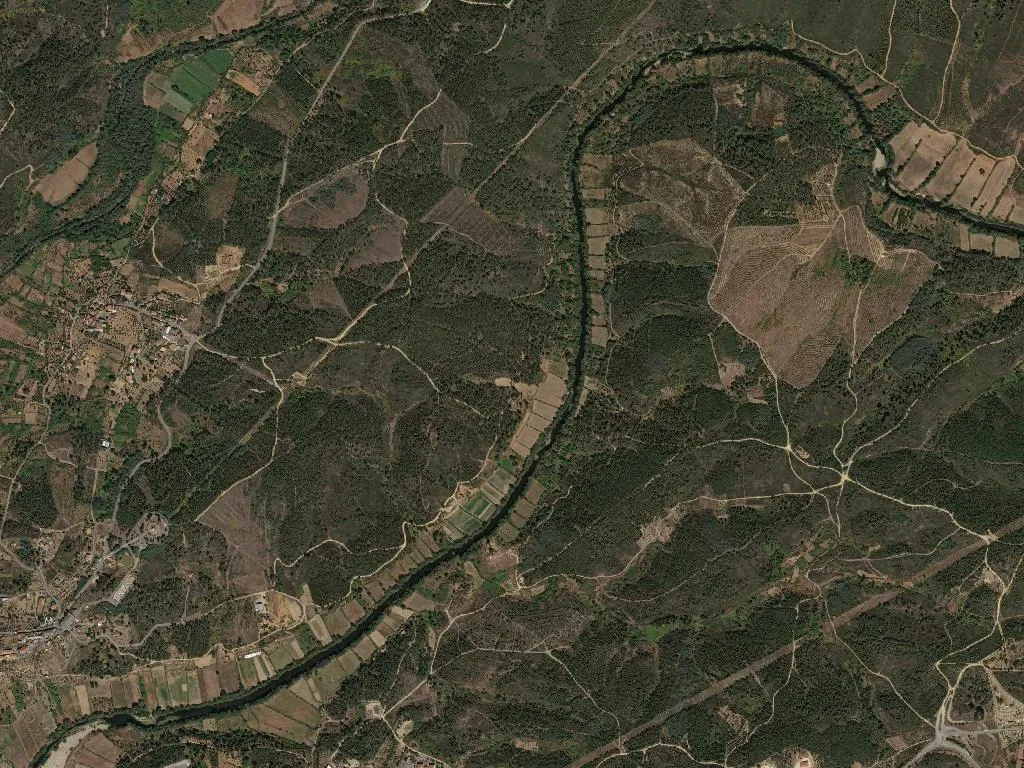
The tread of boots on packed soil rings louder than it should. In Ourondo, where you breathe the same air as exactly 299 neighbours—I counted them in the café while António barked roll-call after Mass—silence is a physical weight. Not absence, but surplus time. The village clings to 389 m of altitude the way an old woman grips her shawl against the mountain wind. Turn off the EN233 onto the single main street and you’ll smell yesterday’s coffee grounds drifting from the bar, braided with the sweet steam of Rosa’s bread, baked only on Wednesdays and Saturdays.
Beyond the Last Signpost
The dirt tracks leaving the settlement have no waymarks; shepherds have used them since my grandfather wore short trousers. Schist isn’t “scenery”—it’s the wall that’s sliding into Sequeira’s vegetable plot, the floor of the winery where grapes are still trodden barefoot. At the miradouro da fita, where Google Maps gives up, a hen harrier circles before dropping into the Cova da Beira valley; to the right, Torre, mainland Portugal’s highest peak, hides behind a hawthorn that Joaquim pruned backwards on purpose.
The Interior Central de Santiago cuts through here, yet only the occasional pilgrim lingers. When they do, they sleep at Amélia’s—she leaves an orange cake on the table and asks whatever they think fair.
A Landscape You Can Taste
Cheese isn’t swaddled in cellophane. It’s lifted from the willow basket while still warm; eat it without Rosa’s tin-loaf and Zé Costa will take offence. Requeijão arrives in the same clay bowl that D. Lurdes’ mother inherited. The olive oil carries DOP status, but the real date for the diary is December, when Valverde’s press roars into life; as the tractor tips its crates, the scent of first-run oil drifts through the windows of the former primary school—now a library, the children having migrated to Covilhã.
In May, cherry orchards on the Levenda slope look like low-lying cloud; in June you climb into the canopy and taste before the fruit ever meets a crate. What sells in Lisbon for double the price still stains your fingers for a day.
The Arithmetic of Staying
Of the 299 residents, 145 draw a pension and 14 still carry homework. The rest are in the cemetery or in France. Yet at weekends the café swells: emigrés back from Nevers, students returned from Coimbra, someone’s accordion always stowed in the boot. There are two places to lay your head: the hostel in the old milk-co-op building, and the farmhouse newly bought by a Lisbon family—yes, it has a pool, but the water comes from the spring and stays teeth-chattering even in August.
At seven o’clock the church bell strikes—always six clean chimes and one hiccup—and smoke still rises from the last two working chimneys. Ourondo promises nothing. It simply offers what’s here: Rosa’s bread, the whiff of manure when the wind shifts, sun-warmed schist to rest your bare feet on after supper. Locals no longer count birthdays; they count harvests they might still witness.