Full article about Peraboa’s Dawn: Smoke, Olives & Serra Granite
Peraboa, Covilhã: sunrise over olive terraces, Fundão cherries, Serra da Estrela DOP cheese and Geopark schist trails.
Hide article Read full article
Dawn over the Olive Terraces
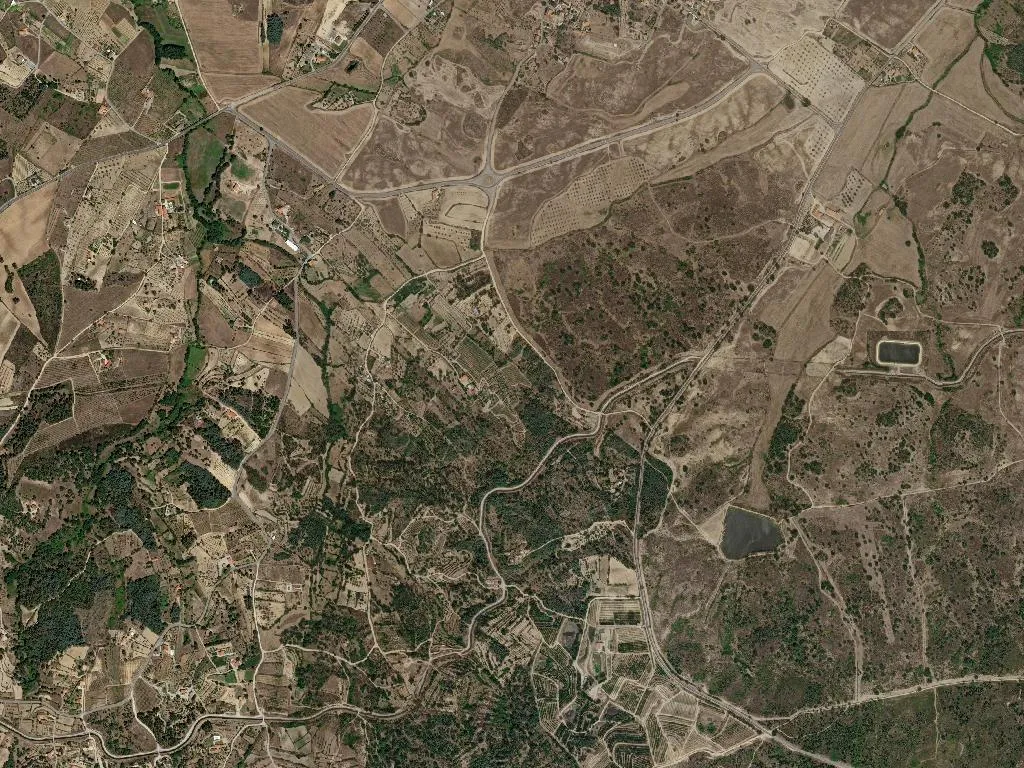
The first thing you notice is the scent: woodsmoke drifting from a baker’s chimney colliding with the peppery breath of old olive groves. By 6 a.m. the light in Peraboa is already razor-sharp, slicing across 2,720 ha of schist-walled terraces that tilt south-east toward Spain. At 491 m above sea-level, the parish sits low enough to ripen cherries yet high enough to catch the granite bulk of the Serra da Estrela rising like a rampart to the north. Only 817 people remain—roughly thirty per square kilometre—so the eye travels unhindered from peach orchard to cork oak without hitting a single block of modern concrete.
The Taste of the Beiras
Breakfast here is a geography lesson. A drizzle of Beira Baixa DOP olive oil—low acidity, artichoke-green—pools beside a wedge of Serra da Estrela DOP ewe’s-milk cheese so soft it must be spooned, not sliced. The olives themselves, small and purple-skinned, carry the protected name Azeitona Galega da Beira Baixa IGP; they appear at every winter table, cracked and marinated with garlic and oregano. Come Sunday, wood-fired ovens accept kid goat (Cabrito da Beira IGP) that bastes its own bed of potatoes; lamb (Borrego Serra da Estrela DOP) is reserved for feast days.
Yet fruit is the true calendar. In mid-June the orchards flare red with Cova da Beira cherries—sold under the tighter Fundão IGP label in London’s Borough Market for £8 a punnet. Juicy peaches follow, then autumn apples whose skins tighten in the 20 °C day-to-night swing that also ripens Beira Interior grapes. Poor, stony soils stress the vines just enough; the resulting whites (Fonte Cal, Síria) arrive with the nervous acidity of a cool vintage Chablis.
On the Edge of the Geopark
Peraboa lies inside the Estrela UNESCO Global Geopark, a 2,200 km² open-air museum of 600-million-year-old schist and quartz. Walk south-east and you climb steadily into the 1976-created Serra da Estrela Natural Park; buzzards replace tractors, the air thins, and granite torrs start to resemble broken cathedral spires. Since 2017 the Interior Way of the Portuguese Camino—nicknamed the Via Lusitana—has threaded through the parish, funnelling a trickle of backpackers who top up water bottles at stone spouts and exchange bom caminho with octogenarians on kitchen chairs.
Two restored houses offer shelter. Casa da Oliveira, a 1950s cork-worker’s cottage, keeps its original threshing floor; Quinta do Vale hides a black-tiled pool among cherry trees. Both run on solar panels and understatement: the luxury is silence so complete you hear fruit drop at dusk.
The Weight of the Everyday
Romance stops at the hardware store. The parish church of São Tiago is sixteenth-century, but most dwellings date from the cork boom of the 1950s; their walls want repointing, their gardens want backs that no longer exist. With 298 residents over retirement age and only 73 under twenty-five, the school bus collects more empty seats than children each morning. Younger generations rent flats in Covilhã—twelve kilometres away and home to Portugal’s first university textile labs—or migrate to Lisbon, leaving shutters to rattle and roofs to sigh.
Still, activity clusters around the 1962 agricultural co-op when the fruit clock strikes. During the cherry window of late June, refrigerated lorries from Rotterdam idle beside 1960s John Deere tractors; pickers—many retired, some Romanian—fill 5 kg boxes while discussing Lisbon spot prices over milky coffee. On the first Sunday of each month a travelling market sets up outside the parish council: one stall sells galvanized buckets, another hawk-coloured yarn, a third slices chouriço so smoky it stains the fingers like cigarette paper.
Dusk is theatrical. Sun ricochets off orange terracotta, shadows spill down the terraces, and the dry interior cold—sharp enough to make a zip tingle—settles in for the night. Beyond the last streetlamp the Serra da Estrela cuts a black silhouette against a star field the Alqueva Dark Sky Reserve would envy. Peraboa never forgets it performs under granite surveillance; the mountain is proscenium, timekeeper, and final critic of every harvest.