Full article about Peso, Covilhã: smoke-cured ham & schist-walled silence
Walk terraced vineyards, taste dawn-warm requeijão, feel granite breathe above 479 m
Hide article Read full article
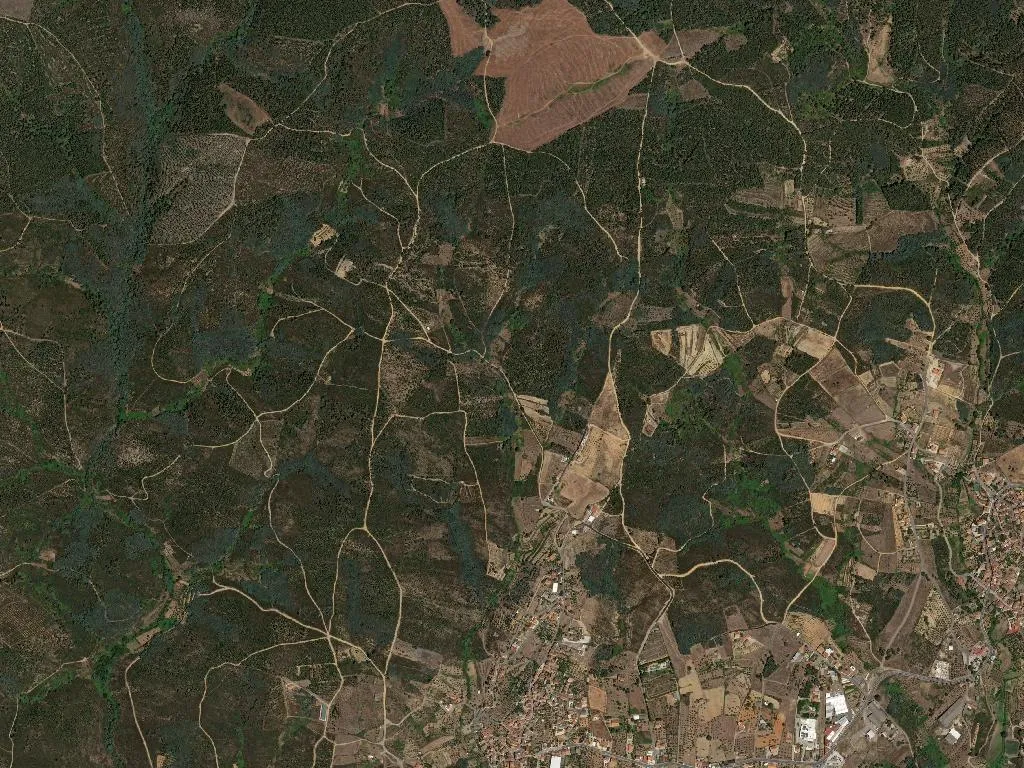
The dark schist walls drink in the afternoon heat and give it back in slow, shuddering waves you feel on your forearms. Wood-smoke drifts down the lane – not just any oak, but the logs stacked for twelve months to cure the winter’s chouriço. Peso perches at the exact point where the southern Beiras tilt upwards, 479 m above sea-level and the last comma before the Serra da Estrela sentences the land to granite and altitude. Only 628 souls are registered inside its ten square kilometres, yet everyone knows the parish stretches exactly as far as a dog’s bark carries at 2 a.m. and no farther.
A landscape you can taste
Vines survive on terraces hacked out by grandfathers who prized granite apart with a mattock. The grapes endure 40 °C summers, but cheese is the metronome of the week. When wild cardoon flowers in June, the women milk the sheep at dawn, while the animals are still cool, and set the curd with vegetable rennet. Come Wednesday and Saturday – Covilhã’s market days – the fresh requeijão travels down the mountain in a cotton-swaddled bowl, still dribbling whey.
Cherries arrive first in the oldest orchards, the ones planted within earshot of kitchen windows so parents can shout at climbing children. Apples that will keep until April sleep in a cellar Dad blasted under the house, a sandstone cave as chill as a chapel. Olive oil is pressed from trees that survived the killing frost of 1945; kid goat grazes the same slopes that will take potatoes after Easter.
Where granite meets water
The Serra da Estrela Natural Park begins above the last back garden, though no one needs a boundary stone to know where farmland ends. Dry-stone walls simply run out; boulders the size of vans appear, and maritime pines seed themselves between outcrops. Snow visits, but never overstays – it slips away overnight and rattles down stone gullies as temporary winter streams.
UNESCO calls the surrounding territory a Global Geopark these days; locals still speak of “giant’s marbles” and quartzite that strikes sparks from a pocket-knife. The Ribeira de Peso keeps a pool all summer – deep enough for children to cannon-ball in pants when temperatures nudge 35 °C.
The path that passes through
The Caminho de Santiago has threaded this way since the twelfth century, but today’s pilgrims arrive with carbon-fibre poles and neon rucksacks built for the International Space Station. They pause at the village spring – cold even in August – and ask hopefully for an espresso. There isn’t one, but someone will walk them to the junction and point toward Paul or Sabugueiro, the next slate-roofed dots on the ridge.
All 202 residents over the age of 65 are on first-name terms; 63 under-30s left for university or Parisian building sites yet still roar back each Friday night. At six, when the sun drops behind the crag, women congregate outside the Mini-Mercado and trade updates on chemotherapy results, wedding dowries, who has flown home from France. Back gardens remain multipurpose: the fig tree supplies jam, shade and hide-and-seek headquarters; vine leaves roll galinha for village weddings; purple grapes become house wine bottled under the sink.
Light changes fast. Dawn fog unspools from the Zêzere and moors the houses like grey galleons. Midday schist scorches bare feet. At seven the church bell tolls for the departed, shadows pour across the lanes and the scent of oak kindling announces dinner. The cheese demoulded that afternoon is already weeping across the pine table; the bread came up the hill yesterday from Telhado’s wood-fired oven, carried home in a red-clay bowl still breathing steam.