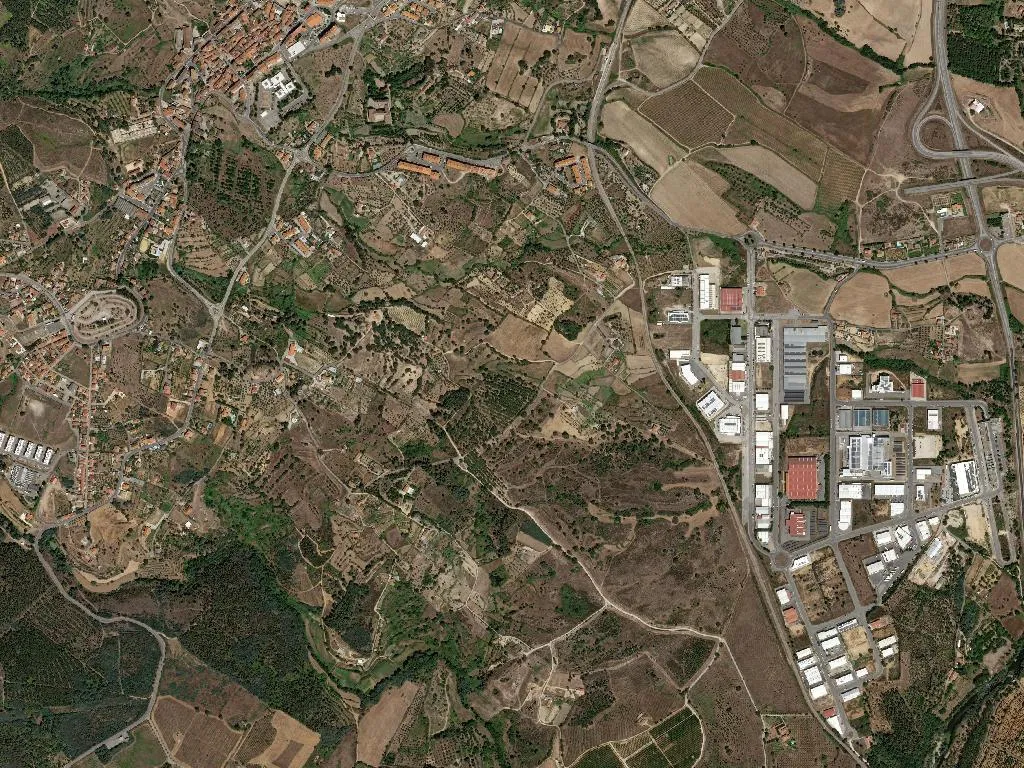
Full article about Tortosendo
Tortosendo, Covilhã: riverside wool village where Serra da Estrela water powers looms, ageing cheese melts on warm bread and 5,000 locals keep mountain tim
Hide article Read full article
The first thing you hear is water. Not a dramatic cascade, but a low, subterranean mutter that slips down the granite ribs of Serra da Estrela and follows you through the streets long after you’ve left the riverbed. At 466 m above sea-level, Tortosendo sits just outside the natural park boundary, yet the mountain still governs the clock: sunrise arrives late, sunset early, and the air carries a cool metallic scent even in July when the Cova da Beira plain below is sweating through the afternoon.
The thread that ran a town
The name itself records the topography—“crooked place,” the bend where two narrow valleys fold in on themselves before unrolling towards the Zêzere. That kink once funnelled glacial streams through the settlement, delivering free horsepower to 19th-century mill owners. Within a generation, transhumance trails that had brought sheep down from the high pastures became cart tracks carrying raw wool the other way: into riverside looms whose flying shuttles were driven by the same water the flocks had drunk months earlier.
Tortosendo never hollowed out like neighbouring villages. Its 5,216 inhabitants still give it a density (294 per km²) more usually associated with the coast, and the parish council reckons that at least a dozen former textile warehouses are now quietly reinventing themselves as co-working spaces for University of Beira Interior graduates who refuse to leave the slope. Shuttered windows still creak open at dawn; espresso—60 ¢ a shot at Café Central—appears on the counter without anyone needing to order.
A seasonal menu written by altitude
The mountain writes the shopping list. Serra da Estrela DOP cheese arrives at the table already sagging at the centre, a butter-coloured tear waiting to be mopped with bread still dusty with maize flour. Requeijão, the same milk in granular form, dissolves on the tongue like snow. Lamb and kid carry the flavour of thyme and rock-rose from the high pastures; their IGP labels guarantee animals born and finished above 700 m.
Cherries are the first summer bulletin—dark-fleshed Cova da Beira IGP varieties that stain fingers and tablecloths indelibly. Apples and peaches follow, then olives: Beira Alta and Beira Baixa DOP oils with enough polyphenol bite to make you cough elegantly. The local olive, Azeitona Galega da Beira Baixa IGP, is cured cracked, so the brine reaches the stone and the flesh keeps its snap. Everything is washed down with Beira Interior wines—Jaen, Rufete, Fonte Cal—whose grapes ripen during the day and re-acidify at night thanks to the 20 °C swing between valley floor and mountain ridge.
Stone ledgers older than any ledger book
Tortosendo lies inside the UNESCO-listed Estrela Geopark, and the pavement is literally pre-Cambrian. Walk east for ten minutes and you are treading on glacial striations; look up and the same granite has been quarried into 17th-century manor houses with wrought-iron balconies. The village is a scheduled stop on the Interior Way of the Portuguese Camino de Santiago—five small guesthouses and a municipally run albergue mean hikers can shower, sleep and recharge before the 18 km haul to the next ridge. Tasco do Zé keeps a cauldron of lamb-and-bean feijoada on the go every Friday; phone ahead—he cooks only if he knows your name and your appetite.
A vice-chancellor who still remembers the looms
Among Tortosendo’s exports is Mário Lino Barata Raposo, Professor of Management and, until 2025, Rector of the University of Beira Interior. Local myth insists his economics textbooks smelled of lanolin; the truth is that his grandfather ran a dye-works on Rua da Fábrica, and the professor spent school holidays counting bobbins. The university’s main campus is ten kilometres away, but Raposo still votes in the village church hall and returns every Palm Sunday to hear the polyphonic choir that rehearses in the old weaving shed.
The sound you take home
Dusk arrives abruptly. The mountain’s shadow slides across the roofs like a slate shutter, temperature drops five degrees in as many minutes, and the streets empty into kitchens where cherry jam is being stirred with a wooden paddle the size of an oar. What remains is the original murmur—water you can no longer see but still hear, running somewhere beneath the granite setts, reminding the village that every spindle, every loom and every loom-boy’s wage began with that cold, persistent voice. You leave Tortosendo wearing it like a second skin: the hush of snowmelt threading its way downhill, still at work long after the mills have fallen silent.