Full article about Alcaide: Dawn Bells & Cherry Snow at 634 m
Granite alleys, cherry-white orchards and wood-oven kid in a Beira Interior hideaway
Hide article Read full article
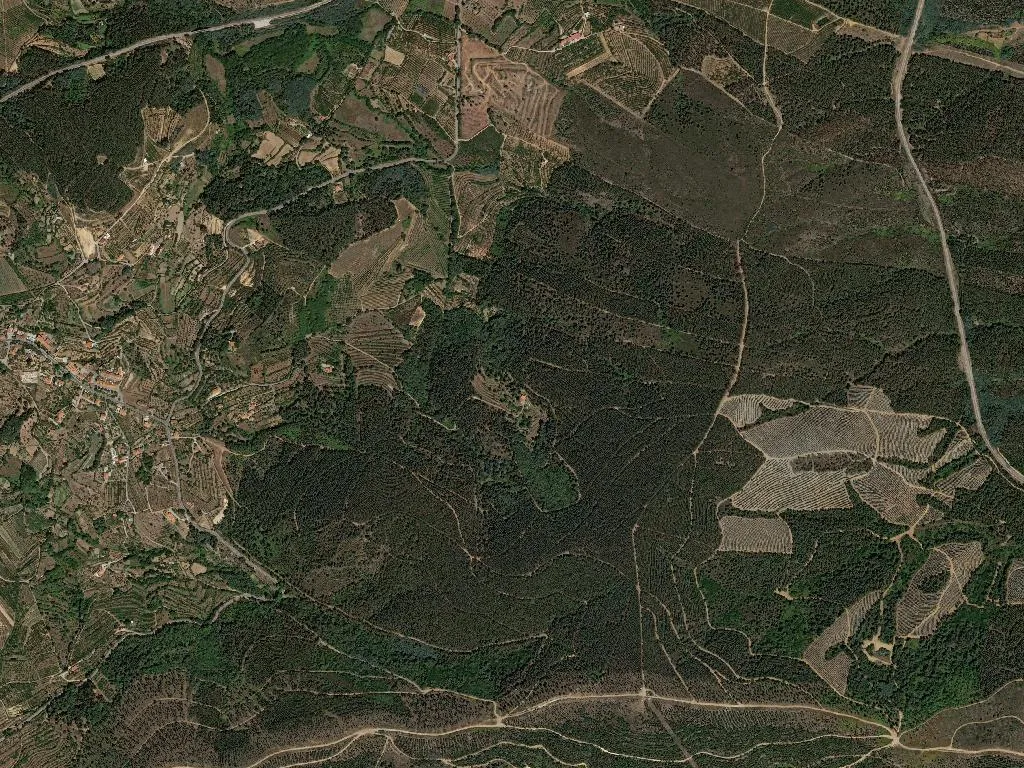
Dawn slants through the warped slats of pine shutters. Outside, the only sounds are the church bell and the slow scrape of boots on granite cobbles. At 634 m above sea-level, Alcaide inhales the thin air of the Beira Interior, a draught so sharp in winter it feels carbonated. Wood-smoke drifts from back-yard piles; 583 people live scattered across 1,671 ha of folds and valleys, and most of them have already worked a full morning before you’ve finished your coffee.
Cherry orchards and olive groves
Spring here is monochrome: the orchards detonate into white, each terrace wearing its own late snowfall of cherry blossom. The fruit—Cereja do Fundão and Cereja da Cova da Beira, both Protected Geographical Indications—ripens small and firm, sugar concentrated by altitude. By July the colour wheel tilts to vermilion; come October the olives take over, Portuguese ‘Galega’ hanging like dark droplets from silver branches. Pressed within hours of harvest, the resulting Beira Baixa DOP oil glows green-gold and catches the throat with raw artichoke and cut grass.
What’s on the table
Menus don’t exist; you eat what the day offers. Wood-oven kid that parts at the touch of a fork, scented only with garlic, coarse salt and a gill of local oil. Rice of giblets soaks up the juices; potatoes roast in the same tray until their edges caramelise. The wine is Beira Interior, high-shouldered and granite-boned, a red that demands meat rather than politely suggesting it. Pudding is someone’s aunt’s queijada, still warm from the copper pot.
A way-marker on the Interior Way
Alcaide sits on the lesser-trod inland branch of the Camino de Santiago. Pilgrims arrive to find a single guest-room above the café: clean sheets, a kettle, a ledger of names and intentions. At first light the staff clicks back down the lane, the village’s only traffic jam. Some return months later without rucksacks, drawn by an echo they can’t name.
The mathematics of staying
Fifty children under fourteen remain; the rest have left for Covilhã, Lisbon, Lyon. Empty houses outnumber occupied ones, their paint flaking like sunburnt skin. Yet the place refuses the picturesque death scripted for it. Vegetable plots are edged with salvaged roof-tiles, chickens keep the hours, and chorizos firm in smoky oak sheds. Every tended terrace is a quiet act of resistance against demographic gravity.
Afternoon wind carries the metallic smell of wet schist. A wheelbarrow squeaks on the hard-packed lane. Alcaide offers no spectacle—just the ungarnished weight of things: a cherry’s burst on the tongue, the refrigerator-cool of granite under a palm, a bell tolling time no one measures in a hurry.