Full article about Alcongosta: where olive oil drips gold at dawn
Fundão’s tiny parish wakes to Camino boots, DOP oil presses and cherry-red Cova da Beira harvests
Hide article Read full article
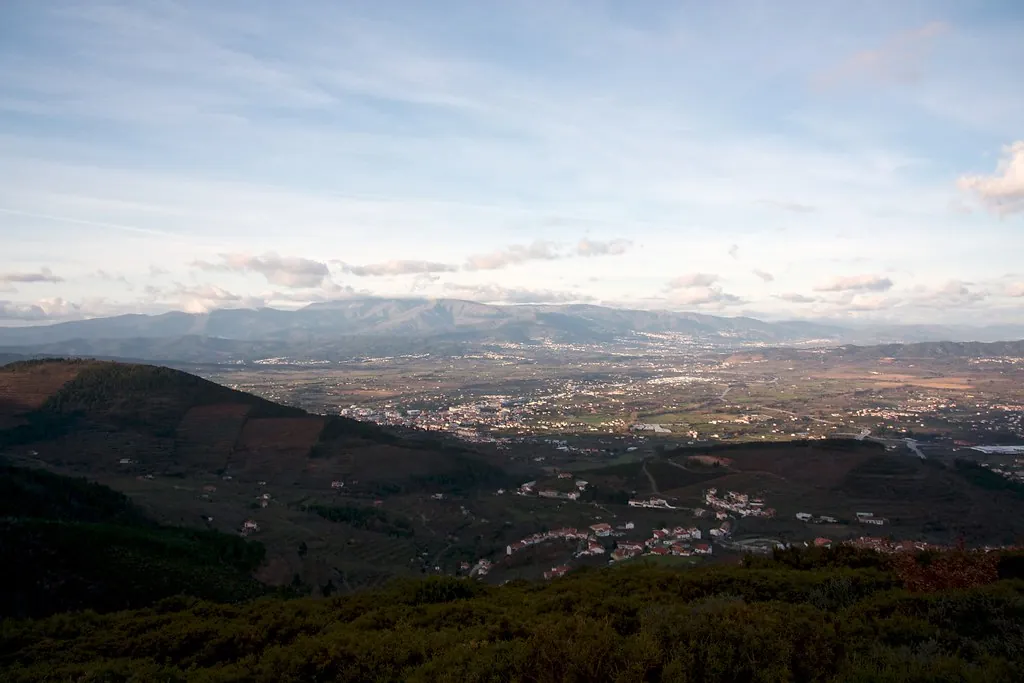
Morning light falls in slanted slabs through the stone-framed windows of Alcongosta, printing rectangles of warm gold across uneven floors. At 679 m above sea-level, the village wakes slowly. A distant trickle of water still runs along the stone levadas that feed backyard vegetable plots; an olive branch snaps somewhere in the grove; Mr António’s front door scrapes open as he shuffles off for bread. Fundão’s smallest civil parish—just 416 residents spread over 731 hectares—keeps time with the Beira Interior cadence: deliberate, sun-measured, unhurried.
Soil that comes with a certificate
What the place lacks in population it returns in produce that arrives already stamped with official approval. December’s first pressing of Beira Interior DOP olive oil drips thick and green from the lagar; IGP Galega olives swell on crooked limbs; in May the famous Cova da Beira cherries gleam like polished scarlet buttons, drawing French and Spanish pickers on seasonal visas. Terraced vineyards stitched into dizzying schist walls belong to the wider Beira Interior wine region; by midsummer the same branches carry IGP peaches and apples whose weight makes them bow towards export crates bound for Valencia or Perpignan.
Food is the local currency. At Zé’s roadside restaurant, Beira IGP kid goat roasts slowly in a wood-fired oven, basted with the owner’s own oil—its scent lingers on coats for days. At Easter the dough for filhós pastries is mixed at dawn so the yeast can climb while the sun does; come December, coscoréis fritters cool on linen cloths before anyone can steal one while they’re still hot.
Footprints on the Portuguese Camino
Alcongosta sits on the lesser-known Interior Portuguese Route of the Camino de Santiago, the Via Lusitana variant. Dust-caked boots clack across the single café’s terracotta tiles; pilgrims ask for a galão and whether anyone has a spare room. Ahead lies the jagged silhouette of the Gardunha ridge, shaped like a broken tooth. No souvenir stalls, no crowds—just a dirt lane rising between schist walls where wild parsley grows, the sporadic song of a blackbird, the short shadow of an olive tree already middle-aged when Wellington’s troops passed this way.
The landscape is labour made visible: watermills where stones are still turned by irrigation channels, abandoned presses that release the sour memory of olives when it rains, vines gripping inclines by fingertip. Proximity to Serra da Estrela sneaks cool air into August dawns; field workers are home by seven, before the valley heat tightens its grip.
Measured by the harvest
Time here is not told by church bells but by what is ripe. High summer carries the almost obscene perfume of peaches so intense you taste it on your tongue; autumn means fermenting grape must seeping into cellar walls; winter mornings send straight columns of wood-smoke up an unmoving sky. There are no fireworks-lit festivals or procession-filled romarias. Authenticity is the hush after lunch when the only mechanical sound is the distant hum from the Frulact fruit-processing plant in the valley below, and the sudden, silent knowledge that the fruit in your palm is the last perfect one of the season.