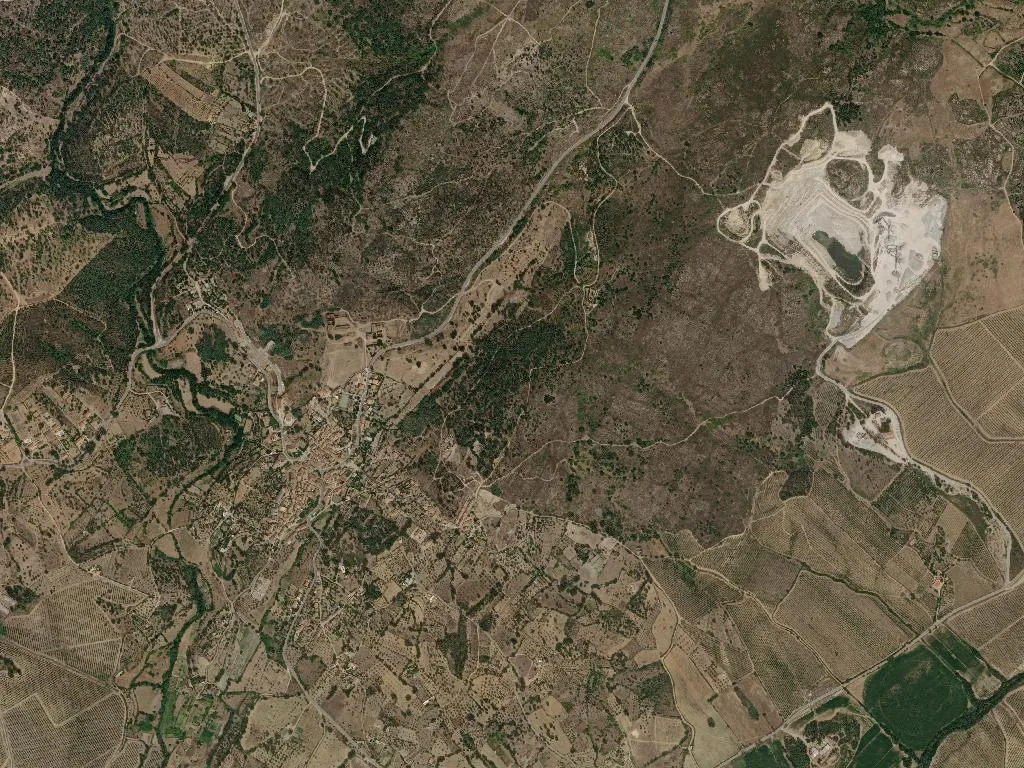
Full article about Capinha: woodsmoke, granite and olives in Beira Baixa
Capinha, Fundão: press your own Galician olives, picnic by a Romanesque chapel, hike cork-oak trails and buy ruby cherries from doorsteps.
Hide article Read full article
Smoke, granite and Galician olives
Between November and January the air in Capinha’s single square tastes of woodsmoke and fresh oil. Thirty smallholders queue at the 1923 community mill—wooden screw-press, granite millstone, a trickle of vivid green from the Beira Baixa Galega olives. Bring your own five-litre jug and you pay €7 a litre; if you need the jug as well, €8. Arrive before eight or you’re behind the tractor.
The chapel that christened the village
Two minutes down the lane, the Romanesque Capela de São Pedro de Talabarda unlocks only on 29 June. Mass at 11 a.m. is followed by a procession and picnic under the 1782 stone cross; the rest of the year the key stays with Sr. António, who will tell you—over a measured bica—where the treasure is supposedly buried. The real reward is the granite balustrade’s view south to Gardunha’s quartzite ridge.
Where to eat and stock up
O Lagar, the only café, pulls espresso for 60 c and a fino for €1.20, shutters down at seven. Chanfana (goat stewed in red wine) requires a 12-km run to Fundão and a reservation at O Albertino (+351 275 753 034). In May–June cherry stalls appear on doorsteps—€3–4 a kilo for ruby-red Burlat. Cured sheep’s cheese is sold from the cool larder at Quinta do Creste, 2 km short of the village on the EM518.
Trails and getting there
The signed Capela loop (yellow dashes) climbs 250 m to the Cerradinho lookout—stone benches, cork-oak shade—then drops beside the stream. Allow 2 h 30 min and carry water; there are no springs. Fundão is 15 min by car on the N18; Transdev bus 2× daily, €2.20.
On the first Friday of each month the women’s association opens the weaving studio at 3 p.m. You can try the 1950s loom and leave with a 60 × 40 cm rug for €25.