Full article about Cherry-laden lanes of Fundão’s five-parish heartland
Taste Fundão’s summer cherries, walk medieval bridges and granite hamlets in Portugal’s Cova da Beira plateau.
Hide article Read full article
The sweet weight of a cherry in the palm
The perfume reaches you before the fruit does. In the high-summer haze of June it hangs above the tarmac: a sugary, almost vegetal note that braids itself with the dry smell of dust thrown up by farm trucks. Along the N18, makeshift stalls sag under the weight of flat-hatched boxes. Inside, cherries – ox-blood dark, lacquer-bright, skin stretched tight as a drum – glint like small, expensive secrets. In Fundão the calendar is not measured in days but in degrees Brix; when the cherries arrive, the year turns.
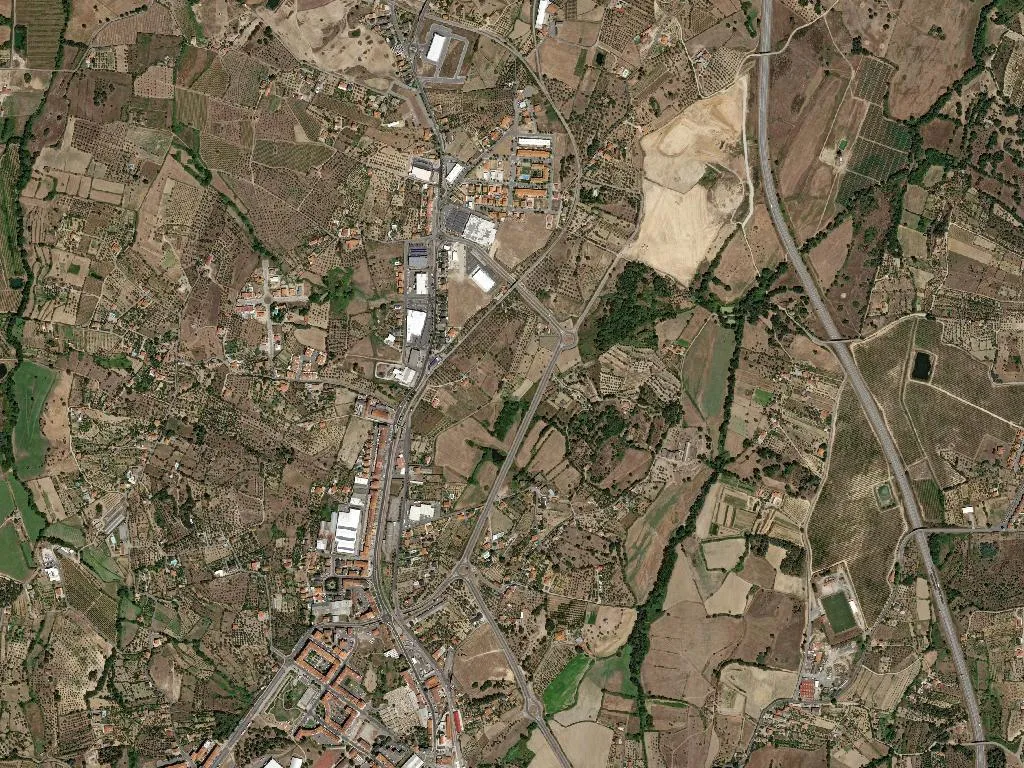
The municipality sits 457 m above sea level in the cradle of Cova da Beira, a bowl of land where the Beira Interior plateau fractures into fertile terraces. In 2013 five parishes – Fundão, Valverde, Donas, Aldeia de Joanes and Aldeia Nova do Cabo – were stitched into a single administrative cloth, creating a territory of 58 km² and just over 12,500 souls. The numbers sound urban, yet the place behaves like a dispersed village. There are cafés where farmers still argue over the price of olive oil, and side streets where the only traffic is a tractor reversing into a garage. Five minutes out of town the roads narrow, granite begins to shoulder out the concrete, and silence settles without asking permission.
Stone upon stone, century upon century
The old centre of Fundão stacks its history in vertical layers. The Igreja Matriz – classified national monument since 1910 – rises from a mesh of alleys where whitewash flakes off walls to reveal the quartzite beneath. Fragments of the medieval castle survive as stubby ramparts and a stretch of battlement that once controlled the transhumance routes between the Tagus valley and the Serra da Estrela. Walk downhill and you cross the 13th-century bridge over the Ribeira de Algodres, its single arch darkened by lichen and the memory of wool caravans that clattered south to the markets of Castelo Branco.
In the surrounding hamlets, chapels classified as imóveis de interesse público punctuate the landscape like modest full stops. Their granite blocks are the colour of weathered parchment; their bell towers carry the lean, utilitarian lines of a region that never had gold to squander on ornament. Between them, cobbled mule tracks tunnel through olive groves and cherry orchards, following the contour lines drawn by Moors and Romans long before the IC8 existed.
An orchard that runs to the horizon
Cova da Beira functions as an unheated greenhouse. Sheltered by the Gardunha and Estrela ranges, irrigated by a lattice of streams, the valley ripens fruit that would struggle elsewhere at this latitude. The roll-call of protected produce is almost excessive for an area the size of the Isle of Wight: Azeite da Beira Alta DOP, Azeitona Galega da Beira Baixa IGP, Cabrito da Beira IGP, Maçã da Cova da Beira IGP, Pêssego da Cova da Beira IGP. And, of course, Cereja do Fundão IGP, the cherry that carries the town’s name to Berlin and Birmingham in refrigerated lorries.
Sit down for lunch and the plateau arrives on the plate. Roast kid – pink at the bone, scented with mountain rosemary and local olive oil – is served in wide, earthenware dishes that retain heat like flagstones. Chestnut soup, a relic of the poor winters when the forest doubled as larder, now appears on menus as heritage cuisine. The wine list offers Beira Interior whites grown at 600 m, their acidity sharpened by altitude and schist, a mineral counterpoint to the valley’s sun-trapped sweetness.
Yellow arrows on the way to Compostela
Look closely at the rendered gable of a farmhouse and you may spot a yellow scallop shell stencilled above the door: the mark of the Caminho Interior de Santiago, the lesser-known Portuguese spine of the pilgrimage. Fundão lies three days’ walk from Lisbon on the Via Lusitana; the town’s 53 registered pilgrim lodgings range from spartan municipal dorms to restored manor houses where the host brings you coffee in a china cup at dawn. The route threads east out of town along farm tracks that smell of wild fennel and warm pine, the Gardunha ridge acting as a compass until the path tips over the watershed towards the Tagus.
For day walkers, waymarked loops leave from every parish. One of the quietest begins in Valverde, climbs through abandoned terraces of cherry and almond, then drops to the Zêzere river at the Ponte de Segura, a 14th-century bridge whose single eye is reflected in the water like a black moon.
Where the numbers tell a story
The 2021 census counted 3,245 residents over 65 and only 1,465 under 14 – the demographic fingerprint of rural Portugal. Yet the contraction is gentler here than in the neighbouring uplands. Schools still operate, agricultural cooperatives invest in cold-storage plants, and a handful of quintas have opened their barns to visitors who want to learn how olives become oil or cherries become jam. Density is 219 people per km², unusually high for the interior, proof that a small regional capital can still exert gravity.
Evening arrives with a sudden dip in temperature as air sliding down from the Gardunha displaces the valley heat. The light flattens, orchards turn the colour of old copper, and the smell of wood smoke drifts from chimneys. Somewhere a church bell strikes six. You realise you have stayed longer than intended, seduced by a place that never advertised itself as a destination. You leave with a paper bag of cherries in your pocket, their weight a quiet reminder that some journeys are measured not in kilometres but in degrees of sweetness.