Full article about Orca
Scatter of schist hamlets, cherry orchards and 539 souls between Gardunha and Spain
Hide article Read full article
The scent that rises before dawn
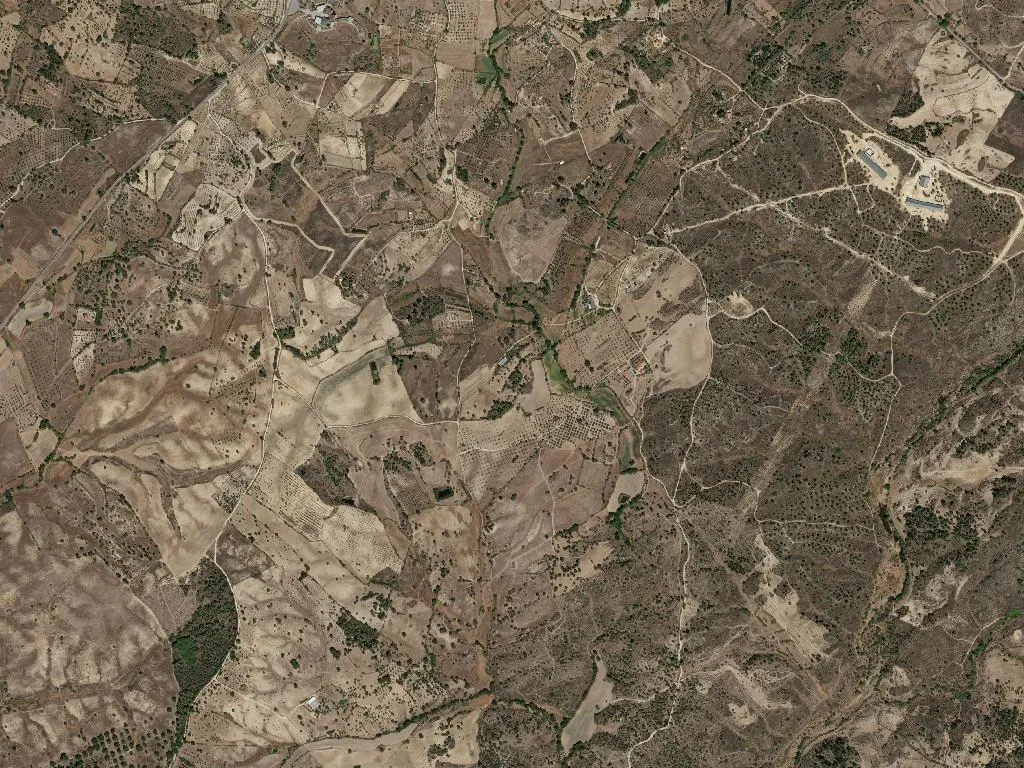
Woodsmoke threads through the valleys while the sky is still oyster-grey. In the southern folds of Portugal’s Beira Interior, the land buckles into terraces so regular they might have been pleated by a giant hand, giving the parish its Latin name—Orca, the curve of a plough-share. At a mean altitude of 353 m, the silence is complete except for the soft clapper of goat bells and the wind that combs the open pastures stretching between the Gardunha ridge and the Spanish border.
Scattered, not gathered
Orca refuses to behave like a village. It is a loose constellation of hamlets strung along 55 km² of schist and meadow, anchored at one end by Zebras and at the other by Martianas. Zebras—once important enough to host its own parish council—still keeps a single grocery whose counter doubles as a post office and, on Fridays, an unofficial cheese exchange. Between these two settlements the density drops below ten souls per square kilometre: granite houses with their shutters latched, dry-stone walls slowly unzipping, granite crucifixes standing where three tracks meet. The 2021 census reads like a haiku of retreat: 28 residents under 30, 280 over 65, 539 in total.
Annexed to Fundão in the municipal reshuffle of 1976, Orca has always preferred the periphery. It lies 28 km from the town hall, the furthest parish in the municipality, and life here is calibrated to agricultural time. August brings itinerant cherry-pickers who sleep in canvas tents among the orchards; October is for hand-harvesting the small, tannic galega olives; winter evenings are spent turning sheep and goat milk into the buttery wheels that locals simply call “queijo de Zebras”. The parish church of São Francisco has no façade of note, no baroque gilt—its treasure is institutional memory: the priest who doubled as the harvest foreman, the ledgers that record who left for France in 1968, who returned with a Citroën HY van and enough capital to plant three hectares of peach.
What the land tastes like
You will not find Orca’s cooking listed on Tripadvisor. Meals are eaten at kitchen tables where the olive oil—DOP Beira Alta, thick enough to coat the tongue—arrives in unmarked bottles. The chouriço hanging above the fireplace is brushed daily with oak smoke; the kid goat has been air-cured for three weeks until the flesh concentrates into something halfway between prosciutto and jerky. In June, Fundão’s famous cherries appear in aluminium bowls, their skins so dark they drink the light; by late July the fuzzy peaches of Cova da Beira follow, juice sliding over wrists like warm perfume. The cheese, semi-cured for twenty days, keeps the meadow scent of cardoon thistle used as rennet.
Pilgrims and footpaths
The Interior Portuguese route of the Camino de Santiago crosses the parish without fanfare—no scallop-shell waymarks, no albergues, only the occasional granite marker half-erased by moss. Walkers share the tracks with free-grazing cattle and, if they climb the ridge at 650 m, are rewarded with a sight-line that runs north to the glacial cirque of the Serra da Estrela. Twelve self-catering houses (registered under the county’s “Aldeias de Montanha” scheme) accept guests who arrive with groceries and a tolerance for nights so quiet you hear your own retinas flicker. The territory lies within the Estrela Geopark, though UNESCO status stops at the council boundary; the geology is still legible to any eye that notices rust-red soil bleeding from pale granite, or the way schist flakes underfoot like dark slate.
At noon the church bell strikes once, its note rolling through the valleys long enough to reach every abandoned threshing floor, every walled orchard where apples ripen unattended. Orca offers no spectacle—only ballast, the gravitational pull of a place that insists on leaving its print in cheese rind, olive sediment and the smell of dawn woodsmoke that clings to a traveller’s coat for days.