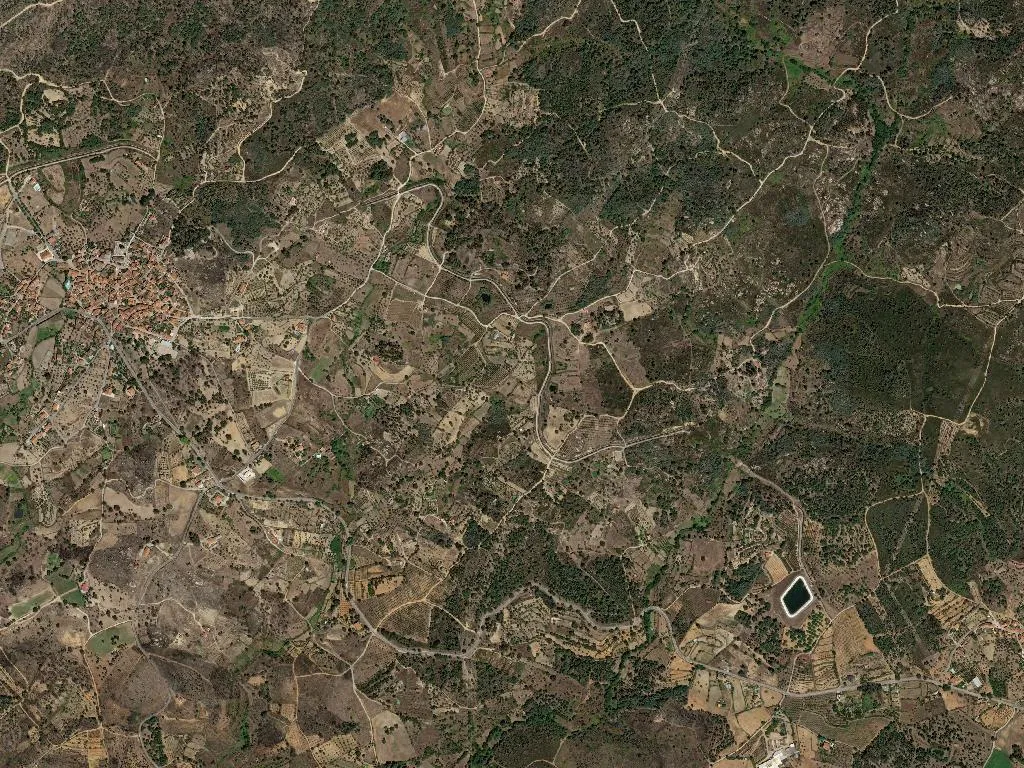
Full article about Pêro Viseu’s sour-cherry lanes & lopsided medieval bridge
Walk Pêro Viseu’s shoulder-wide schist alleys, taste midnight-black cherries, cross the crooked bridge Zé’s grandmother once took home.
Hide article Read full article
The Cobbled Climb
The lane tilts skywards, barely shoulder-wide. Two walkers have to twist sideways to pass, slate chipping beneath their soles – the same brittle schist that skins your knuckles when you reach over Mr Carlos’s wall for early blackberries. In May the cherries are still celadon, but the scent is already sharpening: green almond and hot dust, the perfume of fruit that hasn’t decided to be sweet.
By the churchyard a single tree carries the village quota. Trunk swollen round an old knot, it once served as a bench while I shook soil from my sandals. Eighty kilos is the claimed yield – never weighed, simply decanted into five twenty-litre cans that Nuno’s father loads for Sunday’s market in Alpedrinha. The sour cherries are different: they blacken overnight in late June, and by the time the bell tolls four the lanes are loud with children whose mouths are dyed the colour of bishops’ vestments.
Bridge with Two Arches
The medieval bridge is not listed in any guide; it is simply where Zé’s grandmother coaxed her donkey home with firewood. One arch is fatter than the other because the 1943 flood took a bite from the left flank. Pilgrims still cross, only now they wear Decathlon packs and knock on doors that stand ajar for the afternoon breeze. The PR2 way-mark my uncle painted with bicycle touch-up paint still glows red, steering hikers down to the abandoned olive press.
What the Convent Left Behind
The good schist – pale-veined, clean-split – went to build Tomar’s monastery. What remained lines the terraces here: flaky slabs we wedge back into walls after every winter storm. In the threshing huts the air is thick with maize dust and the ghost of dead mice. At the press, new oil slides along a bamboo spout into five-litre bottles. Ana burns the first loaf deliberately; its charred crust, dipped in cloud-green oil, leaves a catch at the back of the throat like an unripe tomato.
Fires and Festivals
January brings the blessed cake wrapped in brown paper and still warm. Aunt Albertina scores a cross with a wooden fork; the children ignore it, clustering instead round the St Sebastian bonfire where chestnuts pop like cap guns. During the Cherry Festival the village reeks of sour-cherry brandy – men sip ginja from plastic cups and attempt Coimbra fado, bellowing only the chorus they half remember.
Clay Pot and Wild Asparagus
Chanfana – goat stewed in red – is made with three-litre supermarket wine from Fundão. The secret is the cracked clay pot my grandmother brought from Viseu as dowry; the fissure never closes, but the meat collapses obediently. Wild asparagus thrusts up beside the lane where Totó’s dog was killed last spring; you pick it at dawn while dew still beads the tips like apology.
Where the Vultures Wait
At Fraga da Pena the griffon vultures do not flap; they hang in thermals as if suspended on fishing line. The viewpoint railing is tattooed with lovers: “Rute + Bruno 2002”. Once a month the astronomy club hauls up telescopes like artillery, yet the sky remains the one I knew as a child – Milky Way spilled across black when I slipped out after forgetting the cows.
Slate that Keeps the Day
Evening drops behind the bridge and the stone keeps its heat, hoarding the day’s gossip. Last year’s storm snapped half the cherry tree, but a new shoot has corkscrewed from the wound. Eighty kilos? Perhaps. What matters is that it still fruits, and that children still climb the branches – though now they pause, mid-sway, to frame their own grin for a Black-Friday phone.