Full article about Póvoa de Atalaia: Woodsmoke & Poet’s Footprints
Explore Póvoa de Atalaia e Atalaia do Campo: granite alleys, mule-pressed olive oil, cherry-stained roads and the poet’s first light.
Hide article Read full article
Woodsmoke, olive groves and the hush of 374 metres
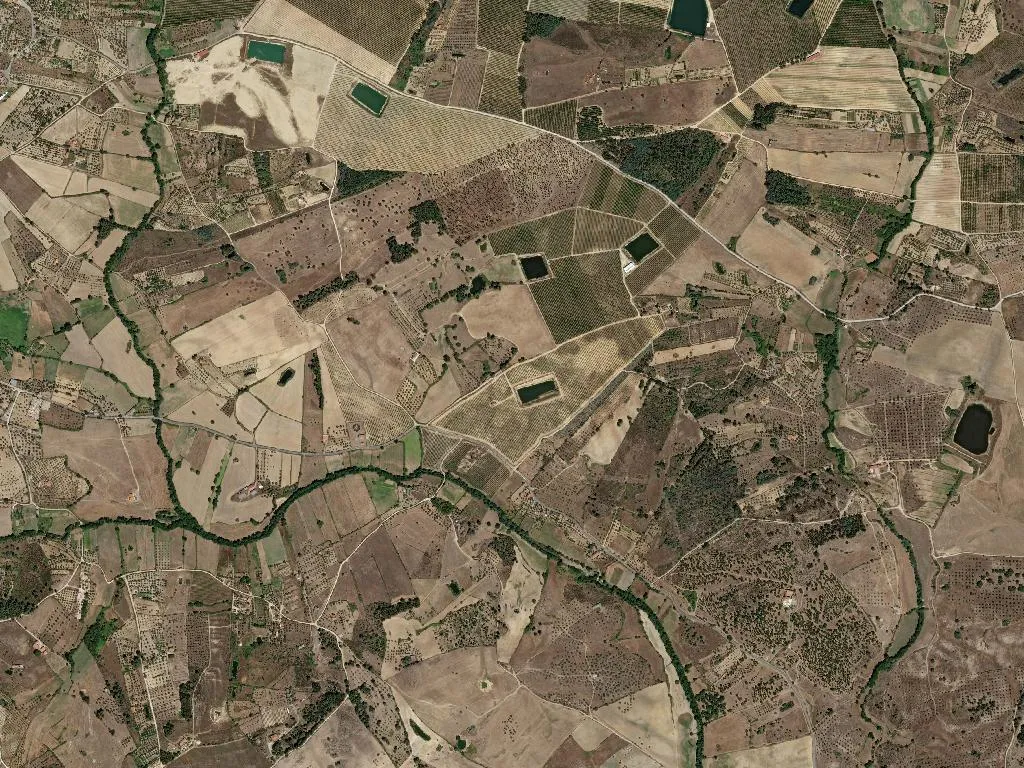
The smell of burnt logs — the kind that clings to a jumper after a day on the slopes — drifts through the olive groves that press right up to the doorways of Póvoa de Atalaia. Shoe leather strikes uneven granite and the ricochet seems to rouse the whitewashed walls. At 374 m above sea level, silence is not an absence but a companion, broken only by the parish church bell or by the bark of Senhor Armindo’s dog, Teijo, who trots after strangers in hope of a biscuit.
A town that lost its title and a village that kept its poet
Atalaia do Campo carries its demotion in the very name: between 1570 and the early 19th century it was a chartered town and municipal seat. In 1801 it held 358 souls — a head-count that speaks both of the land’s severity and of the stubbornness required to stay. Since 2013 the two settlements have been fused into a single civil parish of just over a thousand inhabitants, 427 of them older than 65. Yet it is in Póvoa de Atalaia that collective memory burns brightest. Eugénio de Andrade, Portugal’s great poet of water and light, spent his first decade here before language carried him south. The museum that bears his name occupies the old primary school; stand still and you can almost hear the scrape of desks and the teacher’s warning: “José, pay attention.”
Bread, oil and cherries — the taste of the Beira plateau
The table does not lie. Roast kid arrives scented with rosemary and new olive oil — the golden trickle comes from Senhor Domingos’ hillside grove, still pressed at a mule-drawn mill at weekends. During January’s Festa das Papas, cornmeal porridge appears by the cauldron-load, sided with smoked-pork belly and chouriço cured by Dona Odete upstairs beside her fireplace. In June the Fundão cherry stains the roads lipstick-red; come September it is the turn of reinette apples to mellow on grandmother’s tree. The local galega olive, fat and glossy, yields an almost emerald oil that, for all its lack of a fancy DOP label, outclasses most boutique bottles sold in Lisbon.
Granite trails and solitary faith
The Camino slips through here, but not the crowded coastal French Way. This is the interior Via Lusitana, where the pilgrim walks alone, rucksack heavy and olive shade scarce. Granite crosses and pocket-sized chapels appear at each bend; even padlocked, the door usually yields to a gentle push. Póvoa’s mother church keeps no silver: just limestone walls, lime wash and a dark-wood altar where candles gutter in slow motion. On the first weekend of September the Festa de Santo Estêvão fills the churchyard with long wooden tables and conversation that outlasts the stars. Look up and the Gardunha ridge cuts a jagged silhouette against the sky — proof that horizons can be enough.
What remains when you leave
Castelo Novo is ten minutes away by car, yet some locals have never bothered — and not for want of tarmac. There are no selfie queues, no souvenir stalls. Two villas rent out spare rooms; house numbers have faded and the Wi-Fi code is scribbled on a scrap of paper taped to the wall. Atalaia do Campo’s street plan is still medieval: drivers fold in their mirrors, walkers are rewarded with conversation. Moss colonises the schist joints and mountain wind carries the smell of wet earth even on rainless days.
When the sun drops behind the olives and the oblique light sets the façades ablaze, you realise certain places never shout “visit me”. They simply wait, patient, as if time already belongs to those who stay.