Full article about Silvares: Roman stones, goat stew & Serra firewater
Trace Castelo Branco’s legion slabs, sip schist reds at Quinta do Cardal, taste clay-baked chanfana.
Hide article Read full article
Stone that speaks, wood that turns
The Roman paving stones feel like a chiropractor’s warning: 1.2 km of uneven slabs that once marched Castelo Branco’s legions north to Guarda and now cushion the tread of modern pilgrims with shiny poles and blister-plastered feet. Four kilometres of the Via Lusitana slice through the parish; tick them off briskly and you’ll clock two Manueline stone crosses—one in the churchyard, one by the village spring—and a tiny rock-cut hermitage where a frescoed St Blaise stands beside his hound, painted circa 1500 and better preserved than anything Lisbon’s museums can offer.
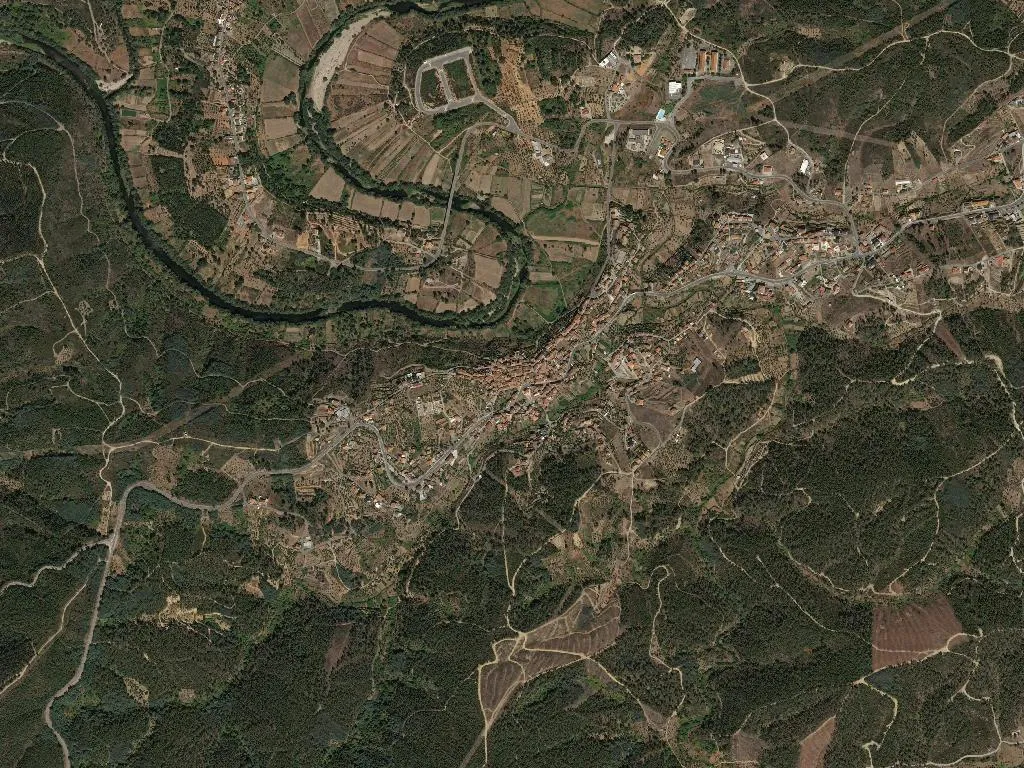
The Moinhos footpath is the pre-lungful of fresh air before lunch: six kilometres, two hours, a snow-well still lined with its original granite slabs, finishing at the Penedo lookout where the Cova da Beira unfurls like a tweed rug left in the sun—vine rows, olive groves and cherry terraces soundtracked by a kestrel that thinks it owns the valley.
Goat in a clay pot, schist in the glass
At Quinta do Cardal the tinta roriz grape is wrested from soil so laced with flaky schist it nicks a thumb run along the terraces. The resulting red is tight-knit, almost taciturn until it meets air. Weekends are non-negotiable: kid chanfana slow-baked in unglazed clay, cornmeal broa rubbed with garlic, glasses filled to the lip. During the August festa of Nossa Senhora da Saúde the menu widens—minted lamb stew and blood-rice morcela smoked over rowan twigs—yet everything still vanishes before the church bell strikes three.
Save a sliver of room for requeijão cheesecakes, skillet cake scented with orange and medronho berry, pine-nut brittle that melts like snow. The final handshake is a thimbleful of medronho firewater: one sip, a sharp intake of breath, and the Serra da Gardunha suddenly feels negotiable in bare feet.
Mid-summer fires, mid-winter masks
On 20 January, St Sebastian’s day, the village descends to the chapel for the fields to be blessed, fingers thawing over grilled chouriço while the Ribeira de Loriga exhales cold air. Easter Sunday still sees the Compasso procession shuffle from door to door: concertina, bass drum, a laurel branch swapped for sugared almonds. At dusk on 23 June the square ignites for the Ceia das Bugiadas; grandmothers dance with toddlers until sunrise brands the sky.
Back to the ridge
Silvares now counts 968 souls—a figure that sounds like a weekend house-party elsewhere but here constitutes mid-week life. Returning French and Swiss owners have rescued more than thirty schist cottages; the primary-school playground still rings with break-time Portuguese, front-page news in these parts. The spinning wheel has reappeared on Saturdays, repurposed as a souvenir nobody needs yet everyone buys.
The 2025 wildfire scorched the southern slope, yet the Loriga valley remains bottle-green and a wildcat still watches from the brambles if you step too close. When the bell tolls the evening Ave-Marias, the echo ricochets between stone walls like someone who has mislaid the way home and is in no great hurry to find it.