Full article about Dawn, bells & olive breath in Três Povos
Walk the silent Santiago stones, taste oak-smoke kid and cloud-fresh oil in Fundão’s triple hamlet
Hide article Read full article
Dawn on the Slope
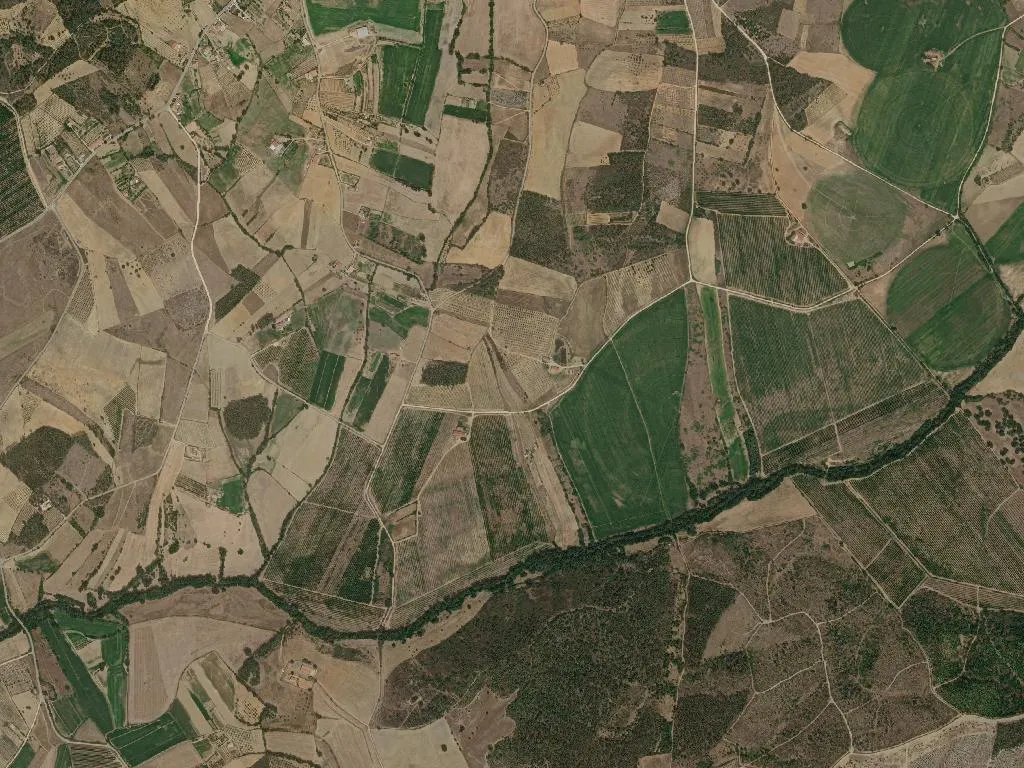
Morning light pours downhill and settles on the olive trees like flour sifted from a height. Their leaves—grey-green, the colour of antique pewter—rustle when the wind climbs out of Cova da Beira carrying rock-rose sap and the tang of oak-smoke. Silence is so dense you can hear soil crunch under the first boot of the day. Far off, the bell of São Tiago tolls six times: three for the living, three for the dead. Três Povos is no picture-postcard name; it is the marriage of Valverde, Alviçor and Souto, three hamlets that once pooled bread, fear of wolves and a single spring where women still scrub laundry on Saturdays.
Stone & Faith
The Interior Jacobean route cuts across the parish, but no one calls it that. Ask and you’ll be told simply “the Santiago road”. Pilgrims have not walked it for decades, yet the cockle-shell stones remain, half-digested by lichen. São Tiago’s church has a south wall blistered by four centuries of sun; its gate shrieks unless coaxed by the sacristan’s particular lift-and-push. Inside, the air is thick with melted candle and bay-laurel soap the old women use to scrub the floor before mass. Higher up, the chapel of São Sebastião is barely five paces by four—just room for travellers to kneel, drink from the cistern and carry on. The water is August-cold, edged with granite and iron.
Houses are built from whatever the ground offered: schist, river clay, roof tiles softened by freeze and thaw. Granite olive presses are now bathtubs for wild fennel; granaries have lost their maize to swallows that swoop in through the gaps.
Tastes of the Beira Interior
The kid goat is slid into the wood oven while stars are still out. Heat must be gentle—only holm-oak embers—or the meat tightens. Meanwhile someone picks purslane for soup: earth-and-rain flavour, the taste of fog rolling off the Gardunha ridge. November’s olive oil is still cloudy, peppery enough to catch the throat. Chouriço has hung above the hearth since All Saints’, smoked by three full moons; blood sausage waits until Martinmas to be sliced.
Cherries come first. When they arrive every hand stains crimson as stones are flicked into enamel bowls for seven-minute jam—timed by the copper pan, not the clock. Walnut cake uses fruit from the tree planted the year a grandfather came home from Mozambique; pumpkin darkens to the colour of eucalyptus honey. Wine is drawn from three-litre jugs that rattle in the neighbour’s boot on market day in Fundão.
Walking Among Olives and Hills
Paths are older than the parish: the one to Alviçor’s spring, the descent to the Zêzere through cork oaks where griffon vultures still nest. Winter soil is ox-blood and sticky; by August it is talcum. Snap a rosemary twig and the resin stays on your fingers until supper. The hills are low, yet you can trace snow on Gardunha until May and count terraced orchards like giant steps.
There are no waymarks. Stop the first figure you meet—straw hat, hoe over shoulder—and you’ll be told: “straight to the big stone, left at the split cork”. The oak, of course, split in the storm of ’95, but everyone still knows the place.
Living Memory
The roll call is 740, yet you will see only the baker’s dog and hens rehearsing for the Tour de France. Humans appear at seven-o’clock mass and on Sunday mornings when the café opens for espresso and gossip. Potatoes are still lifted with a mattock; corn is ground at Guedes’ water-mill, a thunderous barn where conversation is conducted in shouts.
At dusk the village turns the colour of set honey and wood-smoke braids with chouriço fog. That is when 83-year-old António carries a chair to his doorway “to see if the world is still passing”. It is. And Três Povos—454 m above sea level, light-drenched, half-asleep—passes with it.