Full article about Medelim’s Granite Whisper
Cobbled lanes, 1642-hinged church, vultures over Serra de Penha Garcia
Hide article Read full article
The Granite Rim
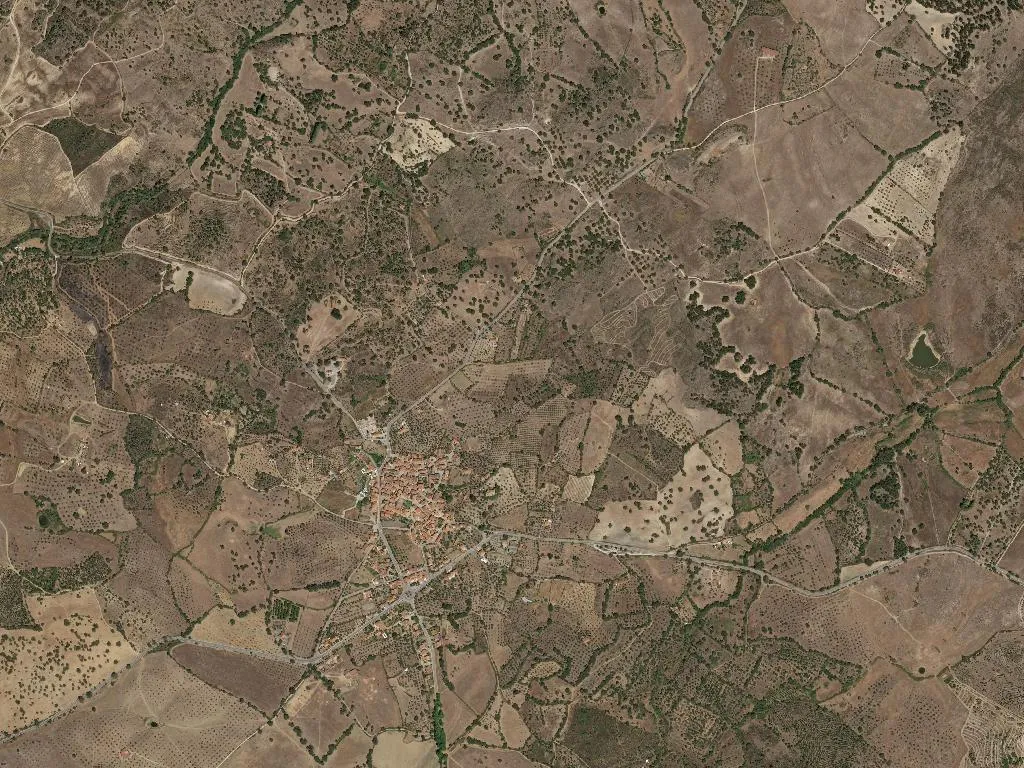
Boot soles scuff the uneven cobbles, the sound ricocheting between schist-and-lime walls while the valley funnels up the murmur of the Medelim stream—water the old ones still call “the earth’s blood.” At 429 m above sea level, on the granite lip where the Serra de Penha Garcia drops to the International Tagus, 230 of us are scattered across 3,047 hectares. You feel the arithmetic when you meet Zé do Cabaz outside the only café, realise the silence that follows is the same hush that shadowed our grandparents.
Stone that remembers
The door of São Brás church groans in the same hinge it has used since 1642—potters in Antanhol call it “the church’s moan.” Inside, a provincial baroque altarpiece still smells faintly of turpentine; it was painted by a travelling master from Vilar Formoso who paid his debts in vermilion and ultramarine. On the churchyard calvary a lighter square of granite shows where generations of summer-trousered children have paused for breath. In the single-arched medieval bridge a .36-calibre bullet hole is preserved—local record insists Captain Henrique crouched there in 1811 while French dragoons clattered overhead.
Mountain kitchen, floor-level flavours
Dona Lurdes’ lamb stew demands three hours on the wood stove—exactly the length of a Sunday mass plus espresso in the sun. The rosemary note doesn’t drift from the hillside; it rises from the pot she waters nightly at six, before the cockerels revise the timetable. The kid goat is Jó’s: he seasons it with looped garlic, turns it over red vine embers and tells you how he nearly ran off to the Colonial War. Each bottle of olive oil carries a disc of cork inked with 1943, the year Aunt Amélia’s tree was planted to mark her birth.
Airborne territory, ancient stone
At the Carrascal outcrop the parish telescope is cracked, but griffon vultures keep the appointment anyway, riding the midday thermals like souls on a ledger. Joaquim, retired forest guard, names them—broken-wing, white-tail, the one that screams before its dive. Eight kilometres on, the Pica watermill still holds flour from 1997, the year Zé Manel ground for his daughter’s wedding. After dark, when the sky drops to an almost vulgar depth, you can hear voices of men who left for war and never came back, the sound pooling in the day-warm stones and mixing with the scent of burning schist in hearths.