Full article about Proença-a-Velha: Where Time Pauses Between Bell-Strikes
Proença-a-Velha, Idanha-a-Nova: granite fountains, 1743 gilded retables, olive-oil presses and borderland seguidillas in Castelo Branco.
Hide article Read full article
The bell strikes three times and the note lingers, rolling down the Rua da Costória, pausing at the granite fountain, then climbing the Travessa do Forno. Dogs lift their heads; cats freeze mid-slink on the wall-tops. In Proença-a-Velha silence is not absence but interval: a pocket of time between heartbeats. One-hundred-and-ninety souls are registered here, yet at this hour it feels fewer. January light scrapes across limestone, turning oak doors the colour of burnt honey. No one hurries; the day unfolds like a linen tablecloth, creases smoothed by hand.
The church is small, its main portal sealed since the storm of ’81 when a roof-beam snapped the lintel. You step in sideways through a side door, ducking instinctively. Inside, the air is candle-wax and damp wool. The gilded retable, dated 1743, has been polished by generations of palms; the wood where foreheads rest is lighter, as if faith had worn a halo into the grain. There are no QR codes, no audio guides. A wicker chair holds the priest’s reading glasses; a tabby cat threads the pews like a collector of small sins.
Borderland
For centuries this was where Portugal exhaled. On moonlit nights, locals claim, you could hear the bulls of León grazing across the ridge. Stand on the hillock of Senhora do Porto and you still pick out the bell-tower of Aldeia de João Pires on the far skyline. The border was never a line on parchment but a zone of transaction: women exchanged, livestock bargained for, coins counted on flat stones. The Portuguese spoken here carries a Castilian cadence; seguidillas—little songs in triple time—pass from mother to daughter without curiosity about their origin. The village name itself remembers displacement: “Proença” harks back to Provence, “a-Velha” —the Old— is the stamp of those who stayed behind.
Olive oil, kid, sun-dried beef
October is for olive oil. At dawn you queue at the communal press, wicker baskets on your hip, a splash of aguardiente for the lamp that warms the mill. The scent is sharp—green apples, bruised grass, the faintest metallic tang of olive sap. First-run oil emerges cloudy, peppery enough to make visitors cough. Weeks later, on St Martin’s Day, the kid arrives: milk-fed, sourced from Zé da Celeste’s fold below the poplars. It roasts slowly, basted with milk-soaked bread, the skin blistering to glass-bubble crackling. Carne de sol—misnamed, for salt is absent—hangs in the wood-smoker for three days over oak and strawberry-tree wood, then is shaved into translucent sheets and eaten with maize broa and rough red decanted from five-litre jugs.
Inside the International Tagus Natural Park
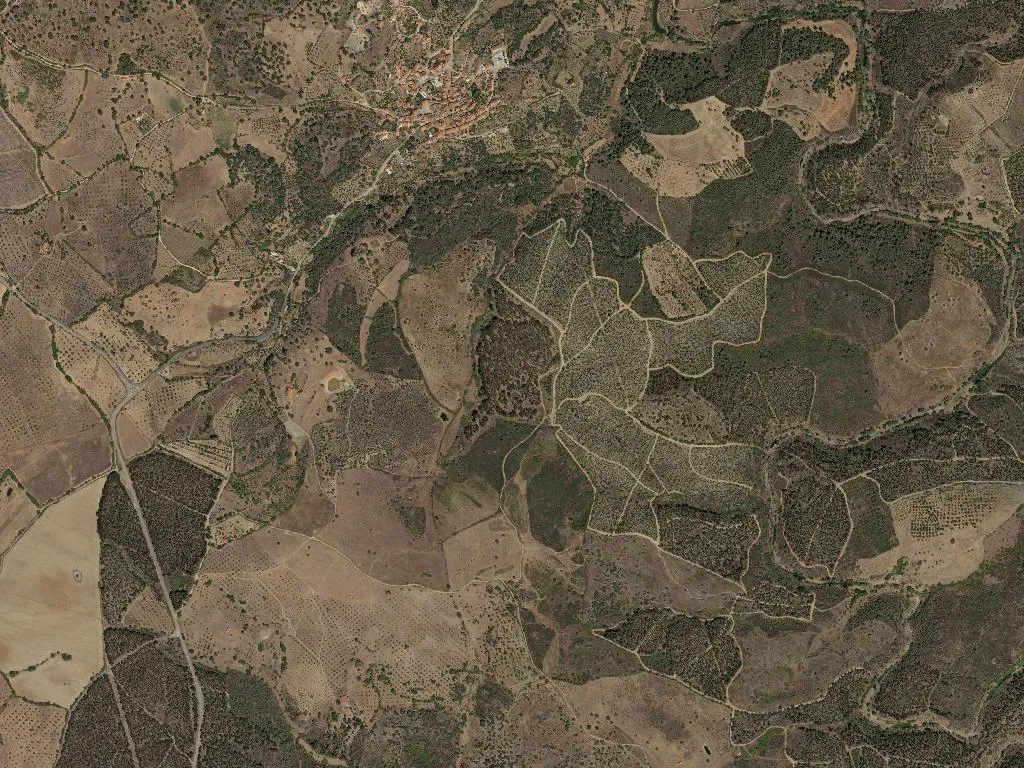
The village is inked onto the edge of the Parque Natural do Tejo Internacional, a gorge-riven reserve that Portugal shares, across the river, with Spain. Leave the N-233 at the granite milestone and the Tagus suddenly fills the windscreen, a blade of water slicing through quartzite. Trails start beside the abandoned mill of Rico, its iron axle still wearing a rotting wooden wheel. Follow the Aravil and Erges valleys: cork oaks corkscrew from the schist, gorse blooms absurdly in winter. Transmontano mastiffs—bear-sized, snow-bellied—doze among the sheep; above them golden eels trace slow circles, heirs to an airspace once patrolled by Imperial eagles. This is not wilderness but a palimpsest: burnt, grazed, replanted, yet still possessed of a composure the coast surrendered long ago.
Dusk leans against the hill; the air turns mauve and granite glows like iron pulled from fire. Women carry bread baskets indoors, exchange a sentence or two across thresholds, then gates click shut. Silence returns—dense, animate, filled with the creak of a bed-frame, the wall-clock’s metronome, the low gossip of stove wood. You do not come to Proença-a-Velha to see anything; you come to inhabit the same slow time as the stone. At nine the bell counts the hour—nine iron notes—then abdicates, letting darkness finish the story.