Full article about Quartzite light & goat-scented air in Estreito-Vilar Barroco
Walk Ordovician fossils, taste thyme-roasted kid, hear silence echo off 564 m São Pedro cliffs
Hide article Read full article
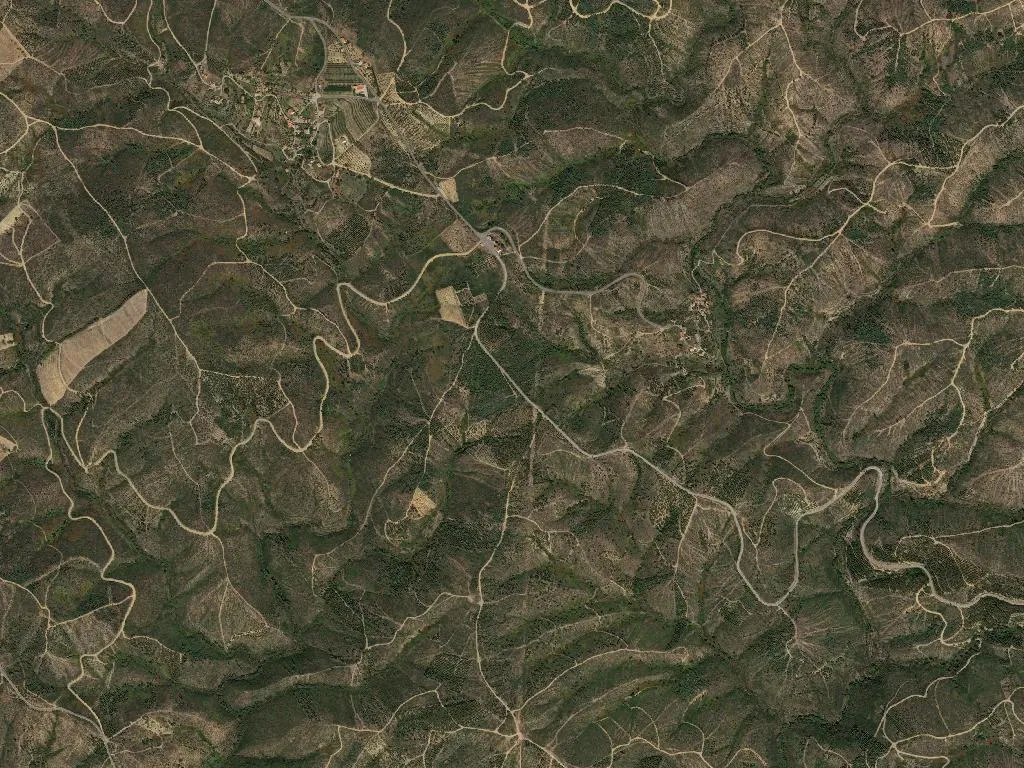
Morning sun ricochets off quartzite cliffs, scattering light so sharp it seems to vibrate against the skin. At 564 m, the Serra de São Pedro keeps an almost monastic hush, broken only by wind combing through Holm-oak and the distant gossip of the Ribeiro de Alagoa. Estreito-Vilar Barroco, a single civil parish folded into 93 km² of schist and granite, has been crossed by pilgrims bound for Santiago since at least the 12th century.
Two hamlets, one parish
The merger was formalised in 1854 when the crown stitched Estreito’s narrow valley – the road squeezes between sheer quartz walls – to Vilar Barroco’s manor houses, their coats-of-arms still legible above granite portals. Post-Civil-War municipal tinkering locked the boundary that survives today.
Walk the Via Lusitana, the interior Portuguese leg of the Camino, and you thread cork groves where black pigs graze semi-wild. Naturtejo Geopark polishes the flagstones beneath your boots: 490-million-year-old ordovician fossils ripple like frozen waves. Turnpoints such as the Miradouro do Zêzere let the eye skate 20 km down-river; springs at Fonte da Vila keep a year-round 12 °C bite.
Goat in the wood oven, olives on the table
Mountain cooking is all there is. Beira-kid goat – IGP-certified, milk-fed – roasts in the bread oven at Padaria Central, scented with hand-picked Gardunha thyme. It arrives with field potatoes and Vilar migas: yesterday’s bread, garlic and hot olive oil beaten to a crumb. The plate is ringed by Beira Baixa galega olives, brine-cured from 300-year-old trees that still fruit in Estreito. At Tasco do Zé you eat slowly, glass of local Pinhal red in hand, while the baker loads the next batch.
Empty houses, unfinished stories
Of 880 dwellings, 463 are locked. Owners left for Paris in the 1960s, for Lisbon in the 1990s. Between shuttered doors, Alda tends kale and chickens; 441 residents are over 65, only 37 under 14. Yet returnees appear: Francisco came back from the 11th arrondissement, opened the parish’s first Airbnb and now runs stargazing nights on the quartz ridge. The town hall has restored the Engenho levada; guides lead 8 km moonlit walks along the water channel.
When the sun drops behind Cabeço da Mina, the bell of Vilar’s 16th-century church strikes the hour – a sound Alentejan dam-builders still recognise from their 1950s boarding houses. Mountain chill descends, wood-smoke rises, and time is measured not by Wi-Fi but by bronze against granite, water over stone, shadow cooling quartz.