Full article about Salvador, Penamacor: Echoes in Olive-Grove Silence
Salvador, Penamacor, Beira Interior—hear 1530s bells, taste strawberry-tree-smoked chouriço, walk cobbles where moss recalls mule-bread winters.
Hide article Read full article
The Weight of Silence
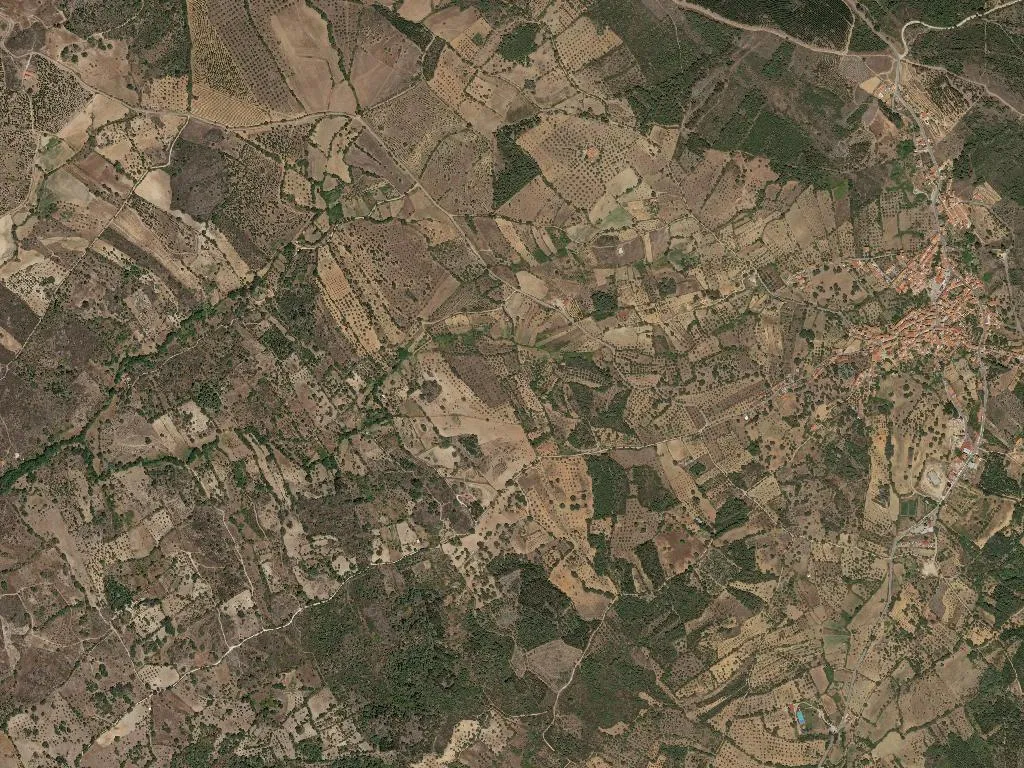
Silence here is not empty; it is a physical thing. At 507 metres above sea-level it arrives on a plateau wind, slips between the leaves of 1,000 hectares of olive groves and settles on the single cobbled street that links the church to the fountain. Salvador, a parish of Penamacor on the Beira Interior frontier, counts 320 souls, 129 of them over sixty-five. Density is so low that neighbours borrow echo instead of sugar.
Stone, Lime, Vertical Memory
The parish church, listed since 1977, keeps a 16-metre bell tower that has tolled since the 1530s. Inside, a Manueline gilt altarpiece survived the 1755 earthquake, two French invasions and the twentieth-century exodus only because José Mateus – carpenter, sacristy door-keeper for three decades – locked the door every night at nineteen hundred hours. At noon the whitewashed façades bounce light like polished pewter; at dawn they dissolve into the Côa valley mist, turning walls into a charcoal study. Run your finger along the schist joints and you’ll find moss that remembers the snows of ’45 and ’54, when the village was cut off for eight days and bread arrived on mule-back.
What the Soil Gives
On St Martin’s Day Celestino Abreu unlocks the smoke-house he built in 1962. One hundred and twenty black-pork chouriços hang like musical notes above a fire of strawberry-tree wood – the only fuel that will scent the fat without turning it bitter. The kid you eat later grazed above 600 m on Colcurinho hill, its diet flavoured by wild thyme and lavender crushed between schist plates. The olive oil on the table is pressed from 150 ha of Galega trees owned by the Matos family, protected under the Beira Interior DOP since 1998. Harvest is a family calendar: two weeks in November when Maria da Luz, her daughter and two London-born grandchildren hand-pick the fruit before the first hard frost.
Between the Ridge and the Plain
Salvador sits on the western shoulder of the Serra da Malcata Natural Reserve, 12 km away as the golden eagle flies. Ecological corridors bring wild boar to the maize plots at dusk and Iberian wolves to the stone pens that guard the goats. João Pedro, 14 – the parish’s only teenager – catches the 07:15 minibus to Penamacor secondary school. Zé Manel’s grocery, open since 1953, sells exactly 31 loaves a day: one for every child still living here. While the Beira Interior wine region experiments with high-altitude reds, Salvador keeps time by olives – from the first ground frost of October until the Almaceda press stops, usually 20 December, when the last 400 tonnes have been crushed.
Learning to Dawdle
There is no direct road. From Lisbon you drive two and a half hours past Sabugal, drop into Penamacor and climb again until the Sat-Nav loses its mind at the Almofins bend. A wooden board, hand-painted, simply says “Salvador 2 km”. No café, no restaurant, no public Wi-Fi. What exists is the Casa do Povo, open Tuesday and Friday, when Alda fires the bread oven and six men play sueca at Formica tables. Bring your own provisions; the village provides the soundtrack – your own footsteps on cube-shaped granite, the clack of the church door, water running from the 1927 spring.
Late afternoon, when the sun sideswipes the white walls and shadows stretch the full length of Rua do Norte, you realise Salvador never asked you to stay. It simply arranges the silence so that turning the ignition feels like an interruption. Only Carlos Silva’s dog marks the moment, barking once at the roundabout – the single motion that doesn’t depend on the plateau wind that never, ever stops.