Full article about Vale da Senhora da Póvoa
Granite cottages, cork-oak ridges and one parish bell ringing over 2,000 ha of Beira Interior emptin
Hide article Read full article
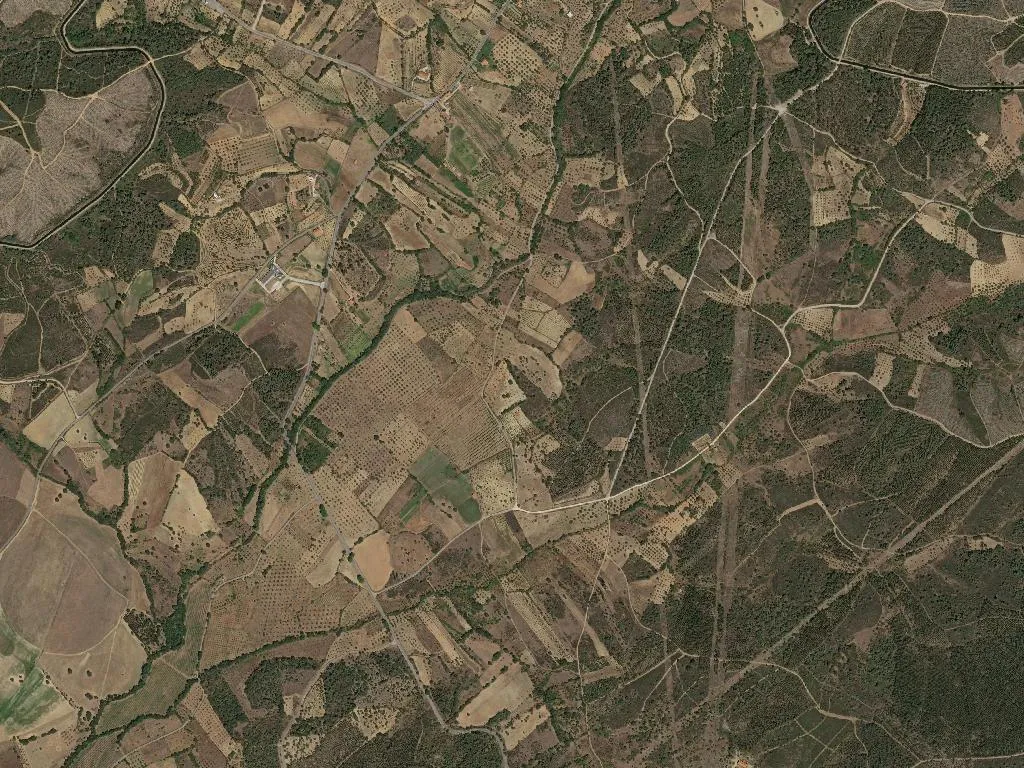
Schist bursts through the cork oaks like grey vertebrae, holding the hillside together. At 489 m, Vale da Senhora da Póvoa is a long, narrow mosaic of dry-stone terraces where olive branches knit shifting shadows across the ground. Spring air arrives resinous from the Serra da Malcata, carrying rock-rose and warmed slate; by August it smells of baked earth and wild thyme.
Olive oil and absolute quiet
Two hundred and twenty-two people live here, spread across almost 2,000 ha—roughly one soul every ten football pitches. More than half are over sixty-five; only seven children sprint between the granite-and-whitewash houses. Silence is not absence but texture: the parish bell cuts through the valley with cathedral clarity, a dog barks two ridges away, a tractor idles somewhere out of sight.
The parish sits inside the Beira Interior wine region, yet grapes play second fiddle. Galega olives, slow-ripened at this altitude, give Beira Baixa DOP oil its peppery bite, pressed in tiny mills where stone rollers still turn like slow-motion clocks.
Between the mountain and the terraces
To the north, the Serra da Malcata Nature Reserve begins. Iberian lynx roam here—seeing one is lottery odds—but you will catch boot-prints of wild boar in the path, or a Bonelli’s eagle planing above the ridge. Trails climb through holm oak and strawberry tree; every 100 m of ascent strips another degree from the air. In winter, fog pools for days, erasing contours so completely that hikers navigate by the crunch of fallen heather underfoot.
Local IGP kid goat grazes these same slopes. Where wood-fired ovens are still used, the meat roasts until the skin crackles like thin ice, fat dripping onto clay trays. There is no restaurant; you eat by invitation, or you don’t eat at all.
The mathematics of emptiness
Only one dwelling is registered as tourist accommodation. Visitors arrive through a chain of acquaintances—someone who knows someone whose cousins emigrated to France and left a key. Logistics are deliberate: fill the tank in Penamacor, stock up in Castelo Branco, download offline maps. Mobile signal collapses in the valleys; WhatsApp waits for higher ground.
Light here is a daily metronome. Dawn skims the schist like polished brass; noon flattens colour into high-contrast lithograph; dusk lengthens olive trees into Chinese-shadow silhouettes. When the sun drops behind the serra, temperature plummets even in July. Yellow window-lights flick on, revealing how many houses remain sealed, their shutters closed for owners who never come back.