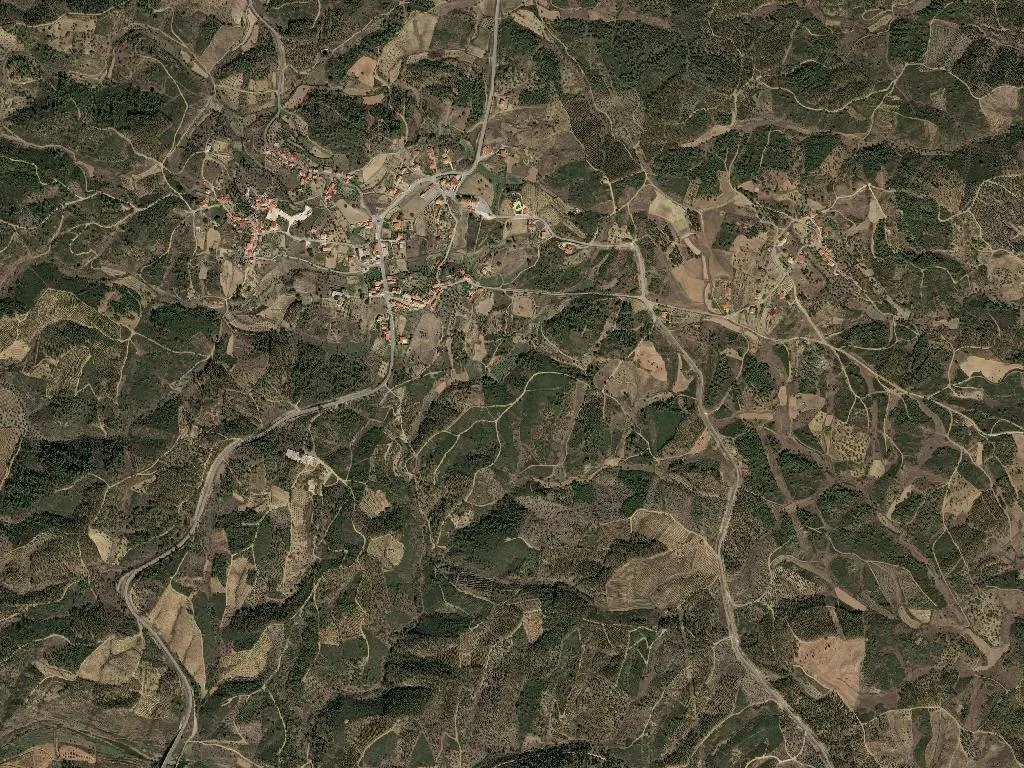
Full article about São Pedro do Esteval
Taste Cabrito da Beira IGP grazed on heather, sip Galga olive oil amid yawning cork groves in São Pedro do Esteval
Hide article Read full article
The afternoon heat releases the scent of warm schist and far-off rosemary. At only 243 m above sea-level, São Pedro do Esteval in southern Beira Baixa feels lower than it is, folded into a gentle valley where silence has body and dry-stone walls set the cadence of the land. Six inhabitants per square kilometre here translates quite literally into the yawning gap between one whitewashed cottage and the next; your gaze must cross hectares of cork and rock before it finds a moving figure.
Schist, scrub and goat tracks
The parish blankets 6,850 ha of Naturtejo Geopark, a UNESCO-stamped terrain that reads like an open-air geology text. Ribbons of Ordovician schist stripe the hills, holm oaks twist in summer shade, and season by season the marshy meadows shift from emerald to rust. Springs appear without warning, feeding stone troughs where goats pause, bells clanking. This is land that has to be learned: locals still refer to the rochas negras when giving directions, confident you’ll know the outcrop they mean.
Flavours with postcodes
Gastronomy is inseparable from altitude and flora. Kids destined to become Cabrito da Beira IGP graze on heather and gorse, their meat perfumed by the maquis; Carnalentejana DOP cattle roam the same slopes, developing the nut-sweet marbling prized in Lisbon restaurants. In scattered groves, the Galga olive turns slowly from green to violet, yielding low-acidity oil that smells of torn tomato leaves. These are not artisan props; they are the parish’s small, stubborn economy, anchoring families who refuse the urban tug.
One listed building, a thousand unlisted
Officially, there is a single Imóvel de Interesse Público – the 16th-century parish church whose Manueline doorway is carved with ropes and seaweed. Unofficially, the whole village is an architectural palimpsest: schist houses with ground-floor stables, external staircases scalloped by centuries of boots, threshing floors circling like UFOs on hilltops. Planning law may not protect them, but the 80-cm-thick walls still regulate January frost and August glare.
The acoustic valley
Sound is the most accurate GPS. A dog’s bark travels for seconds; the church bell carries three hamlets; wind through cork oak is the constant metronome. To be here is to accept a slower logistical rhythm. Mobile signal vanishes inside stone, the nearest petrol pump is 24 km away in Proença-a-Nova, and the café opens only when Zé feels like it. The pay-off is panoramic: no billboards, no coach parks, no fence lines interrupting the horizon.
Pack water, a spare tyre – the EN244 is unforgiving – and patience for lunch. Leave urgency at the municipal boundary. When the low sun ignites the schist and shadows pour down the valley, São Pedro do Esteval offers no curated experience, only its own unadorned substance: stone, light and a silence you can weigh in the hand.