Full article about Carvalhal’s chimney smoke and thyme-scented olive oil
Nine granite hamlets above the Zêzere where maranho sausage steams in January
Hide article Read full article
The scent of burning wood is not perfume
It is the firewood that will still heat tonight’s dinner. In Carvalhal, smoke leaves the chimneys in a straight pencil line; if the wind swings down the Zêzere valley, it carries the mineral breath of wet schist that loosens from the slopes after rain. At 404 m the air rasps the throat outside the village bakery, where a coffee costs sixty cents and Lurdes still serves it in a china cup.
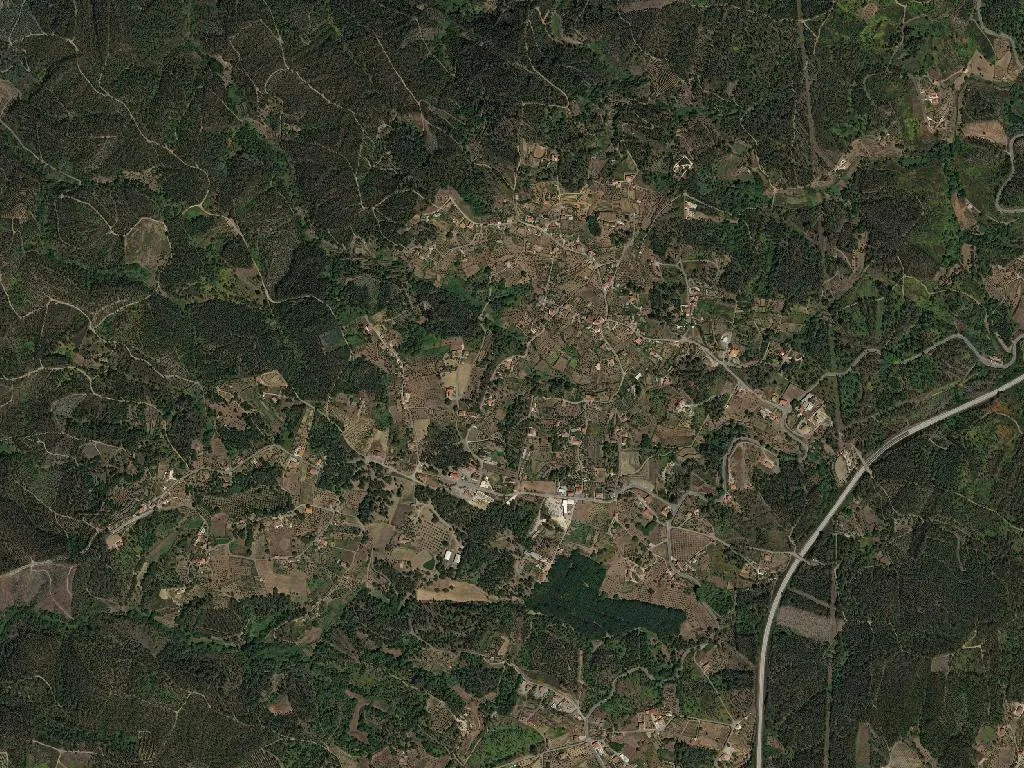
Nine hamlets scatter across 1,000 hectares. The council road to Sertã is only ten minutes by car, but walkers double the time, zig-zagging between potholes. Between houses a ravine drops away, or a chestnut grove, or an irrigation channel where children learnt to swim long before television arrived.
What the land dictates
The olive groves are genuinely old: trunks corkscrewed so long that no living Carvalhalense can name the planter. The local Galega is nicknamed “galega de Carvalhal” – smaller, picked after St Martin’s Day when the skin splits to reveal purple flesh. Everything goes to the Pego press, where Sr Joaquim only fires up the first beam when enough sacks have arrived; otherwise the oil is “watered”. Bottled, it carries a faint note of wild thyme that never appears on the label but is instantly recognised by anyone born here.
Maranho is another matter. Each January the killing room steams for two days. Women rinse intestines at the stone tank; men mince shoulder and belly on the 1958 hand-crank machine. The secret is not the paprika but yesterday’s rice, cooled in the iron frying-pan that once held the Sunday chicken. When the sausages are poached, neighbours receive a foil parcel and reciprocate with a slab of back-fat or a pair of ribs.
Footpaths of faith
A yellow arrow of the Caminho de Santiago is painted on a retaining wall at the entrance, yet pilgrims are scarce. When they appear they ask for “the pilgrim house”; only Alda knows, because she keeps the key. It is an annexe off her kitchen—two iron beds, a paraffin lamp, and a hunk of bread left on the bedside table “in case they arrive at three in the morning”.
There are 126 residents over sixty-five and 54 children. Those in between commute to Castelo Branco or Sertã, to the paper mill or the hospital. At seven the school bus collects the children; the bar fills with parents exchanging news of who is ill, who has sold an olive tree, who has a hospital appointment in Lisbon.
Night falls in instalments. First Celeste’s light goes out, then Albertina’s, then José from the power company. Finally the café, where the lottery screen flickers last. All that remains is Sr Aníbal’s dog barking at the moon and the creak of Emília’s gate, which she only closes once her grandson’s bedroom light disappears.