Full article about Castelo, Sertã: schist alleys echo with olive-oil time
Hear boots on granite, taste maranho in a village where Roman roads fade into wind-scoured schist
Hide article Read full article
The Sound Arrives Before the View
A wooden beam drags across beaten earth; a boot hesitates on granite; silence pools between schist houses like a kept secret. At 350 m above the Tagus basin, Castelo is not a backdrop for weekenders – it is a parish that renegotiates its future every dawn. Red-brick chimneys saw the sky; doorsteps have been hollowed by centuries of comings and goings, some still carrying African dust on army-issue boots.
Traces of a Castellum
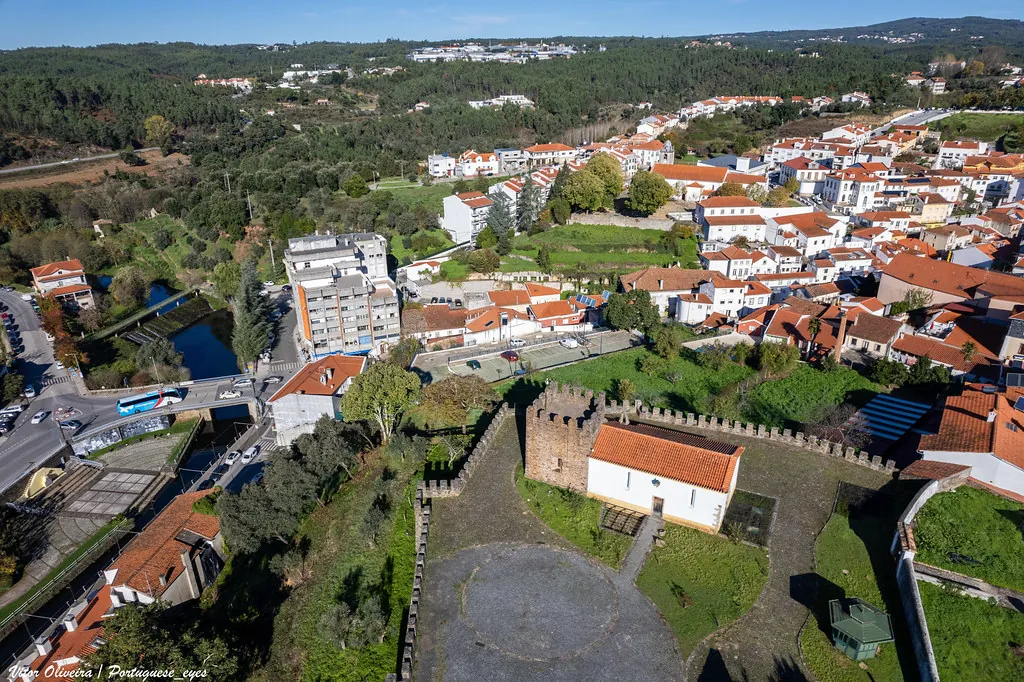
The name is accurate yet incomplete. A Roman road from the slate quarries at Lousã to the Sertã valley once skirted a small castellum here; not one stone remains on another. The village plan – alleys lunging uphill, houses shoulder-to-shoulder – is the only fortress left, built less for glory than for shelter from the Tagus wind that slices cheeks in January. No palaces, no coats of arms: just schist that darkens in rain, lime wash that blisters in August, and hand-painted iron gates announcing simply “Casa da Silva” or “Família Santos”.
Olive Oil, Maranho and the Memory of the Press
Begin with the oil – not the elegant 250 ml bottle sold in Lisbon delis, but the five-litre jerry can Zé Manel keeps beside the café counter. DOP Beira Interior, if certification matters; for him it is the annuity an olive tree keeps paying, even in drought years. The bread is maize, crumbling under a green torrent that runs off your chin.
Maranho is Sunday lunch when cousins converge. Kid goat, rice, chouriço, presunto – all sewn inside the animal’s own stomach like life packed into a holdall. It takes three hours, not thirty minutes; every household swears by its mother’s ratio of mint to cumin. On chestnut days the soup is pure calories – survival rather than “comfort food” – and the wood-oven kid crackles so loudly the neighbour knows dinner is ready.
Two olive presses still function. One is a growers’ co-op; the other belongs to Joaquim, who bought a second-hand hydraulic press in 1982 and says “it’s like a tractor – ignore it and it rots”. Visit in November: the air is part fruit, part wet earth, part winter wages.
The Lusitanian Way and the Pilgrim’s Footfall
Castelo sits on the Caminho de Santiago, but forget neon arrows or albergues with Wi-Fi. Eleven kilometres of dirt track thread through olive groves and cistus scrub where your only conversation is a skylark. The walker who turns up here has bleeding heels and a threadbare soul; no one will ask for an Instagram story. You may meet António carrying pruning shears and a goatskin of rough red. He will pour you a cup and insist “Camões passed this way – though no one can prove it”.
Thin Density, Deep Roots
Official tally: 946 residents. Paper cannot clock the men drinking bica at 7 a.m. before the van to Viseu’s building sites, nor the ones who return only for Saturday supper. Density is 38.5 per km² – space to breathe, room to feel absence. Three hundred and twelve pensioners, seventy-six children; do the maths. The primary school has seven pupils, yet the teacher arrives every day with the same lesson plans she once used for thirty.
When the sun drops behind the saw-tooth roofline the schist glows honey and the smell of burning eucalyptus announces supper. In the two tascas maranho appears on the table without description. Ask what it contains and you’ll be met with a stare that says, “Where on earth did you come from?”
Castelo is not a postcard. It holds itself together drip by drip, like new oil. It feels no urgency to please – but stay until Sunday afternoon when the silence finally settles and you may realise this was the sound you had been trying to hear all along.