Full article about Pedrógão Pequeno: Schist silence above Zêzere
Walk stone alleys where granite air cools your lungs and slate roofs knit the slope
Hide article Read full article
The first thing that arrives is silence. Not the hush of a spa retreat, but the deeper, mineral quiet of a place where 706 people are scattered across 37 square kilometres of schist. Long before Pedrógão Pequeno reveals itself—before the slate roofs darken against the pine-green slope—you feel the altitude in your lungs: 482 m of granite and silence pressing gently on the ribcage. Then a single sound: an old wooden door complaining somewhere inside the village, or perhaps just the wind bargaining for right-of-way through a lane no wider than a out-stretched arm.
The grammar of schist
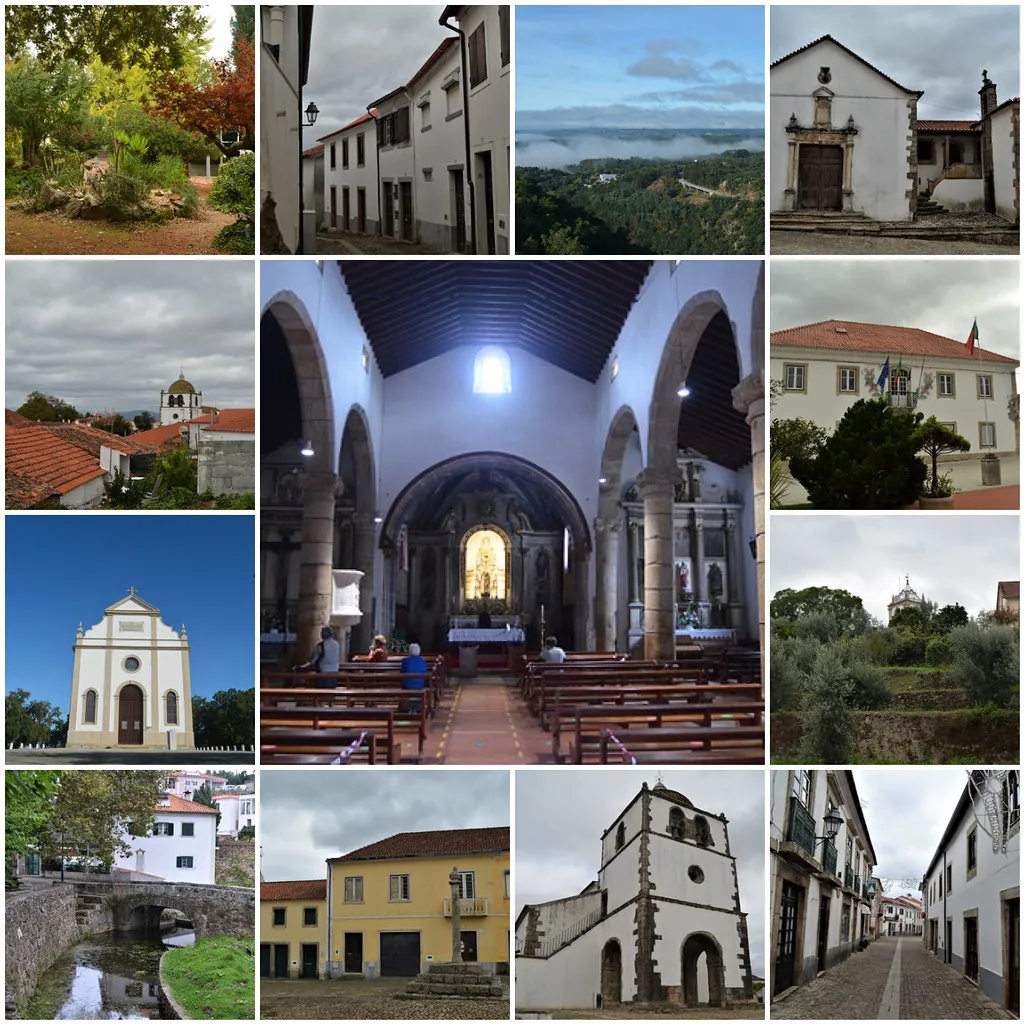
Since 2012 the village has flown the flag of the Aldeias do Xisto, yet the label feels redundant: every wall, step and roof tile here is already a dictionary of the stone. Sheets of schist are stacked like geological pages; when rain strikes they shine the colour of wet graphite, under summer sun they bleach to gun-metal. Houses clamp on to one another for mutual support on the incline, their eaves almost touching across alleyways that force the shoulders to turn sideways. Six classified monuments punctuate the parish—chief among them the thirteenth-century Igreja Matriz de São Pedro, raised to National Monument in 1978—yet the real monument is the fabric itself: a continuous essay in how to keep stone upright, century after century.
Footprints already pressed into the ground
In 2014 the Interior Portuguese Route of the Camino de Santiago was rerouted through the parish, adding a 9 km traverse of olive terraces and stone-paved mule tracks to the long footpath that links Fátima to Santiago de Compostela. Pilgrims arrive quietly—2,345 walked the Portuguese section in 2023, fewer than 300 of them passed Pedrógão—and leave only the faint abrasion of boot rubber on schist. Follow their trail at dawn and you move through successive micro-climates: broom-scented scrub, regimented olive groves, pine-dark ridges where the light falls in warm coins. There is no interpretive board hyperbole, no souvenir stand, simply the creak of a gait-strained backpack and the river glinting far below.
What the land yields, slowly
This is not restaurant-flag territory. Flavour leaks out slowly, certified by DOP and IGP seals that read like agricultural footnotes. Both Beira Baixa and Beira Alta olive oils carry DOP status—thick, green-fruit liquids that coat the throat—while the regional Azeitona Galega table olive lands on every table, plump and faintly bitter. The headline act is maranho da Sertã: a kid or lamb stomach stuffed with rice, cured meats and fresh mint, sewn shut then simmered for hours until it emerges as a herb-scented, sliceable parcel. You eat it only on Wednesdays and weekends at Taberna O Bojador on Rua Dr. Joaquimo Pinto, and you order the day before because Maria Leonor cooks just enough for those who remember to ask.
Stay, or at least linger
Ten houses—no hotel, no resort—offer beds to outsiders. Walls 80 cm thick exhale the day’s stored heat after sunset; darkness is absolute enough to read starlight on the surface of a wine glass. Morning fog clings to the pine tops like damp cotton until the sun unpicks it thread by thread. Demography is the invisible architecture: 64 children under 14, 265 residents over 65. Old age is the default setting, and knowledge—how to forecast rain by the smell of broom, how to knit a goat’s-stomach sausage—resides in hands whose creases mirror the surrounding topography.
The weightless heft of schist
Come late afternoon, when oblique light turns every wall into shifting greys and ochres and someone, somewhere, warms olive oil for the evening’s refogado, Pedrógão Pequeno performs its quiet trick: time loosens its grip. You realise you have walked for an hour without meeting a soul, yet you have not been alone; the place itself has kept you company. The body understands it need not go anywhere else. Perhaps it never did.