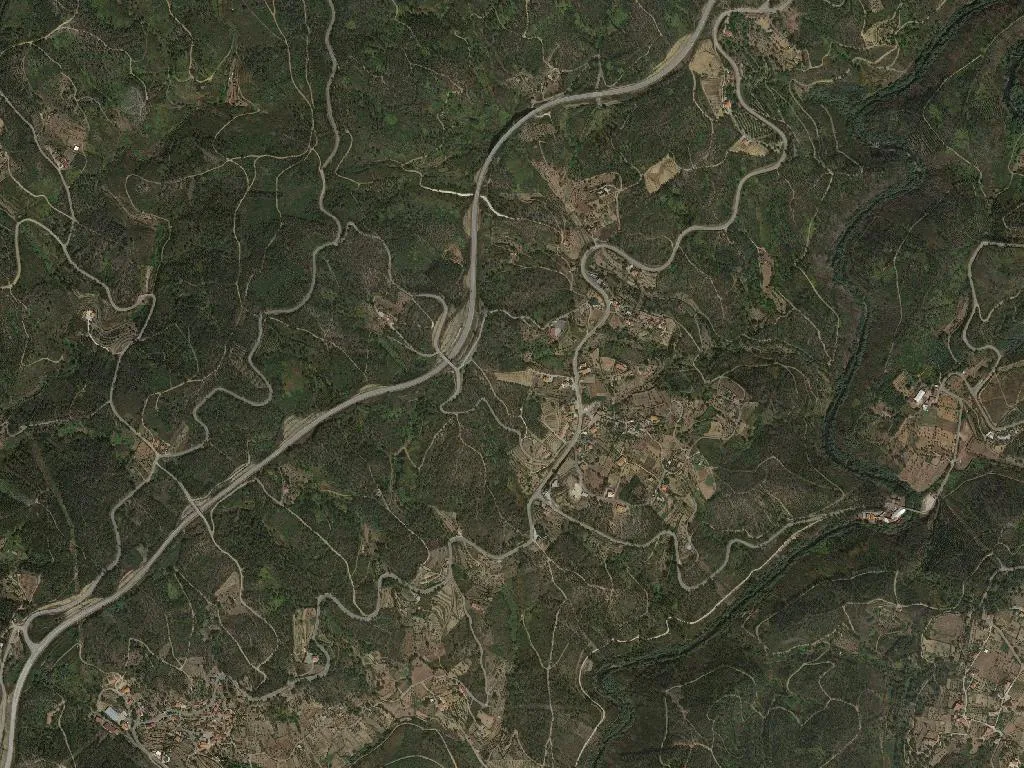
Full article about Troviscal
Roman bridge, moved church and a museum unlocked by phone—village secrets in Sertã.
Hide article Read full article
The bronze that still hears the band
A bronze head, verdigris creeping at the collar, keeps watch beside the primary-school yard. It belongs to José Oliveira Pinto de Sousa, who arrived in 1909 to teach sol-fa and stayed to drill an entire village orchestra. By 1911 he had formed the Banda Escolar; for the next thirty years Troviscal children practised after lessons and marched in summer festivals as far as Coimbra. The band fell silent the year he died, 1942, but the statue went up in 1972 while trumpeters who had once squealed here still lived.
A Roman bridge no sat-nav knows
Leave the N233 at the sign for Passadouro, walk 500 m along a tractor track and the Rio Sertã reveals three moss-lapped arches of grey granite. No brown heritage fingerpost, no lay-by, no coach parties. The structure carried the Roman road between Bobadela and Conímbriga; engineers of the A-road preferred the valley floor, and no one has strengthened the piers since the 1500s. Stand in the middle and you hear water echoing exactly as it did when legionaries crossed.
The church that moved house
Locals still point to a sun-bleached terrace 400 m south-west of the present square: that is where the original Igreja Matriz stood until 1803. When the village drifted towards the new road, the parish followed, dismantling and rebuilding stone by stone. Today’s São Bartolomeu is plain, white-washed, with a single nave and two later aisles tacked on in 1892. The three bells ring at 11.30 every Sunday; the abandoned forecourt of the first church is now a quiet olive grove.
A museum that unlocks only when you knock
The Museu Etnomúsica occupies the old teacher’s cottage behind the school. Officially it opens Saturday afternoons; in practice you telephone the Sertã town hall and a retired driver from Ortiga brings the key. Inside: original band scores annotated in violet ink, sepia photographs of children with tubas wider than their hips, and a 1923 cornet initialed JOPS. Admission is free; donations go towards new window latches.
What to eat and how to order it
O Celta, on the main road, is the place for kid goat from Oleiros (Thursday–Sunday, book ahead). Maranho — pork stomach stuffed with chouriço, ham and rice, simmered for three hours — is domestic territory: ask at Padaria Central for Dona Alice, who will make six for collection at nine the following morning. The cooperative sells DOP Beira Interior olive oil in five-litre flagons (€35) until 17.00; taste first, it bites the throat like green apple.
Beds, bytes and the onward road
Accommodation is limited: three attic rooms sharing a kitchen in Casa da Eira; a two-bedroom flat in the repurposed primary school; or an entire granite house on Cabeço do Frade. All have fibre-optic Wi-Fi and space to park. Reserve through the municipal website or pick up a handwritten list at Vila de Rei tourist office, 12 km away.
Troviscal lies on the Caminho Interior de Santiago. Pilgrims arrive along Rua da Igreja, refill bottles at the bandstand garden fountain, then swing left towards the N233. Café Central opens at 07.00; espresso is 65 c, a sheep’s-milk cheese sandwich €2. Finish both, shoulder your pack and the village is behind you in four minutes.