Full article about São João do Peso: Portugal’s parish of 132 souls
Where elders outnumber children four-to-one and elections fill a living room
Hide article Read full article
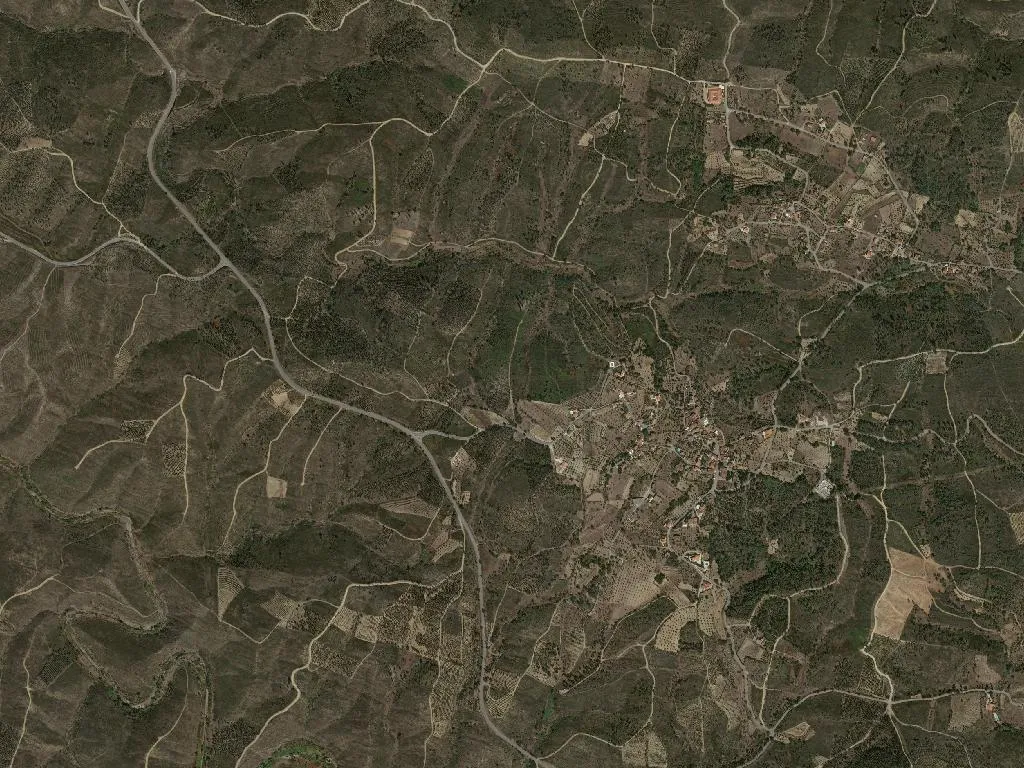
The coffee arrives in a thick, heat-proof glass, too hot to hold. At the counter of the tiny café two empty stools repeat themselves in the white-tiled wall. Outside, the EN348 slices through a dark-green ocean of pine, and the silence is absolute—not the pastoral hush of a postcard, but the loaded quiet of a place people left. São João do Peso now lists 132 souls. In summer its private swimming pools outnumber permanent residents.
The parish that votes in the living room
With only 120-odd electors, São João do Peso is the smallest civil parish on mainland Portugal obliged by law to hold its council election in full public assembly. Between 2011 and 2021 it shed 35% of its population, the steepest decline in the entire Médio Tejo region. Dona Encarnação Dias Lopes—"Dona São" to everyone—remembers when the head-count touched 600. Today 81 of the 132 residents are over 65; four are children.
Revivalist church on Templar ground
The parish church of São João Baptista rises in pale stone, its neo-Gothic revivalism oddly assertive amid the scatter of low farmhouses and olive yards. Classified as a building of public interest, the wide nave and slender bell-tower stand exactly where the Order of Christ—successors to the Templars—once administered these lands after King Afonso Henriques donated the region in 1165. No castle or Romanesque bridge remains; only the toponym "do Peso", hinting at a medieval weighing post or toll, anchors the memory of a vanished commandery.
Olive oil, kid and flavours that endure
São João do Peso does not flaunt its cooking; it conserves it. DOP olive oil from Beira Alta and Beira Baixa lubricates lamb stews and migas studded with crackling. The protected Galega olive ripens between pines on thin, stony soil. On the rare feast day—never fixed to a calendar—IGP kid from the Beira slopes turns slowly on a spit. In winter chestnut soup warms arthritic hands before it reaches the stomach. Walnut, honey and egg confections appear from neighbouring Tomar: doce de gila, formigos, fatias de Tomar.
Pine, ash and distant water
The landscape is a rolling carpet of maritime pine and cork oak over schist and sand, 300–400 m above sea level. Seasonal streams slip down to the Ocreza river, unseen yet present in every valley name. The 2017 fires scorched these slopes; charcoal trunks still punctuate the view, though fresh green undergrowth is reclaiming ground. There are no signed trails, no river beaches, no picnic parks. You walk red-earth tracks, smell resin heat in the sun, hear your own footfall crackle through pine needles.
Beside the national road an informal lay-by opens onto the Ocreza valley and the distant ridge of the Serra da Melriça. Wind carries the scent of dry earth and the faint drone of a distant tractor. That is all. And, for the moment, it is enough.