Full article about Benfeita: slate roofs echoing water-song
Ribeira de Pena threads this 400-soul schist hamlet beneath glowing midnight eaves
Hide article Read full article
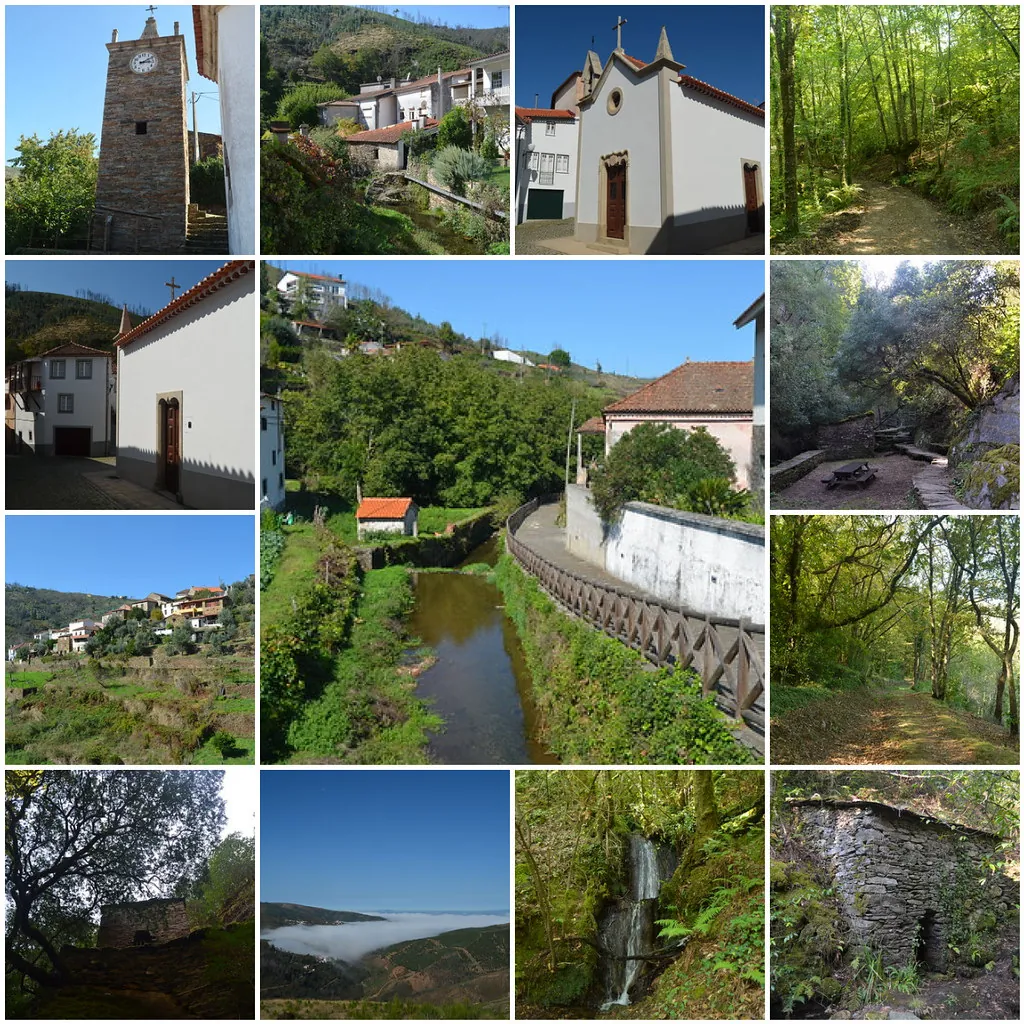
The first thing you hear is water. Not the thunder of a river in spate, but a low, constant conversation between moss-covered stones, a hush that insinuates itself into plaster, into lungs, into the valley’s own slow pulse. The Ribeira de Pena threads the northwest flank of the Serra do Açor; its voice is the metronome of a village that counts barely four hundred residents and sits just shy of five hundred metres above the sea. Dawn light lands on roofs of midnight slate, and by dusk the same stone glows like newly-minted copper.
You don’t stumble upon Benfeita; you decide to arrive. A single lane tunnels through chestnut and Portuguese oak, heather and gorse brushing the wing mirrors. Then the first houses appear—slabs of schist locked without visible mortar, window frames the colour of cornflowers or oxidised bronze. Every angle reveals a mason who once knew the weight and grain of each particular rock.
A name that was already a promise
Benefacta—“well made”. The medieval Latin referred less to craftsmanship than to the land itself, irrigated by the Pena and São Pedro streams, fertile enough to keep smallholders and shepherds rooted for centuries. The settlement grew around the Igreja Matriz de Nossa Senhora da Assunção, recorded in sixteenth-century ledgers, its gilded baroque altarpiece still catching stray shafts of light while August scorches the ridge outside. In the cobbled lanes you trip over echoes: ox-cart drivers who once hauled chestnuts to the coast, olive presses where a granite millstone revolved to the creak of a wooden beam, water mills whose wheels no longer turn but whose walls now shelter guests—twenty-two of the parish’s beds were conjured from near-ruin.
Half-way up the slope, locals call the whitewashed Ermida de São Pedro the “little convent”. Below it, a granite pack-horse bridge arches over the Pena, its parapet polished by centuries of floodwater and by hooves that once carried the mountain’s autumn crop to lowland markets.
1,620 tolls and the silence that follows
On 7 May Benfeita does something no other Portuguese village attempts. At the Fonte das Moscas the parish gathers and processes, candle-slow, to the Torre da Paz, a modest belfry built for one purpose only: to ring 1,620 strokes, one for every day of the Second World War. Bronze counts time into the valley until sound and echo are indistinguishable. Flowers are laid, names are spoken, then silence settles back—denser, as though the air has absorbed something it cannot name.
That same collective reflex explains ARBOR. After the 2017 fires that left the hills charcoal-smooth, two hundred residents and incomers formed three volunteer fire-defence teams. When flames returned in the summer of 2025 those crews saved houses that bureaucratic engines could not reach. The village—already part of the Schist Villages network—has since become a testing ground for permaculture plots, raw-earth building workshops and rewilding schemes that favour native oak and chestnut. Plant a holm oak here and you plant a wager on the future.
The forest that outlived empires
Three kilometres from the centre, the Mata da Margaraça feels like a misplaced fragment of pre-history—one of Portugal’s last fragments of primal deciduous forest. The PR1 AGN loop (seven kilometres, steady going) threads between the buttress roots of centuries-old chestnuts, over wooden bridges and out to a belvedere where the Alva valley dissolves into blue distance. Then comes Fraga da Pena: a thirty-metre curtain of water that collapses into a granite cauldron cold enough to make your heart skip. Bring Serra da Estrela DOP cheese, a loaf still warm from the oven and a Dão red with enough tannin to stand up to both; there are tables waiting under the alders.
Goat, chestnut and the taste of clay
Benfeita’s cooking is literally grounded. Chanfana—goat braised in red wine, bay and garlic—simmers for hours in black clay pots until the meat submits to the pressure of a fork. In winter, maize porridge with kale and butter beans is smoked-sausage territory; the fragrance of burning oak clings to your sweater. Feast-day tables revolve around kid goat kissed by embers and basted with peppery new olive oil. October brings magusto, the open-air chestnut roast: fruit wines and jeropiga circulate while shells split and steam. Dessert is a duel between chestnut cake, pumpkin-pine-nut sweet and heather-honey brittle—viscous, almost medicinal, the flavour of altitude itself. On every label—Serra da Estrela lamb, Beira Alta apples, mountain requeijão—you read the geography rather than a brand.
When the day folds in
Night subtracts the village to a line of amber rectangles and the mountains close like theatre curtains. Overhead the sky lowers a ceiling of stars so near you feel you could snag them on the eaves. The Pena keeps talking, indifferent to darkness. What lingers is not a sight but a precise thermal memory: the chill that slips down from the Serra do Açor at dusk, adheres to skin, and makes the first swallow of aguardente beside a converted olive-press hearth—heat in the throat, heat radiating from sternum—the single most necessary thing on earth.