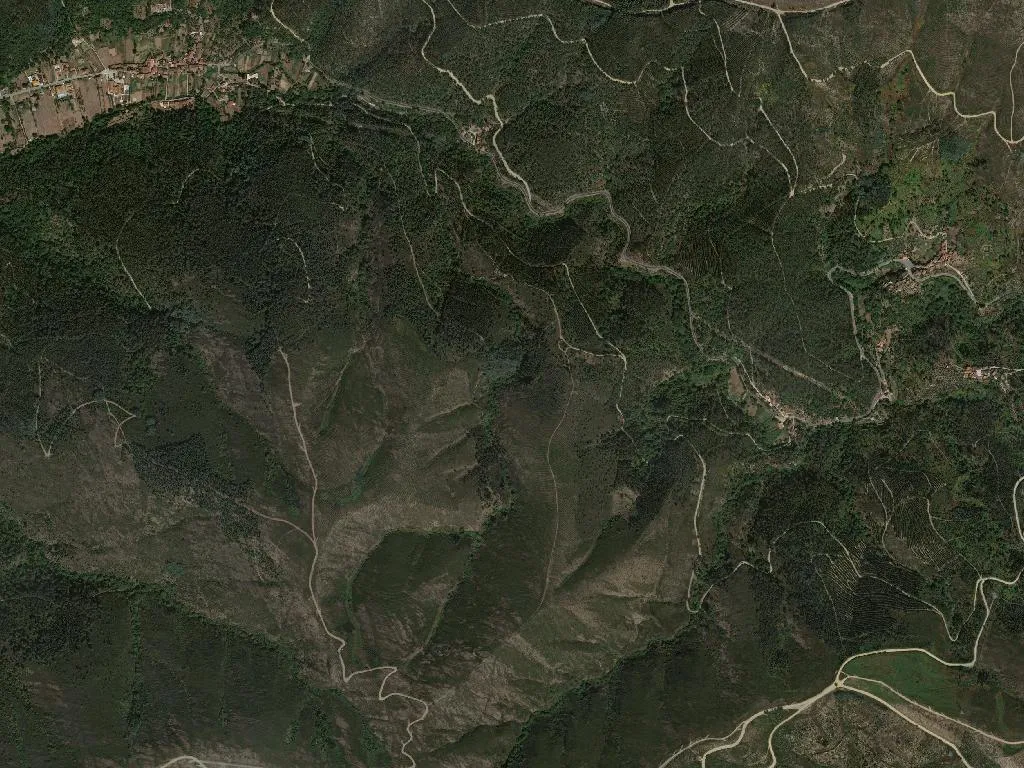
Full article about Smoke & Cheese in Celavisa, Arganil’s Forgotten Hamlet
Hear Irene’s latch echo, taste thistle-set Requeijão, sip grandfather-terraced wine at 440 m
Hide article Read full article
The smoke that remembers winter
Smoke from the curing room coils upward, clinging to chestnut beams that still carry the scent of last winter’s felling. Outside, the wind delivers the perfume of damp earth and burnt logs – a fragrance that mingles in Celavisa with the deeper, almost metallic tang of chouriço and morcela suspended above the cellar steps. The key to that cellar hangs on the same nail Zé Manel’s father used; no one has seen reason to move it. At 440 m above sea-level the air is thin enough for January mornings to silver the rooftops with frost, yet in August it merely freshens the skin, neither mountain-cold nor valley-warm – simply the sensation of breathing something older than you.
Arganil’s smallest parish counts 142 souls, every one addressed by diminutive. Corn for the chickens is still measured in alqueires; corn-bread is mixed in the same wooden trough that once fed nine siblings. Population density here is 9.3 people per km², a figure best understood acoustically: the click of Irene’s church-door latch at seven o’clock can be heard halfway to the river. Ten minutes on foot from Alfredo’s gate to César’s gate and you will meet no one; the lane itself seems surprised to see you.
Numbers on a slate, taste on a spoon
Eight children, sixty-four over-seventies. The 2021 census reads like an obituary for a future that never arrived. In granite kitchens where bread is proved on chestnut boards, the same wrists that rocked cradles now turn Requeijão da Serra da Estrela DOP, ladling thistle-set curds into linen so the whey drips onto the flagged floor. Amélia still heats milk on Wednesdays; the cheese waits in the unheated dining-room till a primrose rind forms – something no wine-fridge can counterfeit.
Above the Dao demarcation, but spiritually in the Serra da Estrela orbit, Celavisa keeps its own viticulture. Antonio’s grandfather cut the terraces with a mattock; no consultant has ever measured their aspect. Red wine rests in glass demijohns, served at lunch with a splash of cold water if the alcohol edges above fourteen degrees. Roast Borrego Serra da Estrela DOP, scored and basted in its own fat with potatoes that drink the juices, appears only when the family table is fully extended – an event that happens, statistically, 2.3 times a year.
Three front doors
Only three households accept paying guests, and two are returning children attempting to insure their parents’ houses against ruin. There are no frette linen packages, no QR-coded late check-in. Breakfast is a loaf collected at dawn from Arganil’s bakery – Celavisa lost its own two decades ago – plus quince jelly that Lurdes traps in September when the fruit yellows and wasps begin to circle. Sat-nav loses the thread after the 2018 storm that took out a landmark sign; the final kilometre is guess-work between mint-choked verges. Arrival feels less like discovery than like being quietly tolerated: the village has been disappointed before, yet cannot quite bring itself to refuse company.
Echoes in a lived-in emptiness
When the sun drops behind the ridge the schist walls ignite briefly, a colour somewhere between burnt honey and wet rust, and the church bell counts the hour. The note travels downhill, ricochets across the pine plot where Zé Manel felled this year’s firewood, then dissolves. No crowds, no queues, no piped music – only the hinge of Irene’s gate asking for oil, Bobi the dog rehearsing the same territorial aria, the stream turning a low page among oaks once coppiced for charcoal.
Celavisa does not invite you to linger; it simply omits to show you the exit, having forgotten where it is. When you leave you carry a yoghurt pot washed and filled with still-warm requeijão, a shirt that will smell of oak-smoke through three washes, and the advance nostalgia for a silence so complete you could hear your own pulse negotiating with the air.