Full article about União das freguesias de Côja e Barril de Alva
From Baroque gilt to barrel-born legend, the reunited parishes pulse either side of the Alva
Hide article Read full article
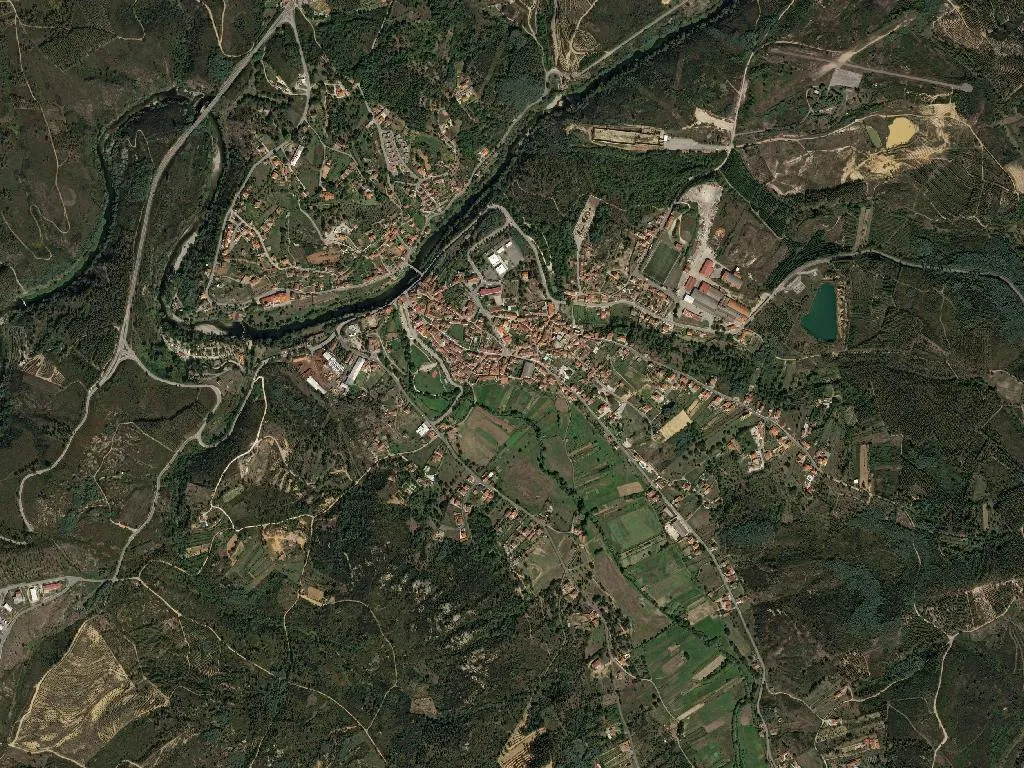
The Alva speaks first. Before the parish council sign, before the café opens, before any human voice, the river is already negotiating polished granite boulders, unzipping July light into turquoise shreds. Stand on Côja’s river-beach at 8 a.m.—Blue Flag snapping above the willow shade—and you can feel the water’s chill breathe up through the sand. Upstream, at Barril de Alva’s Urtigal pontoon, kayaks rest like bright needles on green silk, waiting for someone to disturb the reflection of the sky.
Two Villages, One River, One Story
Administrative maps caught up with geography in 2013, re-uniting the parishes after an 89-year divorce, yet the Alva had never recognised the boundary. Côja—its name a Latin shrug at the gentle hill that tilts into the current—has always looked across to Barril de Alva, a settlement born from a flood. Legend pins it to a 16th-century miller who salvaged drifting barrels after a winter spate and sold them on; the nickname “Barrel Miller” stuck to the place as well as the man. By 1527 the royal census already listed ten hearths here, and in 1938 the little chapel of São Simão was promoted to full parish church. The merger simply acknowledged what every swimmer and trout already knew: the two banks inhale together.
Stone, Carving and Memory
Côja’s main church arrives in late-Baroque dress: gilt carving erupts across the high altar while 18th-century azulejos panel the nave like blue-and-white wallpaper for saints. Light drops from tall windows, firing the gold into sudden currency. Across the water, São Simão keeps humbler time—rebuilt in 1938 on medieval footprints, its stone still warm from earlier centuries. Between them, the 18th-century Ponte de Côja throws a single granite arch over the water; ox-carts once clattered here, now it’s trail-runners pausing for drone shots. In the hamlets of Vale de Agia, Casal Cimeiro and Casal do Meio, schist walls and tiny stone granaries survive without an architect’s signature—just local shale, lime wash and an instinct for turning the gable against the north wind.
Festivals, Fairs and Craft Ale
Pisão—43 permanent residents—hosts several thousand on 16 July for Nossa Senhora do Carmo. The procession winds down from the hilltop chapel with brass band and pyrotechnics; night turns the threshing floor into a dance stage where lamb from the Serra da Estrela sizzles over vine-prunings and concertinas duel with WhatsApp ringtones. Two weeks later Côja’s FAVA fair (Craft, Collectables & Antiques) colonises every alley with cracked walnut commodes, clay crocks, wicker hampers and vinyl that still smells of attic. Autumn brings the Alva Beer Fest to Barril’s 1952 community hall—Portuguese micro-breweries pour saisons scented with rosemary-rock while a generator-powered band reminds everyone what bass feels like in the sternum.
Goat, Curd and Chestnut Pudding
Chanfana arrives in a black clay pot: kid marinated overnight in red Dão wine, bay and sweet paprika, then slow-collapsed until it surrenders at the touch of a fork. Smoked Alva trout follows, anointed with olive oil and served on toasted maize bread. Wild-boar stew borrows mountain thyme and potatoes that drink the dark gravy. Corn broa mops up Serra da Estrela DOP curd, lactic and sharp as green apples. Finish with chestnut pudding, the flavour of October forests pressed into custard. Locals wash it down with Dão reds—Touriga Nacional and Alfrocheiro poured from a misted carafe—while grill-smoke drifts over the terrace.
Trails, Waterfalls and Raptors
South of the river the Serra do Açor rises in schist terraces and ancient oak. The Margaraça trail starts behind Côja’s last house, wriggling seven kilometres through evergreen oak and strawberry-tree forest where the only soundtrack is the yelp of a circling red kite. Five kilometres farther, the Fraga da Pena waterfall drops seventy metres into a fern-lined cauldron cold enough to make your bones sing. Mountain-bike and trail-running circuits stitch the two villages together, crossing meadows where cattle bells clang like slow metronomes. From the natural balconies above the valley the Alva scribbles bright calligraphy across the rock, silver at noon, gun-metal by dusk.
Evening slants in, gilding the water. Inside Barril’s Casa do Povo the village band—founded 1894—rehearses with tubas and clarinets older than the players. The sound crosses the river without need of streaming, mingling with wood-smoke and the Alva’s permanent undertone. You can’t Shazam it; you have to be here, where the current keeps polishing stories the way it polishes stone, and where barrels no longer drift downstream but songs still do.