Full article about Pomares: Where Fumeiro Smoke Writes the Day
Pomares, Arganil, hides Serra da Estrela cheese cellars, barrel-drawn Dão wines and silence broken only by chestnut bells.
Hide article Read full article
The smoke that never hurries
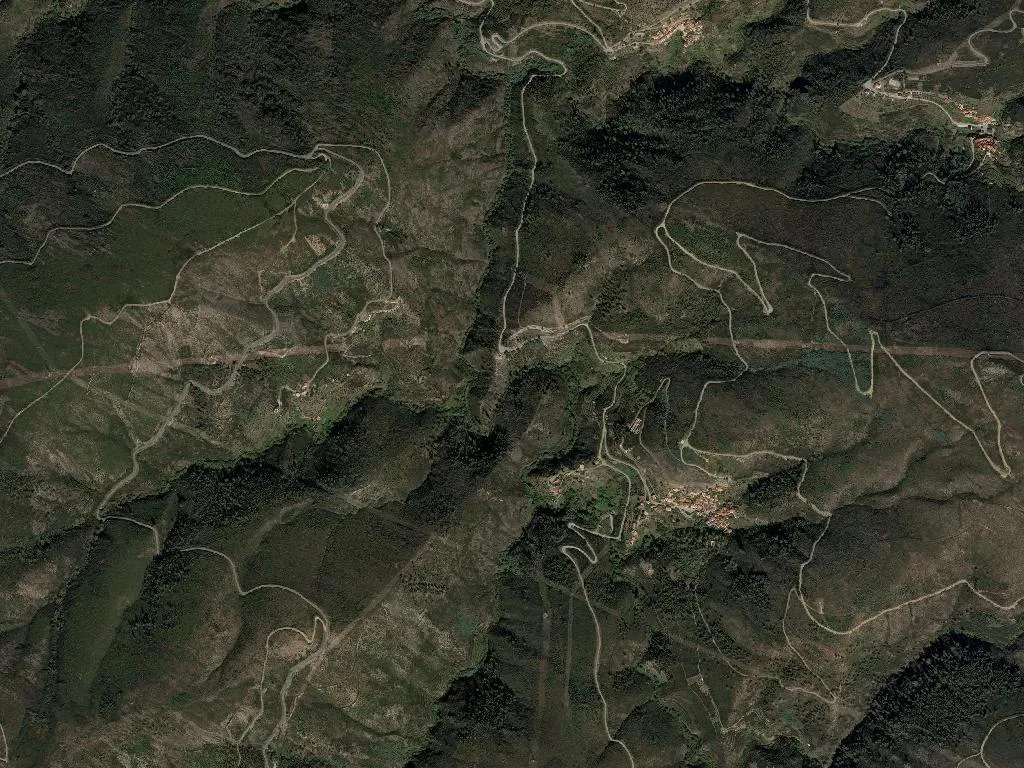
The fumeiro exhales its thread of smoke as though time were a local currency it can spend freely. Sometimes the plume uncoils; more often it simply clings to the soot-blackened beams like a memory that refuses to leave. Pomares perches at 400.5 m, halfway between the Dão and Mondego basins, where wheels of Serra da Estrela DOP cheese breathe on rough-sawn shelves and the wind outside appears to know every inhabitant by name. Officially there are 431 residents, but headcounts mislead: step into the only café when the farming day ends and the room swells like a held chord.
Forty-two children, 188 pensioners. Between those numbers unfolds the rest of life. The hands that press curds into muslin today performed the same motion thirty years ago; the only new addition is the EU stamp on the label, a bureaucratic afterthought that merely announced to outsiders what had never been in doubt. In the kitchen a Beira Alta apple waits for its slow metamorphosis into compote, and mountain-wood fires the bread oven because no one here has seen a reason to change the fuel of centuries.
Where the vineyard meets the mountain
We are on the north-eastern lip of the Dão wine region, close enough to the granite massif of Serra do Açor for the Atlantic to send cool breezes down the valleys. Vines grip the terraces like latecomers to a dinner table—short of space, yet undeniably at home. There are no tasting flights, no gift-wrapped corkscrews. Cellar doors stand ajar, bottles may lack back labels, and wine is drawn straight from the barrel with a length of plastic tubing. If you like it, you buy it. If not, the vigneron will find another customer by sunset.
Population density: fewer than fourteen souls per square kilometre. Shout across the chestnut woods and no one will answer—unless silence itself replies, amplifying the tin bell of a wandering ewe into cathedral-plate resonance. Three thousand hectares fold forest, scrub pasture and pocket-sized vegetable plots into the folds of the hills. Every house keeps its own allotment; the larder is the true village centre.
Eight front doors left ajar
There are eight places to sleep. None is a hotel. They are simply homes whose owners have stepped next-door for the evening, leaving the kettle on the hob and the key under a hand-woven mat. Breakfast smells of bread that left the wood-fired oven thirty minutes earlier, and the curd cheese is still warm when it reaches the table. Check-in consists of Dona Amélia pointing to her neighbour’s porch: “If you need anything, knock there.”
Come to walk without a marked trail, to eat wherever a table has been laid, to understand that five-star gastronomy can be a saucepan of tomato sauce that has barely bubbled since dawn. By mid-afternoon the sun skims the whitewash and the olive branch sketches a shadow atlas of undiscovered territory across the wall. On the stone slab the cheese sits patient, demanding only one thing: take me, but slowly—maturity is not a race.