Full article about Sarzedo’s slate-built alleys breathe Alva Valley air
Granite doorways, handkerchief terraces, Dão-stone reds, Serra cheese smoke
Hide article Read full article
The stone that builds the village
Slate greets you at the first bend of the lane, split into uneven plates and stacked shoulder-high to make the walls that hold up the houses. Nothing is veneered; every slab is structural, mortared only by gravity and habit. In Sarzedo, 214 m above sea level, geology climbs above ground, framing granite doorways and propping the narrow passageways where winter sun arrives in low, theatrical blades. The air smells of moss and of the Alva river that slips unseen through the valley floor, its cool breath lingering even when the cobbles are warm.
The parish covers barely eleven square kilometres where the Beira Alta hills begin to shrug off the valley. Vineyards and olives are parcelled into handkerchief terraces, each buttressed by the same schist that heats through the day and releases it after dusk. There are no tasting rooms, no weekend “harvest experiences”; instead, rows of garrafões stand in private cellars and knowledge of when to pick, how to tread and how long to leave the must is passed around neighbour to neighbour like a borrowed tool.
Where the Dão meets slate
Wine geography usually stops at the Dão’s demarcated edge forty kilometres east, yet the granite–schist seam that gives the region its nervy reds threads westward through Arganil. Here the grape is only one of three crops that share the terraces. Between the rows, olive trees older than the Republic keep producing oil registered as Azeite de Beira Baixa DOP, and small herds of Serra da Estrela sheep supply the milk that becomes Queijo DOP in kitchens whose ceilings are still blackened from smoking the rounds over heather.
The cooking is inseparable from the larder. Requeijão, the cloud-light fresh cheese, is spread hot over rye broa at breakfast; lunch might be roast Borrego Serra da Estrela DOP scented with garden rosemary, finished with a compote of Beira Alta apples whose tartness cuts the lamb fat. You will not find a tasting menu; you eat what the day produces, and the day produces only what the plot behind the house allows.
The mathematics of staying
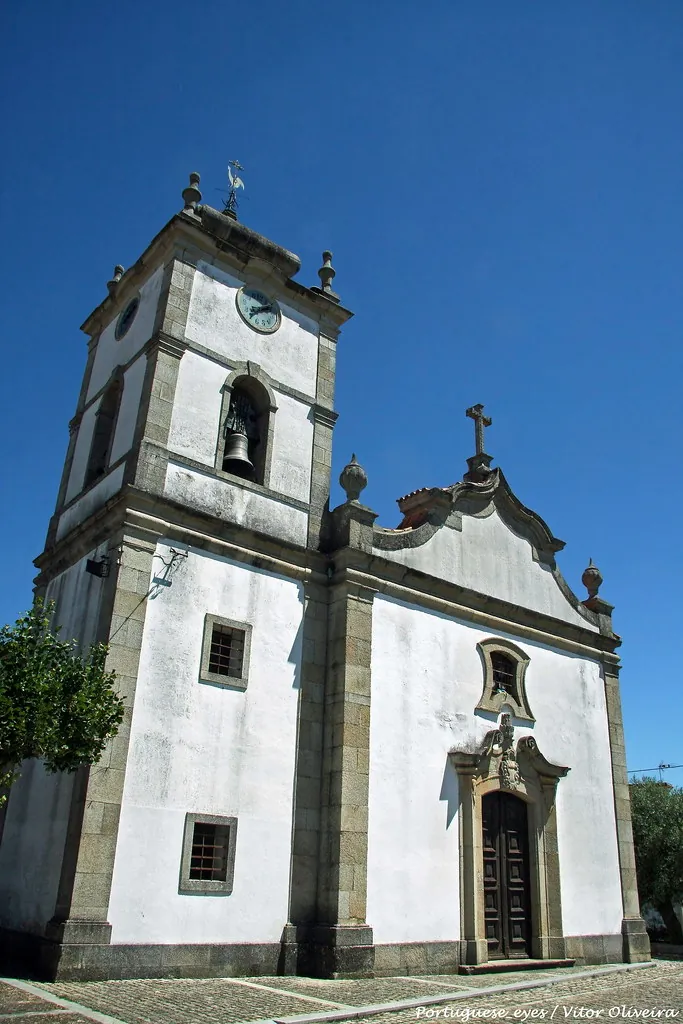
Officially, 636 people live here; two hundred of them are over sixty-five and only seventy-one are under fifteen. Yet the place refuses the narrative of collapse. Children ride the morning bus to the primary school in Arganil seven kilometres away, returning in time to kick footballs against the church wall before the bells strike six. Retired farmers occupy the granite benches facing the 17th-century chapel, their conversation punctuated by the clink of pruning shears going back into wicker baskets. Some houses stand shuttered from Monday to Friday, waiting for owners who commute to Coimbra’s university or return from building sites in France, but smoke still rises from enough chimneys to keep the rhythm intact.
There is only one formal place to stay—Casa da Cerca, a slate-and-glass conversion on the ridge—yet visitors willing to knock are sometimes offered a room above a stable or a former olive press. People come to walk the old cobbled paths that link Sarzedo to the even smaller hamlet of Piódão across the valley, to listen for kingfishers along the Alva without competition from jet-skis, to discover that luxury can be a table set with food whose provenance is the length of a conversation.
What lingers
Late afternoon, when the sun lies almost parallel to the terraces, the stone ignites: copper, rust, burnt umber. Olive groves turn the colour of bottle glass; the still-leafless vines throw silver shadows across the paths. Your footfall echoes back from the walls like a second pair of steps. Somewhere downhill a wood-pellet stove coughs into life, releasing a thin ribbon of urgency into the cooling air—the only haste this village knows: to get the fire lit before night closes in.