Full article about Dawn woodsmoke and granite hush in Secarias
Serra do Açor mist, river-cleft silence and slow-roast DOP lamb in a 395-soul Arganil village
Hide article Read full article
The scent of woodsmoke at dawn
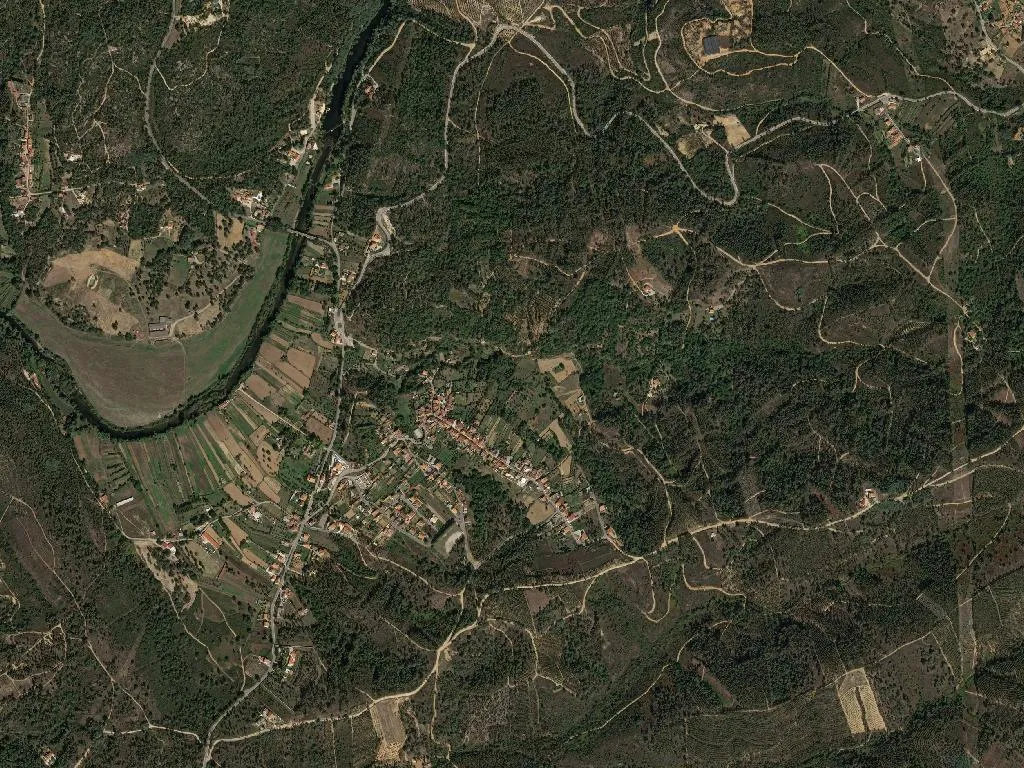
By 6 a.m. the air in Secarias is already seasoned. Woodsmoke drifts uphill before the sun has cleared the ridge, mixing with the resin of chestnut and oak that cloak the lower slopes of the Serra do Açor. At 174 m above sea-level the village is low enough for morning mist to linger in the river cleft, silencing even the Rio Alva that slips past slate roofs and forgotten watermills. Its 395 residents no longer register the water’s murmur; visitors hear nothing else.
Granite, lime and the hush of departure
The parish’s only listed building – a modest 17th-century church granted public-interest status in 1982 – squats at the village centre like a stone thermometer. Thick granite walls exhale cool air in August and hoard warmth in January. Outside, four octogenarians balance on walking sticks, conducting a conversation so soft it could be prayer. Census data spells out the arithmetic: 106 inhabitants over 65, just 39 under 14. Between school runs the streets return to themselves – footfall, sparrow, distant axe on wood. Come outside July and August and your own pulse becomes audible.
Kitchens that keep the PDOs
There are no restaurant signs; hospitality begins at the front door. In wood-fired ovens locals slow-roast Serra da Estrela lamb (DOP) with nothing more than garlic, paprika and time. Larders cool-ferment the eponymous sheep’s-milk cheese until it weeps under its own rind, while requeijão waits to be spooned onto hot rye cornbread. Beira Alta apples (IGP) are stacked in October and still soundly crisp by April. Recipes are muscle-memory: a palmful of rock salt, a wineglass of olive oil, conversation measured in wood added to the fire. Accept a dinner invitation; refusal is the only regret on offer.
Dão in miniature
Secarias lies at the northern lip of the Dão wine region, though the vineyards are shy – a hectare here, a terraced row there. Decomposed granite forces the roots deep, producing reds of violet perfume and whites that bite like green apples. What little is made is usually drunk within the parish; ask for “o vinho da casa” and you’ll be poured something unlabeled, unforgettable, and almost certainly the work of the host’s second cousin.
Walking where the signal dies
Footpaths fan out across 694 ha of schist-walled lanes, crossing the Alva and its tributaries that roar in April and shrink to silver threads by August. Waymarks are redundant: follow the wall, cross the wooden bridge, climb until the valley opens into chestnut coppice. Mobile reception quits within minutes; blackbirds and the occasional distant dog provide the soundtrack. Carry water, allow two hours for the 7 km loop to the abandoned mill at Póvoa de Alva, and remember that the only pressing deadline is the angle of the sun on granite.
Five guest rooms – two in converted village houses, three on outlying smallholdings – offer stone floors, down duvets and the guarantee of waking to woodsmoke and river light. Secarias does not do highlights; it does weight underfoot, flavour that lingers, and the slanted 6 p.m. light that turns every slate roof a fleeting bronze. Arrive slowly, leave slower.