Full article about Ançã: Rice Fields, Limestone Quarries & Smoky Kitchens
Ançã village, Cantanhede: watch rice paddies reflect vast skies, taste DOP Carolino rice, trace creamy limestone that built Jerónimos & Belém.
Hide article Read full article
Rice steam and woodsmoke
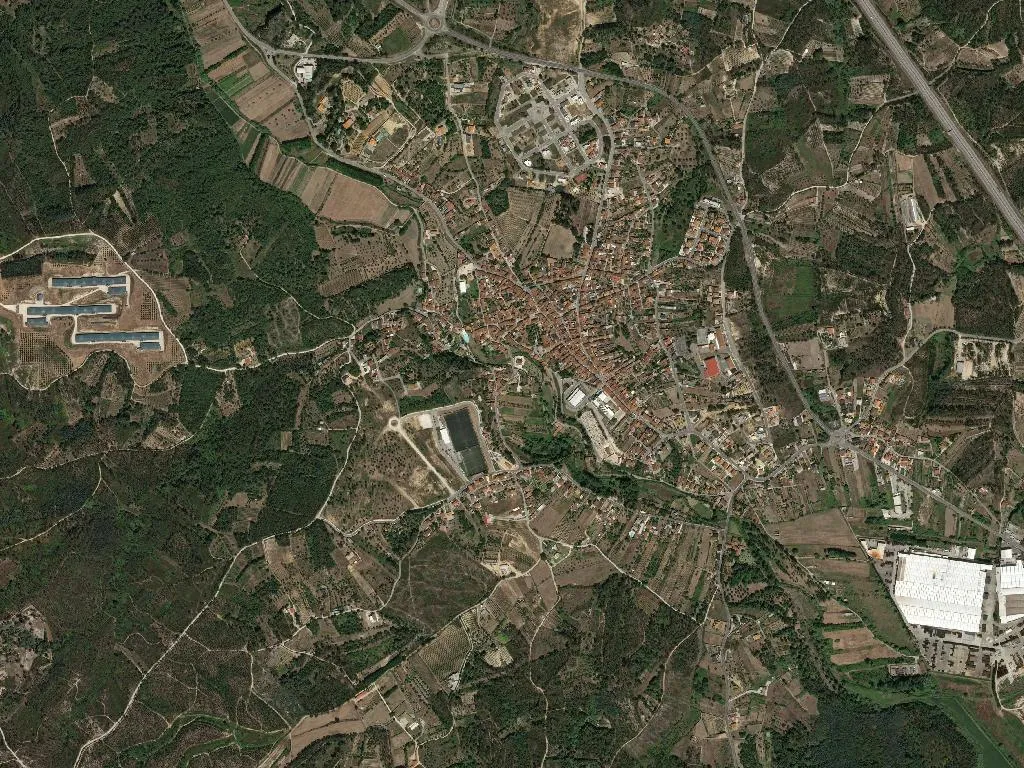
At dusk the smell of simmering Arroz Carolino drifts through Ançã, mingling with curls of eucalyptus smoke from kitchen chimneys. The rice fields – paddies in all but name – lie just below the village at 27 m above sea-level, where the Mondego’s old flood plain spreads like pale parchment. Water glides along clay levées, reflecting a sky that seems twice its normal size; no hills interrupt the view until the faint blue ripple of the Bussaco ridge twenty kilometres north-east.
The stone that built the kingdom
Ançã’s creamy limestone has travelled. Cartloads of it were barged down-river to Coimbra in the 1500s, then shipped south to Lisbon for the Jerónimos cloisters and the Belém tower. Fine-grained and soft enough for under-cutting, it became the face of Manueline portals, the grave-slabs of crusading knights and the scrolling capitals of the University’s 18th-century library. Abandoned quarries pock the parish like flooded amphitheatres, their water the improbable colour of oxidised copper; disused saws still lie where masons left them when cheaper stone from the Algarve undercut the market. Walk the lanes and every third house is a palimpsest: re-cut blocks from a dissolved convent, a coat-of-arms re-set upside-down, a windowsill worn silky by centuries of elbows.
Two buildings enjoy national protection. The parish church, rebuilt after 1755, wears its seismic scars in mismatched buttresses; inside, gilded woodwork crowds a ceiling painted with trompe-l’oeil rope moulding. A five-minute shuffle away, the Paço de Ançã – once the seat of a minor noble line – is now a tidy pile of cracked stucco and rust-red pantiles, its chapel bell still tolled by hand on saints’ days.
What the kitchen remembers
Carolino rice from the Baixo Mondego carries DOP status, but in village kitchens the label is beside the point. The grain’s perfume is released only after 18 minutes at a steady boil, the exact moment grandmothers learn to recognise by ear. Lamprey season – January to April – brings a glossy, mahogany-coloured arroz de lampreia, the rice absorbing the blood and red wine until each grain is edged in iron. The rest of the year the pot is filled with Carne Marinhoa, a native long-horned breed whose haunches are slow-roasted overnight in wood-fired bread ovens, then pulled into fibres that collapse into the rice’s open pores.
Vineyards nibble at the higher ground, but rice dictates the calendar. In April the fields are flooded mirrors; by June a luminous green carpet sways under egrets; October sees combine harvesters wade like bright yellow amphibians, off-loading paddy into 1950s Bedford lorries still running on leaded petrol.
No check-in desk, no souvenir shop
Ançã offers exactly three places to stay: a first-floor flat above the former chemist, and two detached houses whose gardens end in irrigation ditches. There is no hotel bar, no guided tasting, no cycling hire. The daily soundtrack is the parish council’s ancient diesel generator coughing to life at 7 a.m., the slap of dominoes on the café table after Mass, and nightingales arguing with the church bell for sonic dominance.
With 135 inhabitants per square kilometre – less than a tenth of the Lisbon average – space is measured in silence. Teenagers practise wheelies on the main road because there are no traffic lights to disobey; their grandparents sit on granite stoops shelling beans, ready to tell strangers how the 1962 flood drowned the lower street, or which quarry supplied the stone for Mussolini’s 1934 Portuguese World Exhibition pavilion in Rio. When the sky finally drains of colour and the temperature drops, woodsmoke rises straight up in the still air, carrying the smell of dinner and the certainty that tomorrow the rice will need water again.