Full article about Cordinhã’s Smoke-Scented Twilight
Bairrada rice, loquat-leaf smoke and 974 souls in Cantanhede’s hidden hamlet
Hide article Read full article
Smoke writes on the sky
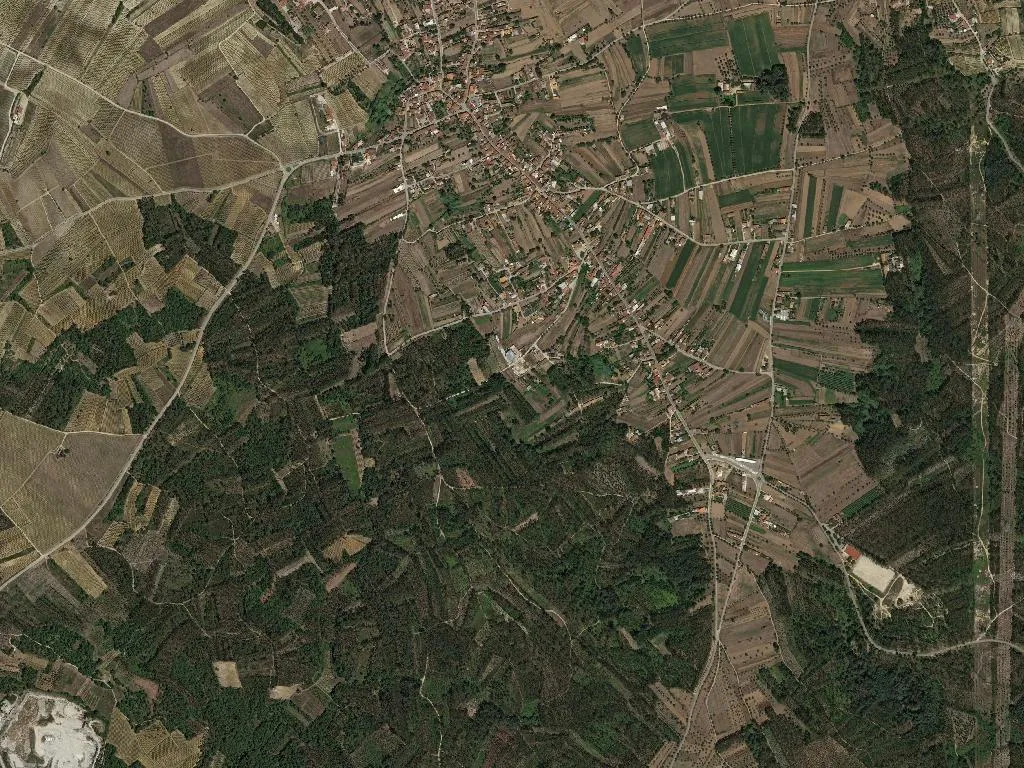
At dusk the chimney breath turns visible, scoring pale lines across the Bairrada ceiling. In Cordinhã the smell is more than woodsmoke: it is loquat-leaf kindling, chouriço dangling in the fireplace, soil still holding yesterday’s rain. Streets have no plaques—only shorthand: “turn at the school”, “after the dip”, “up past the graves”. The limestone cottages sit low, but inside, clay ovens fire and alheira sausages sputter fat onto hand-thrown plates.
Rice with a pulse
Outsiders call it “Bairrada rice”, yet locals know the grain by its first name: carolino, grown on the Mondego floodplain, toasted by grandmothers before it meets the eel stew. On São Martinho’s day, when the new wine is tapped, duck blood thickens the pot; the colour ends up almost black, anchored only by onion, paprika and a splash of vinegar carried in a washed-out 7 Up bottle. António’s tavern—unmarked, of course—serves it on a flat dish; anything deeper, he mutters, “looks like a massacre”.
Nine-hundred-and-something
The census reads 974, but the arithmetic drifts. August subtracts grandchildren bound for France and Canada; January adds them back for requiem Mass, pig-killing and a nativity that still smells of pine needles and wax. Three classes share one corridor—Years 1-2 by the window, 3-4 beside the broom cupboard—while dinner ladies ladle quince jam over limp sliced bread. When the Cantanhede bus sighs away at 17:45, the square drops into a silence normally reserved for Sundays, even if it is only Tuesday.
Muscle-memory lanes
The municipal road 2553 bisects the parish, yet feet ignore it. To reach Póvoa spring you follow a sheep track where quartz stones screech against bicycle cranks. Late May splashes scarlet: wild carnations between wheat and flax, borage drying on farmhouse racks like salted silver fish. The pine belt arrived in the 1970s to nail the sand dunes; now children raid it for kindling to ignite the harvest bonfire. Vines survive only on the scarps left after the 2005 blaze—tight rows of baga making rough red for the table, not the label.
When the church bell strikes six, the village answers on cue: Jaime’s dog barks twice, Celestino’s gate squeals its broken-hinge solo, Zé Mário’s tractor growls up Cotia hill in third. Then, abrupt hush—only the Atlantic wind riding twenty kilometres from Mira, already tasting of salt and iodine, as though Bairrada itself exhales before sleep.