Full article about Covões e Camarneira: Where Baga Vines Bowl into the Atlantic
54 m clay saucers sculpt Cantanhede’s hidden fizz country between Covões and Camarneira
Hide article Read full article
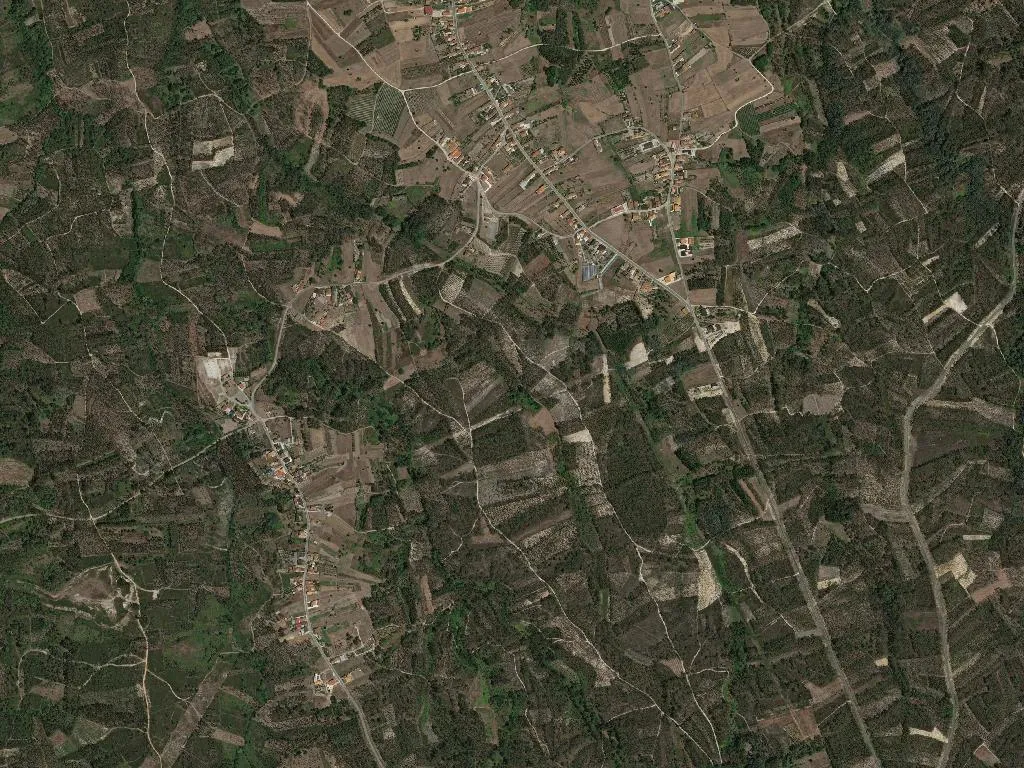
The late-summer sun slants across the Baga vines, firing the twisted trunks to copper while the land cools fast. Along the Sunset Trail, runners kick up a pale dust that hangs like chalk in the air, then settles on the still-green bunches. Between the hamlets of Covões and Camarneira—merged into a single parish in 2013—clay-and-sand soils drink in the light, turning every leaf the colour of burnt honey. No signposts announce the change of scene; the landscape simply unrolls, row after disciplined row, until the Atlantic cloud-base buttons it shut at the horizon.
Hollows, vines and a 54-metre high plateau
“Covões” takes its name from the shallow dips that pucker the farmland—miniature valleys where rainwater lingers just long enough to feed the roots. At barely 54 m above sea-level the terrain looks flat until you walk it: every 200 m the ground sighs into another gentle bowl, each one a private amphitheatre of vines. Bairrada’s denomination, one of Portugal’s first to protect sparkling wine as well as red, prizes these cool clay saucers for the tension they give to Baga, the stubborn local grape that can ripen even when the fog rolls in from the Aveiro lagoon.
There are no stately convents or baroque staircases to slow your gaze. The parish church, built in 1835 after the last earthquake had its say, stands plain and white under a red-tiled roof; beside it, three fieldstone chapels do their duty on saints’ days. Heritage here is measured by what happens, not what is displayed. January pruning, September picking, the slow drift of smoke from hillside chimneys—rituals repeated so often they have become the architecture.
A week of small-stage applause
For ten days around late May the parish cultural week turns front yards and cafés into pop-up venues. A touring fado trio commandeers the village hall, primary-school desks become craft stalls, and trestle tables groan with suckling pig whose crackling shatters audibly under a bay-scented knife. No procession lasts longer than the priest’s patience; no fireworks rival the harvest tractors backfiring at dusk. The closest thing to grandeur is the Sunset Trail race, launched by local development association PRODESCO in 2018. Runners climb through 18 km of vineyards and eucalyptus groves, sharing tractor-width lanes with pick-up trucks stacked with yellow lugs of grapes. The finish line is a makeshift tape between two traffic cones; the prize is a bottle of traditional-method espumante and a slice of crackling handed over before the sweat has dried.
Rice that keeps its nerve, beef that tastes of sea-salt
Two protected names dominate the table. Arroz Carolino do Baixo Mondego IGP, grown on the Mondego’s alluvial flats since the 1920s, keeps its kernel firm even after three ladles of rich stock. Carne Marinhoa DOP comes from the mahogany-colled cattle that graze the coastal meadows between Cantanhede and Mealhada; the meat is lightly marbled, tasting of salt meadows and long pasture. Together they form the base of caldeirada de arroz—an autumn casserole baked in a Bairrada red until the rice edges caramelise. Between mouthfuls, a classic-method sparkling Bairrada scrubs the palate with a fine, persistent mousse.
Room to breathe
Spread across 3,685 ha for just 2,754 residents, the parish averages 74 people per square kilometre—less than a tenth of the national mean. By noon the lanes are empty; by late afternoon they briefly clatter with John Deere and New Holland returning from the fields. Fifteen minutes east is Cantanhede’s small supermarket; twenty-five minutes west brings you to Aveiro’s Art-Nouveau centre or the Atlantic rollers at Mira. Accommodation is limited to one guesthouse in a converted quinta, so nights are soundtracked by barn owls rather than minibuses. When the church bell strikes six, three slow bronze notes travel unhindered across the vines, reminding whoever is listening that the day’s last act of light is about to begin.