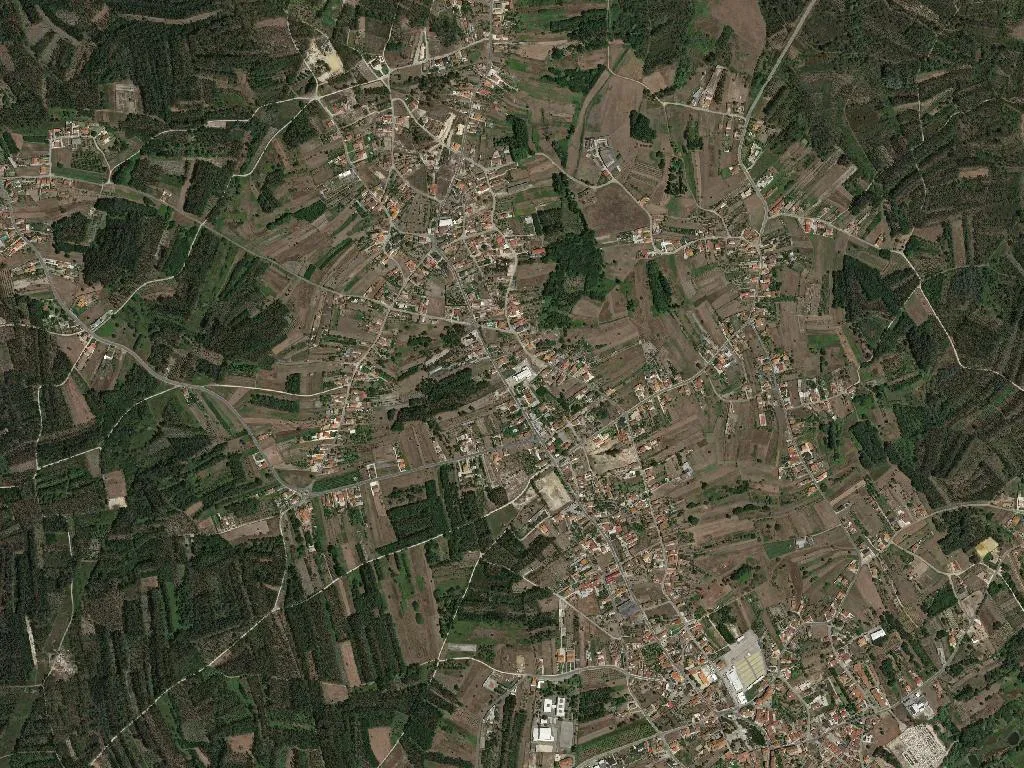
Full article about Febres: Goldsmith Bells & Baga Vines
Febres, Cantanhede hides itinerant goldsmith history, hand-beaten jewellery workshops, Bairrada vineyards and rice paddies laced by Bairrada hill streams.
Hide article Read full article
The bell and the gold
At noon the single bell of Igreja da Conceição slips its note over the low terracotta roofs of Febres. The sound travels slowly, threading past workshops where jewellers still burnish 19-carat sheet by hand. From somewhere beyond the last house drift the resinous smoke of vine-prunings and the damp-earth scent of the vineyards that roll away to every horizon. Water has always written the script here: rivulets born in the Bairrada hills braid the parish, feeding rice paddies before slipping silently into the Aveiro lagoon.
The green-trunk men
Febres was carved from the neighbouring parish of Covões in 1791, but its character was minted later, in the 19th century, when dozens of village goldsmiths shouldered green-pigment trunks—hence malas-verdes—and set off on foot to sell commission pieces at fairs from Braga to Beja. They returned months later with coins, scandalous gossip and orders for wedding bands that would keep the forges busy all winter. The itinerant trade is gone, yet the clink of miniature anvils still leaks from back-room ateliers. A stylised bronze suitcase in the main square commemorates those travelling craftsmen who carried Febres’ reputation far beyond the limestone ridges of Cantanhede.
Vine, paddy and eucalyptus
The land billows between 50 m and 150 m, a patchwork dictated by drainage. On the drier slopes, cordons of Baga and Touriga Nacional stand in chalk-clay soils that built Bairrada’s sparkling-wine fame; on the valley floor, knee-high Arroz Carolano IGP riots in flooded paddies. Eucalyptus and maritime pine plantations interrupt the geometry, while creeks—Ribeira de Febres, Ribeira de Covões—glint like polished pewter. At Coudiçais a shallow lagoon cups rainwater; walk the reed-fringe at dusk and you’ll clock purple herons, marsh harriers and the low artillery of moorhens.
Crisp skin, clay pot, bubbles
The local kitchen speaks Beira dialect. Leitão arrives with glass-crackling skin and a carnation of orange slices; chanfana is kid goat slow-collapsed in red wine and black clay. Chicken is grilled over vine-cuttings, the smoke sweetening the flesh. Everything is rinsed with Bairrada espumante—first fermented here in 1890—served in straight water glasses, the mousse tight, the finish tasting of wet stone. No foam or foraged garnish intrudes; the region’s DOP Marinhoa beef and IGP rice are already the stars.
Festas that pace the year
Religious calendars still organise social life. Our Lady of Febres (second Sunday in September) draws processions and a makeshift fairground; Our Lady of the Afflicted (first Sunday) is candlelit and penitential. June’s São João march turns Rua Dr. Sousa Gomes into a catwalk of matching rayon costumes, while the weekly Sunday market reclaims the square: pyramids of tomatoes, wheels of amarelo da Beira, just-netted eels from the lagoon. Bargaining is soft-voiced; gossip is not.
Beside the 17th-century Capela da Fontinha, the communal wash-house still spills water over its worn granite lip. No one scrubs shirts there now, but the stream keeps its contract with the village, just as the bell keeps its daily tryst with midday. In Febres, time is measured by water that refuses to hurry and by gold that still travels, if only as far as the next generation’s workbench.