Full article about Murtede: Myrtle-Scented Granite Haven in Bairrada
Roman-named village where Atlantic fog lifts over Baga vines and slow-ageing Carne Marinhoa
Hide article Read full article
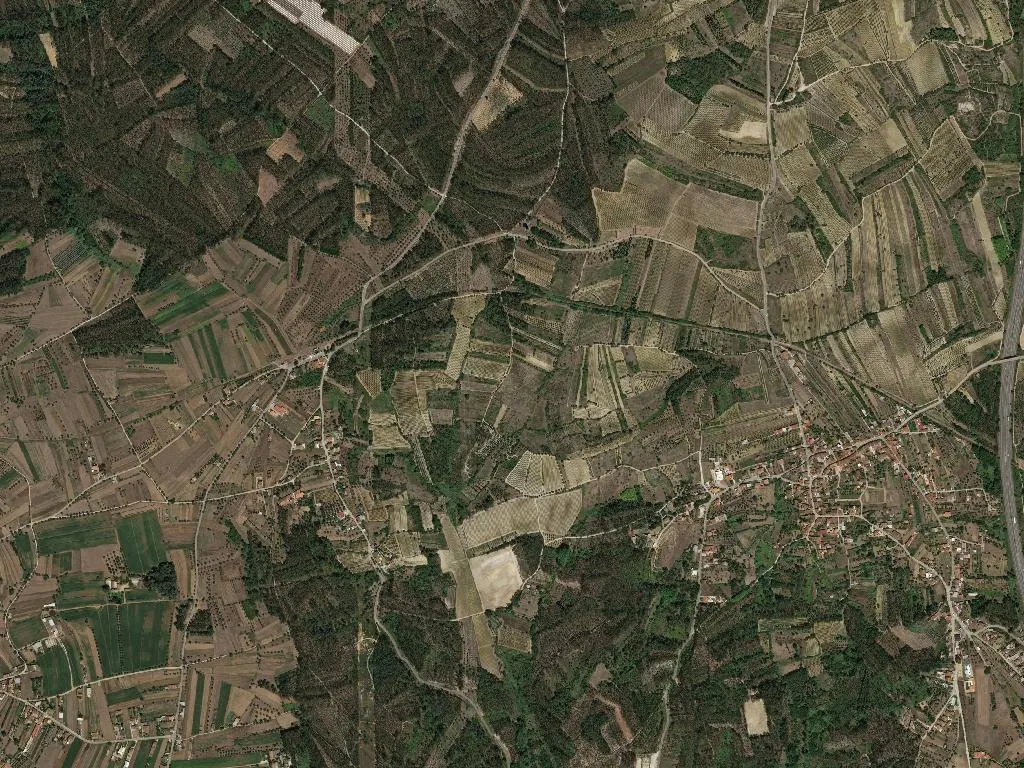
The scent of damp schist mingles with the resinous sweetness of flowering myrtle. Between the ruler-straight rows of Bairrada vines, each trunk is as thick as a man’s thigh, its bark fissured by forty summers of Atlantic sun and inland heat. At 108 m above sea-level, Murtede’s granite cottages soak up the thin morning light while fog unthreads itself from the rows, revealing a parish map no larger than the City of London but populated by 1,288 souls.
Latin roots among the vines
Romans called the place Murtidum – “where the myrtle grows” – and the plant still obeys the name, colonising field edges, cattle tracks and the tops of walls built from the same grey stone as the houses. The settlement charter dates from the thirteenth century, yet the contract remains visible: sow corn between the vines, keep the terraces, leave the myrtle for the bees. Population density is a whisper – 64 inhabitants per km² – but the demographic ledger is stark: 465 pensioners, 110 school-age children. Knowledge still moves horizontally here, passed along during winter pruning rather than down a fibre-optic cable.
Bairrada on the plate, Bairrada in the glass
In the smoke-blackened rafters of older cottages, sides of Carne Marinhoa DOP hang like mahogany curtains. The native long-horned cattle graze the surrounding meadows; their meat re-emerges as slow-simmered lamb stews that taste of hay and sea-salt, or kid roasted until the fibres surrender to a nudge of the fork. The rice is not incidental – Arroz Carolino do Baixo Mondejo IGP, a short-grain variety that absorbs duck fat like risotto absorbs butter, and has done so since the monks of Lorvão recorded rice paddies here in 950 AD.
Yet barley and cattle are only supporting actors. Bairrada’s chalky marl and Atlantic breezes conspire to make one of Portugal’s most age-worthy reds: Baga, a grape that can out-Burgundy Pinot for tannic stubbornness. In Murtede you drink it two ways – as a midnight-coloured still wine that stains the glass violet, or as bottle-fermented espumante kept sur-lie for thirty months until the mousse feels like chilled silk. Myrtle berries, meanwhile, are macerated in aguardente for an after-dinner digestif that tastes of pine sap and bitter chocolate.
Slow lanes
There are no ticketed attractions, no viewpoints with orientation boards. Instead, a lattice of single-track lanes where the only congestion is a Massey-Ferguson at milking time. You can walk the vineyards for an hour and meet nothing sturdier than a hoopoe. The experience is resolutely tactile: schist crumbling under a walking boot, the rasp of a vine leaf, dew that climbs through denim before the sun clears the pine ridge. Knock on any door with an open shutter and you will be led to the cellar, offered a pipette drawn straight from the barrel, and asked which vintage you prefer – 2011 for austerity, 2015 for perfume – while the owner’s grandmother continues shelling beans in the same silence.
Myrtle at dusk
When the sun drops behind the Buçaco ridge, oblique light picks out the silver undersides of myrtle leaves and projects them, shadow-puppet size, onto the dusty track. Temperature falls quickly at this modest altitude; wood-smoke begins to shoulder out the smell of vines. One by one, yellow rectangles of lamplight appear in granite walls. If you listen past the first glass of red, you can hear the same wind that eight centuries ago convinced a Latin scribe to ink the name Murtidum onto parchment – a soft sibilance that still tells you exactly where you are.