Full article about Pocariça: Where Rice Fields Marry Vineyards
Flatland village breathes garlic, bay and yeasty espumante between paddies and vines
Hide article Read full article
Rice steam and limestone dust
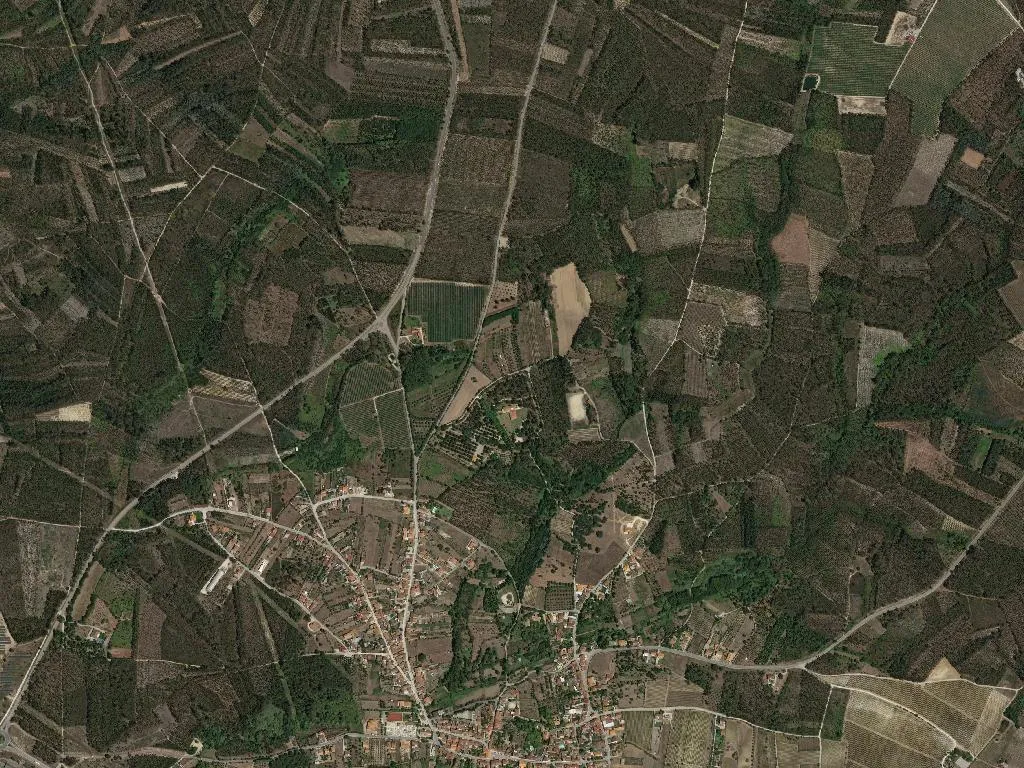
Garlic and bay crackle in hot fat, releasing a ribbon of scent that drifts down Pocariça’s single main street and collides with the smell of turned earth drifting in from the irrigated Low-Mondego paddies. Here the land is a chessboard of viridescent rice plots, dead-flat all the way to the Atlantic thirty kilometres away; no hills muscle in to break the horizon. Bairrada’s high light bounces off single-storey cottages, low limestone walls and the ruler-straight cordons of Baga vines that stitch the soil until distance blurs them.
Rice, wine and the animal that grazed next door
What Pocariça eats is what immediately surrounds it. The Carolino rice that carries the Baixo Mondego PGI is grown in the paddies you can see from any kitchen window – chalk-white grain that drinks stock without collapsing. No one mentions protected status; they simply buy 5-kilo sacks from D. Lurdes’s grocery, the farm name scribbled in fountain-pen ink. The butcher, Zé Manel, sells beef from actual Marinhoa cattle that graze the water-meadows behind the football pitch; the denomination is irrelevant when you watched the animal grow. Wine is whatever António pours in his one-room tasca: Bairrada reds that make you pucker on the first glass, or a yeasty traditional-method espumante uncorked for baptisms and funerals with equal enthusiasm.
Flat land, tight community
Officially a parish, Pocariça behaves like a village—population 4,415, elevation a modest 79 m—and at 3 p.m., when the sun scorches the backs of the last workers bent over the seedlings, the streets empty. Only the café on the square shows signs of life: retired men slap down trump cards while women trade decibel-heavy gossip and children queue for Maria biscuits before the afternoon school bell. The primary school is the clutch that keeps the place in gear. When neighbouring Olho Marinho’s closed, young families drifted away; here, 635 pupils still oblige parents to set alarms for six because the only bus does a single pass. On Tuesdays and Thursdays the health centre in Cantanhede, 15 km west, fills with the 1,036 over-65s who once worked these fields. Between appointments they sit on the granite bench commenting on how Ricardo has bought Uncle Albino’s plot to plant blueberries under netting.
A kitchen that begins in the backyard
To eat here is to be invited into someone’s casa. Duck rice is made with the bird Joaquim fattened in the back garden since Easter, dispatched on Michaelmas and jointed over the stone sink. The lard spooned into the pot has been clarified and saved since last winter; the chouriço came from the pig divided between three neighbours in January. The Taberna do Zé unlocks its door only on Friday and Saturday nights; the cabidela is thickened with chicken blood caught in a basin at the moment of slaughter, not with a supermarket sachet. Wine is drawn straight from the fibreglass tank: if you wince at the tannic rasp of Baga you’ll be met with polite suspicion. Bread arrives from Ana’s bakery, which opens at six and shuts when the last loaf is gone—arrive after ten and you’ll be told, without apology, to come earlier tomorrow.
Where the plain exhales
Dusk settles behind the parish church whose bell-tower still bears the lightning scar of 1978. Flooded paddies become mirrors of rose and cobalt; the earth itself appears to levitate. Adelino’s spread of manure drifts over on the breeze, mixing with the first wood-smoke of the evening. Down at the river-wharf the Mondego is only a narrow sleeve, but eel nets still glisten among the reeds. Teenagers smoke furtively between the canes until a parental car-horn summons them home. The silence that follows is weighty, almost architectural: every resident recognises each creak, odour, footstep. It is the quiet of people who know that, for now, Pocariça remains a place where you live from, not simply on, the land you were born to—one rice cycle after another, the horizon holding its breath.