Full article about Vilamar & Corticeiro de Cima: Cork, Baga & Rice on Bairrada’
Roman-named villages where cork oaks, tannic Baga cellars and Carolino paddies share Atlantic-cooled
Hide article Read full article
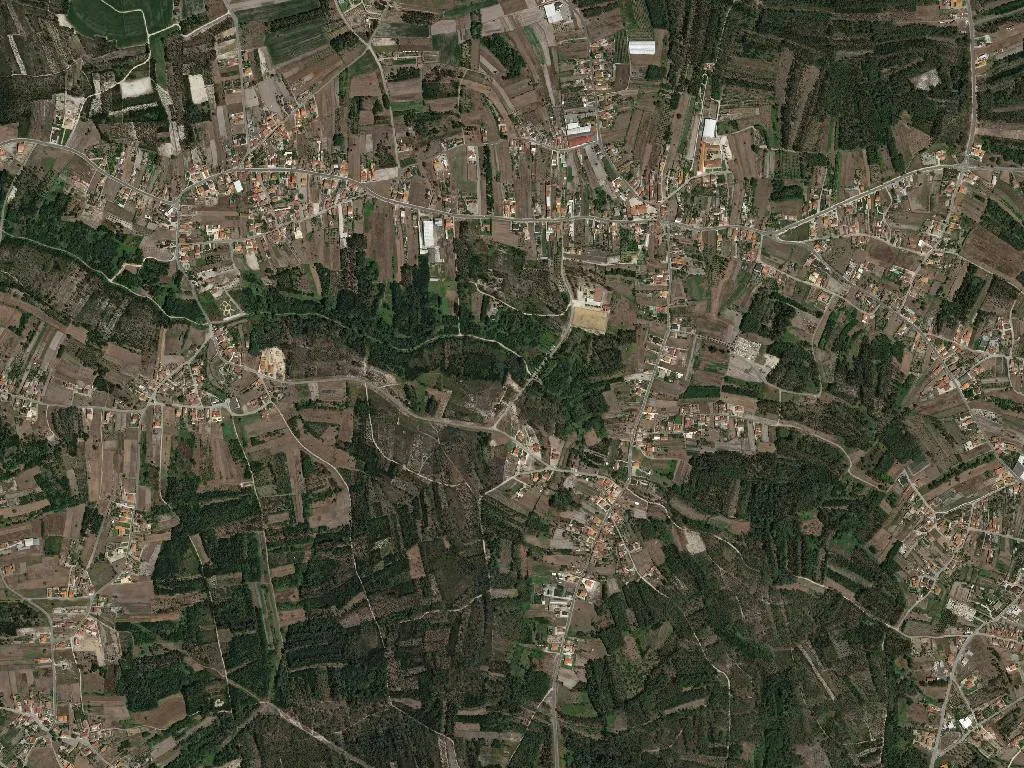
The scent of damp earth after rain mingles with the resinous snap of cork bark and the late-season sweetness of fermenting grapes. At just 54 metres above sea-level, Vilamar and Corticeiro de Cima feel lower than they are: the Serra do Buçaco rises to the north-east like a green wave, while the Atlantic, 25 km away, breathes moist air across the Bairrada plain. Every few minutes a lone heron resets the silence above the Águeda’s irrigation channels, the only punctuation in a landscape that smells more of leaf and must than of salt.
Latin ghosts and cork oaks
Vilamar’s name remembers villa maris, a Roman “farm by the sea” when the lagoon of Mira still lapped this far inland. The settlement later served as seat of a short-lived município; today its grid of low whitewashed houses shelters 1,363 inhabitants, a number that has barely shifted since the 1940s. Corticeiro de Cima (“Upper Cork Place”) distinguishes itself from its downhill sibling by the density of sobreiros whose trunks are stripped every nine years for wine stoppers and NASA insulation panels alike. An administrative merger in 2013 yoked the two parishes together, but no one here thinks of them as anything other than a single working vineyard dotted with rice paddies and ox pastures.
Baga, Carolino and Marinhoa beef
Bairrada’s chalky clay is stamped on every glass. The red Baga grape—temperamental, late-ripening, thick-skinned—produces tannic wines that loosen into violet and black-plum after a decade. Locals drink it younger, alongside leitão assado da Bairrada, but the serious bottles travel: Luís Pato’s “Pé Franco” ungrafted-vine cuvée, or his daughter Filipa’s zero-sulphur “Método Ancestral”. Between the vines, the Mondego’s alluvium feeds the IGP-protected Carolino rice, a medium-grain variety that absorbs three times its volume in stock and finishes the province’s arroz de cabidela with a glossy blush. The meat in the pot is Marinhoa DOP, matured on the bone for 21 days, its fat the colour of fresh butter and its flavour somewhere between Galician blond and Scottish Highland.
Convent sweets and summer threshing floors
When the eira (threshing floor) is swept clean for the August festival, aluminium trays appear: pastelinhos de Santa Clara—latticed pastries oozing egg-yolk cream—alongside trouxas de ovos, cigar-shaped bundles of the same sunshine-coloured filling. Both recipes were smuggled out of the dissolved convent of Santa Clara in Coimbra by 19th-century servants; the nuns would recognise the copper pans, if not the portable sound-systems now wheeled in to accompany the accordion.
Tracks through the vines
Without cliffs or coast to break the horizon, the land invites measured walking. A 9-km loop starts behind Vilamar’s cemetery, follows a dirt lane between cordoned vines, then cuts across a rice check to the hamlet of Corticeiro. Kingfishers flare along the drainage ditches; in October the air carries a bass-note of carbonic maceration drifting from the nearby cooperative. No waymarks, no gift shops—just the sound of your own boots keeping time with the slow oscillation of irrigation water and the occasional low of a Marinhoa cow watching you pass.
Evening arrives sideways, the sun flattening across the vines until every leaf looks gilded. Somewhere a cork stripper fires up a chainsaw, the metallic buzz rising then receding like a distant dirt-bike. You leave with tannin on your tongue and the faint itch of grape sugar on your fingers, aware that the region’s real monument is not a building but a taste—persistent, earthy, impossible to separate from the ground that made it.