Full article about Ega: limestone village that Camino feet remember
Solomonic columns, Manueline windows and pilgrim scallops in porous Ançã stone
Hide article Read full article
The grit underfoot
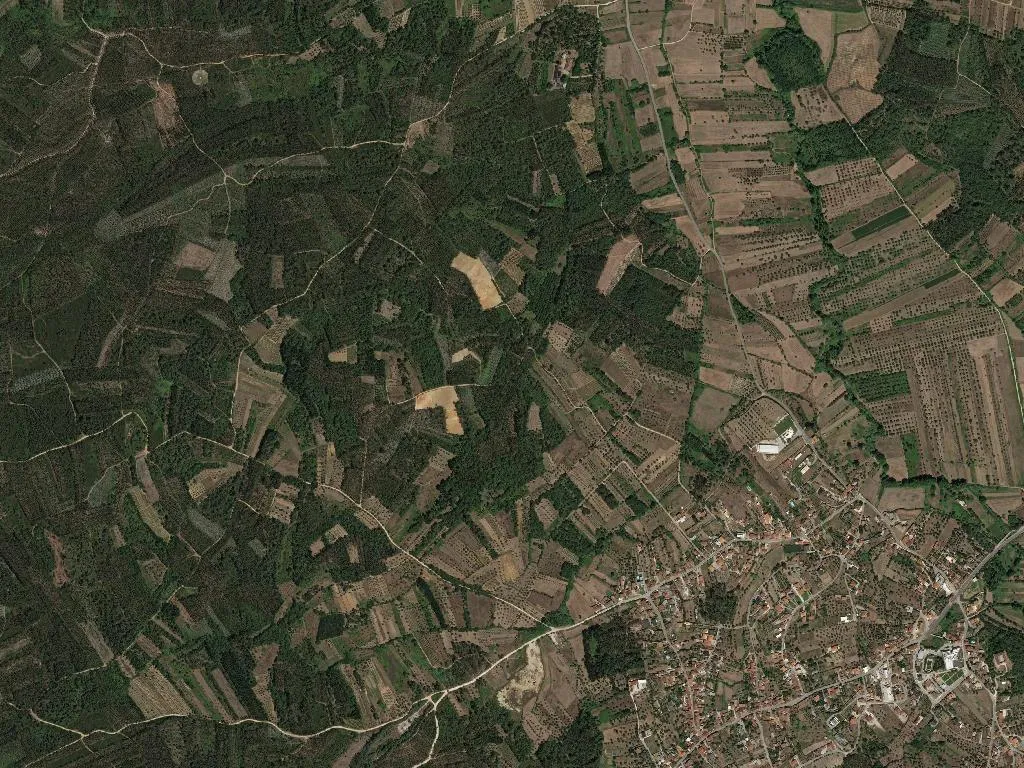
Cobblestones pop and splinter beneath your soles – not the sanitised clack of coastal Algarve towns, but the coarse complaint of granite that has spent three centuries finding its level. Ega sits only 37 m above the Mondego’s floodplain, low enough for Atlantic weather to sweep across open fields without interruption. Light ricochets off whitewashed walls; wind drags the smell of turned earth through the streets, swapping it for wood-smoke in January and bruised grass in June.
Three centuries in limestone
Tourist coaches bypass the parish, yet it guards a tidy portfolio of public-interest monuments. The parish church’s 18C baroque façade erupts in Solomonic columns and cherub-heavy pediments; next door, the Paço dos Condes de Ega – now the town hall – marries 16C Manueline windows to 17C sober brickwork. A two-minute shuffle away, the single-nave chapel of São Brás (1562) still displays the scallop-shell keystone that welcomed medieval pilgrims. All are built from local Ançã limestone, so porous that winter showers soak in and re-emerge as dove-grey streaks long after the rain has gone.
Way-markers for walkers
Ega is less a destination than a punctuation mark on two long-distance footpaths: the Central Portuguese Camino and the lesser-known Torres variant. At the Casa do Guarda, wedged against the church tower, a rubber stamp pad sits on the windowsill – Credential stamp No. 12, usually accompanied by a flask of water so trekkers can re-ink the dried pad. Most refill bottles at the Rossio fountain, exchange three sentences with the owner of Café Central, then head on. The village exhales back into its own cadence: 2,583 residents spread over 32 km² – dense enough for a post office, too sparse for traffic lights.
Arithmetic of ageing
National statistics read like a cautionary tale: 286 children under 14, 768 residents over 65. The 1958 primary school still rings a bell at nine o’clock, but class sizes have collapsed from forty-odd to single figures. On August afternoons elderly men occupy the granite bench outside the bakery, caps tilted against the glare, fingers interlaced as if rehearsing the village’s slow diminishment. Conversation is optional; the shared subject is the heat, or the price of maize, or the way swallows no longer nest under the eaves.
Soil, vines and sky
Below the settlement, the Mondego’s irrigation canals feed a chessboard of maize that flips from emerald to parchment between May and September. Rice paddies glint further west; tomatoes follow melons in a tight rotation demanded by the cooperative. Vines climb the sandy ridges to the east, their Bairrada DOC label giving local restaurants an excuse to charge an extra euro per glass. There are no granite peaks for selfies, no waterfalls – just horizon interrupted by the occasional bell-tower or a glossy black kite banking over the paddies. Stand still for a minute and the landscape sorts itself into subtler layers: the geometry of trellised vineyards, the silver underside of olive leaves, the way the river blurs into sky at dusk.
Getting here is uncomplicated: the old EN1 slips you into Condeixa-a-Nova in five minutes; the IC2 deposits you in central Coimbra before the radio news has finished. No sat-nav gymnastics, no coach park manoeuvres. What you find is elbow-room – literal and metaphorical – to breathe out, walk the levee and let your gaze run until a stork or a church spire decides where it ends.