Full article about Shale Trails & Ink-Red Wine in Vila Seca-Bem da Fé
Camino arrows, schist ridges and 60-cent bicas in a Coimbra plateau parish
Hide article Read full article
A Slow Road Through Shale and Silence
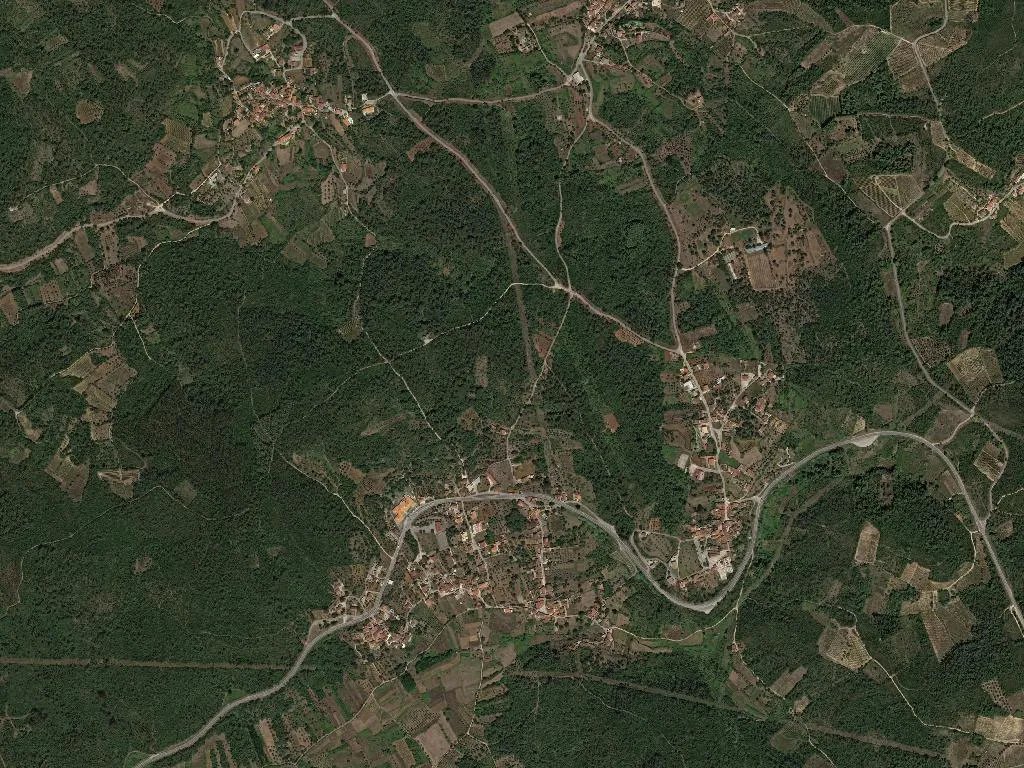
The lane climbs gently between wheat stubble and blue-gum plantations, releasing a sudden waft of turned earth each time the wind pivots—an odour equal parts sweet and acrid that English noses normally associate with October allotments. Vila Seca and Bem da Fé share a single civil parish that stretches across 1,627 ha of undulating plateau at 251 m above sea level. Schist outcrops poke through the soil like broken black crockery among the vines and olive terraces, a geological hinge between the Mondego valley and the limestone hills that guard Coimbra from the south.
Pilgrim Footfall
Two variants of the Camino—Central Portuguese and Torres—bisect the parish. Yellow arrows guide walkers along farm tracks where the only soundtrack is blackbird song and the occasional squeal of a rusted gate. The rhythm here is neither coastal plain nor mountain switchback; it is a metronomic stride that invites conversation or, better, the sort of idle thought that evaporates on motorways.
Four small guesthouses (three in converted farmsteads, one in a former school) absorb the nightly trickle of walkers. With 55 inhabitants per km², crowding is mathematically impossible. In Bem da Fé the village café still charges 60 cents for a bica served in a saucer whose gilt rim has long been scoured away by a thousand spoons.
Demography and the Memory of Labour
National statistics tell the familiar interior story: 89 residents under fourteen, 302 over sixty-five. Weekday streets belong to slower gaits; youthful voices arrive only on Friday evening, disembarking from Coimbra trains. Yet the agricultural calendar refuses retirement. Winter pruning leaves hands the colour of raw beetroot; by 8 a.m. in August the sun has already printed crop-circle tan lines through shirt fabric. In Dona Lurdes’s barn the granite lagar still receives bunches of Touriga Nacional; the free-run juice emerges the colour of Indian ink, destined for household tables rather than export labels.
A Geography of Modest Watercourses
No raging rivers—only seasonal streams that braid through gorse and willow, shrinking by midsummer to white pebble necklaces picked out by the greener, wicked spines of Spanish broom. The Ribeira de São Facundo carries winter rain like a courier, then forgets its job entirely between June and September. Property lines are drawn not by fences but by living hedges of hawthorn and elder; dry-stone walls accumulate moss on their northern cheeks the way elderly men collect stubble. On the hillock called Cabeço do Telhado a windmill keeps its wooden vanes, still facing thirty-year-old breezes.
Plateau Time
Daylight drains sideways across the stubble, igniting the ochre fields and throwing long cypress shadows that resemble spilled ink. This is landscape that withholds instant Instagram gratification; it yields meaning only after repeated exposure—walk, season, conversation. The Atlantic wind arrives unfiltered, carrying the scent of cured hay and, on burn days, a faint blue wisp of vine-pruning smoke. What lingers is not a postcard vista but an accretion of small sensations: the crunch of white gravel under boot, the noon heat stored in a stone wall, the weighted hush before summer rain. When winter fog pools in the shallow valleys, the single church bell in Vila Seca sounds less like a call to worship than a reminder that someone is still keeping time against erosion.