Full article about Zambujal: granite ridge above Coimbra’s oak hush
Zambujal, Condeixa-a-Nova: walk the ridge of wind-bent oaks, hear gates groan and 349 villagers keep time by shutters, not clocks
Hide article Read full article
Granite breathing
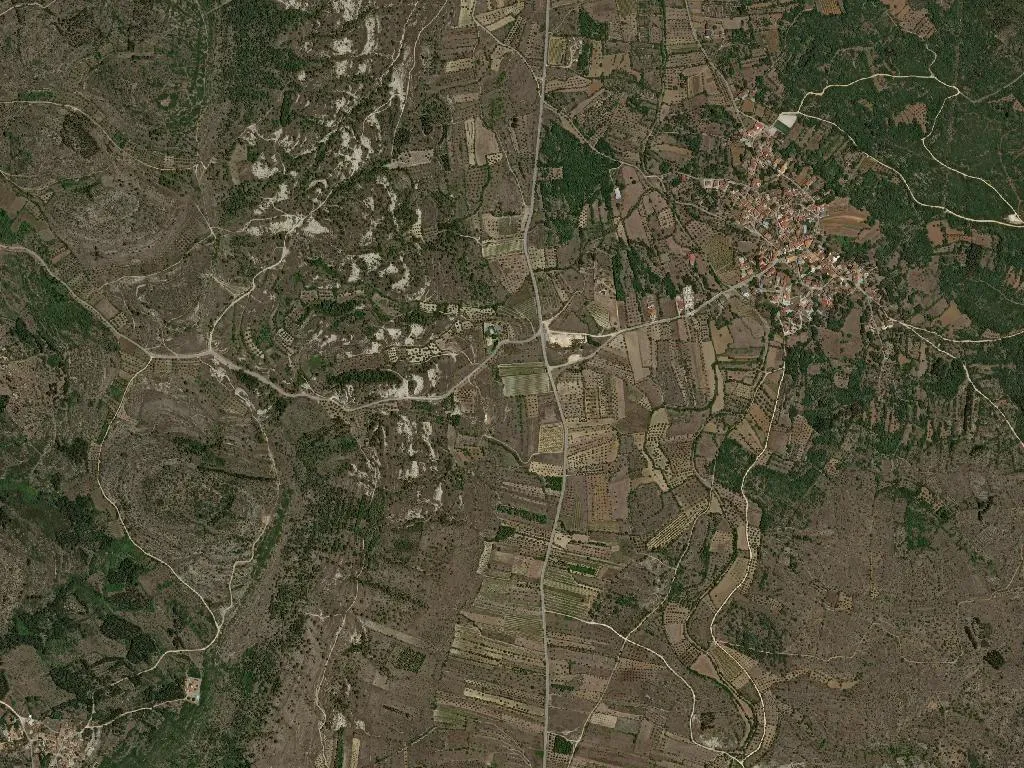
The stone looks half-pulled from the soil, as though the earth itself were trying to shrug it off. At 183 m, the ridge of Zambujal is too low to tax knees, yet high enough for the eye to lose itself in successive waves of oak and olive that fade into the Coimbra interior’s rinsed-air horizon. With fewer than twenty souls per square kilometre, silence has texture here: a dog barking two farms away, a gate complaining on its one rusty hinge, the soft acoustic of absence made audible.
Crossroads, not stopover
The parish spreads across 1,800 ha where the Central Portuguese Camino intersects the lesser pilgrim trace from Torres Vedras. Walkers pass, but Zambujal refuses to become a stage set. Its drama is domestic: 349 residents—116 already past retirement age—who still open shutters at seven, irrigate tomatoes before the 12 o’clock news, and stack firewood as if it were bullion. Four cottages now take paying guests, yet the place is defined by half-open doors, chimney breath, and the tabby that sun-stretches across the chapel wall.
Stone that refuses to lie
One boulder, still awaiting classification as a national monument, shoulders doorways and corners like a family retainer who remembers every birth and betrayal. Architecture is blunt—granite, lime wash, cane tiles blackened to graphite by Atlantic storms—ugly only if you mistake prettiness for truth.
Wide horizons, small courtesies
Paths obey topography, not surveyors. Hawthorn hedges declare property lines more eloquently than any plaque. The green is not the lush Minho palette but a sun-baked hue that understands drought. Vegetable plots pulse with winter beet and spring onion; smoke signals rise; and though only 39 children under fourteen remain, their playground voices ricochet through the lanes when the parish school empties.
What stays
At day’s end it isn’t fatigue you carry downhill but the click of loose granite inside your boot tread, the scent of turned topsoil, the ghost of hearth-smoke you taste before you see. Zambujal offers no postcard moments—just permission to stand still without anyone asking you to smile for the camera. For those who value that, nothing else comes close.