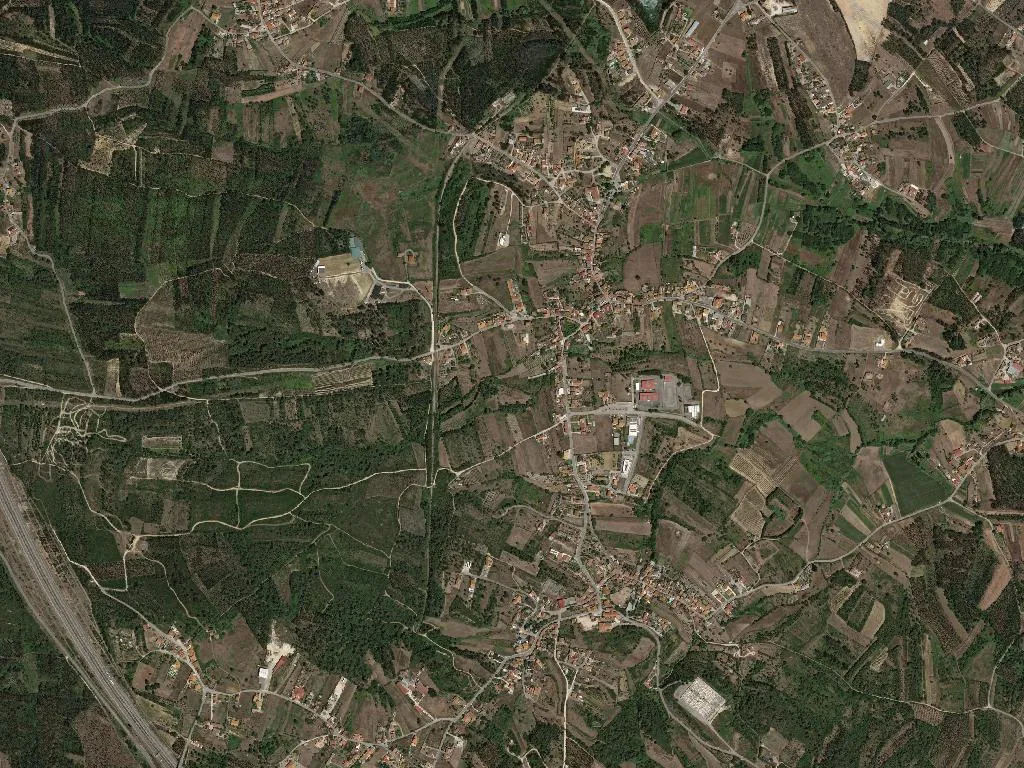
Full article about Alhadas: woodsmoke, looms & custard tarts
Looms clack, pastries steam and pilgrims pass through this Coimbra hill-village above the Atlantic
Hide article Read full article
Woodsmoke, flax and the river
The scent of burning oak drifts uphill, braiding with the river-damp air the Moura leaves on its banks. Inside the one-room museum the mechanical thud of a floor-loom keeps time: thump-shuttle-thump. The hands guiding it belong to D. Lurdes, 83, whose fingers still remember the tension of warp and weft her grandmother taught her seventy summers ago. Alhadas spreads across a plateau ribbed with vineyards, cork and olive, half-way between the Atlantic and the sandstone ridges of Serra da Boa Viagem. Every bend recalibrates the light; suddenly the breeze tastes of salt and you know the ocean is just beyond the next crest, though you still can’t see it.
The parish archives date the settlement to the fifteenth century, but villagers insist the Romanesque footpaths that bisect the high ground once funneled medieval pilgrims toward Santiago. The name probably derives from the Latin alhadas, “little hill”, though the old men in the Café Central swear it’s the eagles that once nested on the schist outcrops. Today the coastal branch of the Camino passes straight through; hikers pause for a galão and a slab of olive-oil cake before the final haul to Cabo Mondego. The parish church, whitewashed and slightly peeling, anchors the square; its bell tower was rebuilt after the 1953 earthquake, yet the limestone cross on the porch is original early-1700s workmanship.
Pilgrimage pastries and looms
On the second Sunday of May the chapel of Nossa Senhora da Saúde overflows. The romaria is logged in every guidebook, yet the unwritten timetable begins the previous Friday at dusk when the women of the village fold egg-yolk custard into flaky foguetes while they debate rainfall forecasts and mildew on the red grapes. By dawn the stalls exhale cinnamon and burnt sugar; you eat the pastries scorching hot, custard still bubbling. On Easter Sunday the Compasso Pascal—a procession of priest, choir and catechism children—has knocked on every door for more than two centuries, pausing longest at Sr António’s larder to sample the new wine he brooded over all winter.
Across the lane the linen museum gives the place its pulse. Inside, manual looms, flax brakes and spinning wheels map the journey from plant to cloth. “Flax is like a small child,” D. Lurdes murmurs, “it wants attention every single day.” On Saturdays visitors can tension the warp themselves; the oldest loom came south with the Gomes family from Gândara in the 1920s, lured by the Moura’s soft water—ideal for retting.
Between river and vineyard
The River Moura Trail unrolls 8 km east to the surfers’ beach at Buarcos, stitching together restored water-mills—one still grinds corn for Cidália’s grandmother’s maize bread—stone pack-horse bridges where boys launch themselves in pants each August, and willow galleries so dense the light turns emerald. Near the mouth you enter Gândara, a monochrome ocean of eucalyptus that creaks like an old schooner, resin thick enough to taste.
The walk cuts through the Bairrada DOP, rows of Baga and Maria Gomes vines aligned like troops on a parade ground. The best fruit, growers whisper, faces the morning sun on the eastern slope where night mist lingers long enough to fatten the berries. In the surrounding paddocks the mahogany-coloured Marinhoa cattle graze on heather and wild rosemary; their DOP beef ends up in black clay pots at O Lagar, a former olive press, where the cook’s chanfana—goat stewed in red wine and aromatics—is still served in the same pot she once used at home. April and May bring eels from the Moura, stewed with bay and peppercorn; out of season you’ll find Celeste’s asparagus migas, breadcrumbs refreshed with stock and green spears, strictly made with day-old bread “because fresh loaf turns it stodgy”.
Satellites and smoked sausage
Since 2021 a high-resolution weather station on Quinta do Cabeço has fed micro-climate data to smartphones. Farmers now check frost risk online rather than in the ache of an arthritic knee. The Rural Improvement Association, founded 1923, still organises the monthly produce fair in the churchyard after the 11 o’clock mass: warm goat’s cheese, olive-wood-smoked chouriço, heather honey crystallising into velvet, and olive oil that leaves a peppery rasp in the throat—liquid gold pressed the same morning.
Dusk is announced by three slow bells: one for the men trailing back from the vines, one for the women retrieving linen from the lines, a last for the children still hiding among the cork trunks. Between the wood-smoke, the metallic river chill and the final gilt flare on the oak leaves, Alhadas reveals itself—layer upon layer, warp upon weft—cloth still being woven by hands in no hurry to finish the pattern.