Full article about São Julião: Dawn Nets, Baroque Tiles & Rhino Fossils
Watch xávega boats haul silver at sunrise, then trace pilgrim stones and Manueline fountains.
Hide article Read full article
São Julião, Figueira da Foz: Where the Mondego Meets the Salt
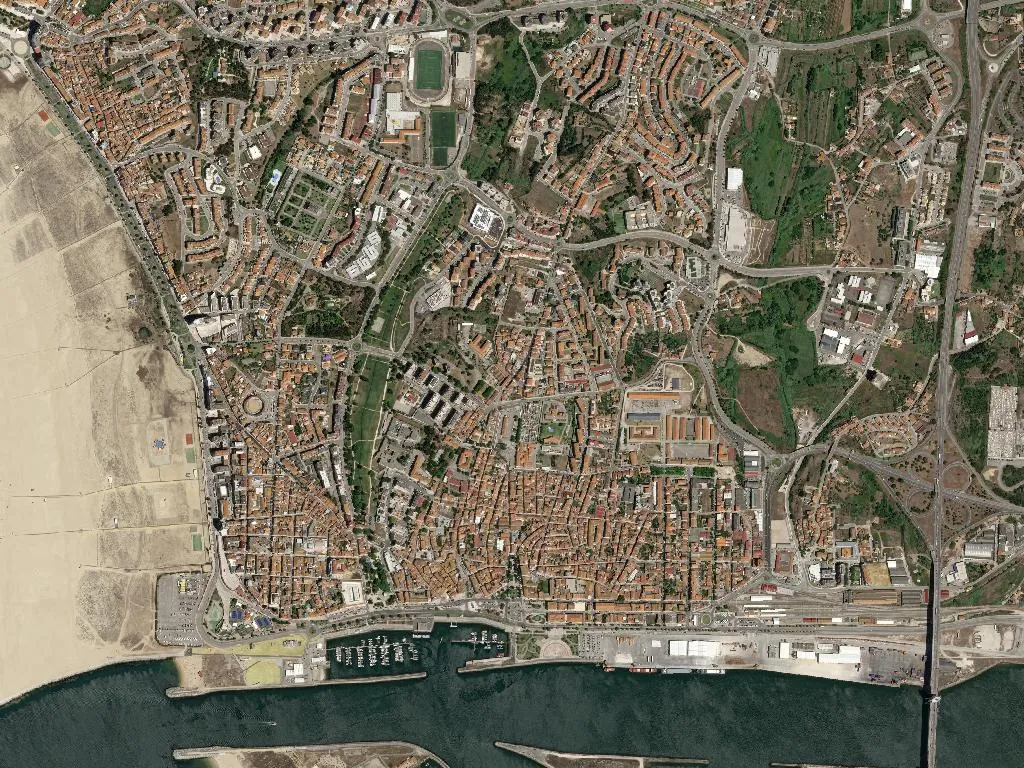
You hear them before you see them. Thirty men move in shoulder-to-shoulder formation, boots sliding on compacted sand, hauling a 300-metre seine net that the Atlantic is reluctant to surrender. This is xávega—a living fossil of fishing—and in Buarcos it is performed at dawn, not for applause but for sardines. Two lateen-rigged boats still work the ritual, their ochre sails cutting through the morning haze while the foreman’s shout ricochets across five uninterrupted kilometres of urban beach. At the river mouth, São Julião parish keeps strata of history as neatly stacked as the Jurassic limestone of the headland that shelters it.
Stone upon Stone, Century upon Century
The parish existed before its name. A 12th-century charter already lists the church of São Julião, and the will of Abade Pedro, a Mozarab priest, bequeathed the building to Coimbra’s cathedral—proof that Christian worship was rooted here two centuries before the 1237 royal charter that formalised the settlement. Toponymy is blunt: fig trees at the mouth of a river. The village grew as a fishing port and as a waypoint on the coastal pilgrim road to Santiago; walkers still follow the same Atlantic-backed route, now way-marked with aluminium discs instead of scallop shells.
The parish church was rebuilt in the 1500s and again in the 1600s; inside, a gilded baroque altarpiece drinks in the pale side-light and 18th-century azulejos the colour of deep water absorb the rest. Two streets away, the Misericórdia church offers textbook Mannerism: perfect round arch, no ornamentation, geometry as theology. On Rua Dr Calado the 1782 granite fountain still trickles, its royal coat of arms eroded by Atlantic moisture into abstract verdigris. Further south, the 17th-century Forte de Santa Catarina has been swallowed by the modern sea wall, its stone gun-platforms now benches for anglers.
A Headland that Once Held Rhinoceros Teeth
Cabo Mondego is the only coastal cliff between Nazaré and Espinho that plunges straight into deep water, visible from 18 nautical miles out. Protected as a natural monument, the fossiliferous rampart exposes Upper Jurassic and Cretaceous limestones; visitors run fingertips over ammonites the size of dinner plates. In the caves of the adjoining Serra da Boa Viagem, palaeontologists have extracted rhinoceros teeth from Pleistocene layers—reminders that this promontory was once savannah. At the summit, the 1855 lighthouse—now a national monument—flashes white every ten seconds from 34 metres above sea level, the last terrestrial signature fishermen see before the horizon erases land.
The Boa Viagem Trail begins on Buarcos beach, climbs through stone-pine and cistus to the Cruzeiro viewpoint, then drops to the lighthouse—seven kilometres, two-and-a-half hours of olfactory switchbacks: hot resin, sun-baked rock samphire, salt, finally sun-warmed limestone. Sea-kayakers can paddle a five-kilometre guided loop between estuary and cliff, slipping into a fossil-lined grotto for snorkelling. At dawn in the Mondego estuary, the saltmarsh and reed beds blush pink as greater flamingos and little terns lift off the mirrored water; the bird hide beside the fishing dock is worth the 5 a.m. alarm.
Eel Stew, Goat Wine and a Sausage that Carries Sugar
São Julião’s kitchen splits its loyalties between river and ocean. Mondego eel stew arrives in a black clay pot—sweet river eels braised with dark rye bread, tomato, onion and coriander, the sauce bubbling like hot lava. The local leiteira seafood rice, cooked in iron pans with clams, razor-shells and prawns, is thick enough to stand a spoon in and demands silence and extra bread. Inland, Boa Viagem-style goat chanfana is stewed overnight in red wine, paprika and bay, served in the same glazed bowl used to take it to the wood-fired oven. Carne Marinhoa DOP appears as grilled veal steaks or bitoque on Buarcos bread, wood-fired so the crust shatters and the crumb stays tight.
The revelation is in the sweet counter-current. Almond pastas, yolk-rich trouxas and Santa Clara custards share counter space with Buarcos sweet chouriço: pork seasoned with cinnamon and sugar, a legacy of 18th-century Castilian fishermen. In the municipal market, translucent slices of the sausage are handed out as samples; the warm spice seems improbable amid the iodine reek of live eels twisting in plastic tubs.
Summer Palaces, Pine Trails and the Lit Promenade
Early-20th-century holiday palaces still line Avenida 24 de Julho and the lower slopes of Serra da Boa Viagem—tile-clad façades, wrought-iron balconies built for Coimbra professors escaping the interior heat. Casa do Paço, a 17th-century manor blazoned with royal arms, and the 1882 railway station, a confident cocktail of wrought iron and polychrome brick, anchor an unhurried walking circuit. Cyclists can pick up the “Dunas & Mar” greenway, an 18-kilometre track that stitches the Mondego cycle path to Quiaios beach through pine plantations and saltmarsh; the only sound is sand rasping against tyres.
After dark, sodium lamps trace the sea wall to the north jetty. The air cools, wave-thud amplifies in the blackness, and Cabo Mondego’s lighthouse keeps its 170-year heartbeat—flash, pause, flash—proof that the headland will still be here, fossils and all, long after the last visitor has folded up the deckchairs and gone home.