Full article about São Pedro: Where the Atlantic Knocks at Your Window
Salt-laced cottages, Jurassic cliffs and an 1855 lighthouse two minutes from Figueira da Foz
Hide article Read full article
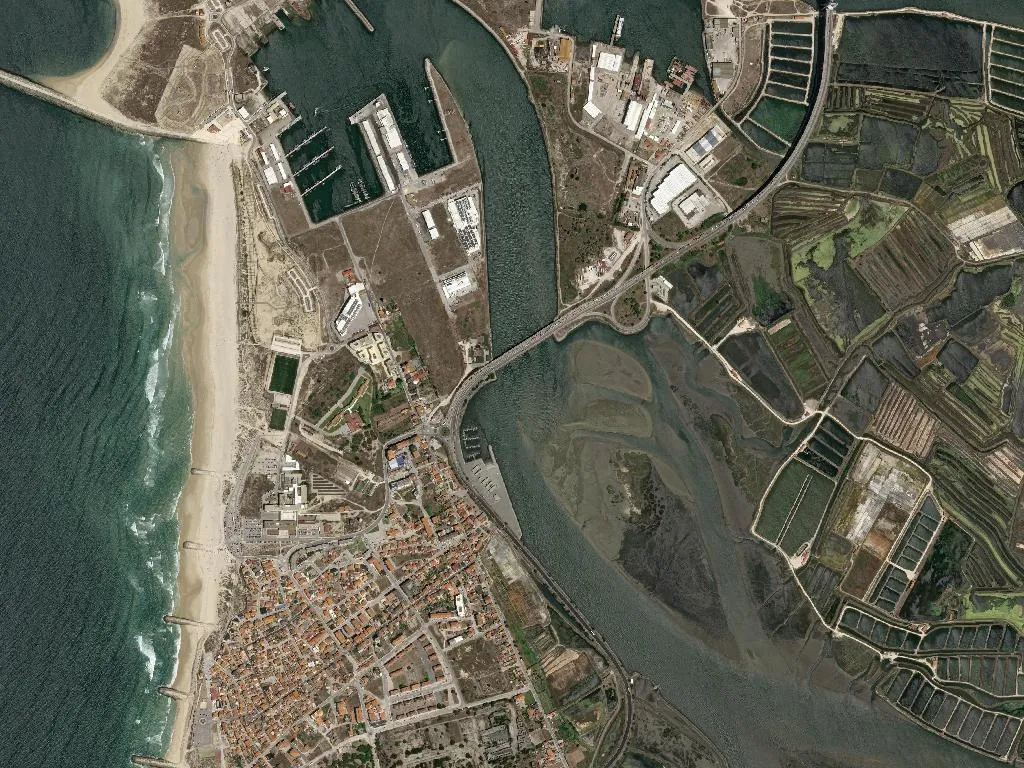
The Atlantic arrives on the hour, every hour, slapping the sea wall beneath Rua Engenheiro Silva with a precision that sounds almost mechanical. Stand here at São Pedro at 07:00 and you can taste the spray: salt crystals on the lips, iodine in the nostrils, light ricocheting off the foam and in through open shutters. Two and a half kilometres west of Figueira da Foz’s casino and Belle-Époque cafés, the parish sits at sea-level – zero metres on the chart – as if the ocean had simply left it behind on an especially generous tide.
There are no castles, no Manueline monasteries, nothing for the checklist tourist. The bandstand in Praça 5 de Outubro is 1932 concrete; the parish church is a late-nineteenth-century rebuild after fire, its gilded woodwork already hazed by brine. What you get instead is immediacy: cross the street and the Atlantic is on your ankles. Low, whitewashed houses – many signed up to the municipal “Casas Brancas” branding scheme – are arranged in a grid that runs perpendicular to the coast, offering sixteen authorised guest beds (seven flats, six cottages, three rooms) to anyone who wants to wake to the same metronome.
Where the land stops taking lessons
Head north and the Cabo Mondego Natural Monument rises 42 m above the surf, a Jurassic limestone stack folded like a mille-feuille. Embedded shells of Pecten vesiculosus date from when this was a warm, shallow sea 170 million years ago. An automated lighthouse, white on rust-red outcrop, has blinked here since 1855, replacing the open-fire beacon that once guided cod boats back from Newfoundland. Way-markers for the Portuguese Coastal Camino, adopted in 2014, now thread the same cliff-top path, steering pilgrims through gorse and dried saltwort towards Santiago.
The wind is not the sharp mountain kind but a damp, persistent Atlantic breath that films every surface: balcony rails, spectacles, bicycle spokes. Yellow-legged gulls wheel overhead, suspended in invisible thermals, quarrelling in hoarse Iberian slang.
Beef from the hills, fish that left the water minutes ago
Carne Marinhoa DOP – the local marbled beef – spends its life grazing the windy pastures around Bordalo and Campelo, the salt in the grass working like slow seasoning. At O Pescador on Rua Dr António Padinha the grill man does little more than add coarse salt; the flavour needs no ornament beyond a roasted potato and a drizzle of olive oil. Yet the sea is the quicker larder. Sea-bream from the Mondego estuary farms, bass hauled by the small fleet of São Pedro, mackerel that hit the Figueira auction at 06:30 still shimmer with ocean iridescence when they appear on lunch plates three hours later.
Census 2021: 2,588 souls, 369 per km² – room to breathe
The demographic arithmetic is revealing: 680 residents over 65, only 331 under 14. Young families drift in for the surf schools and the promise of a garden that smells of seaweed rather than diesel; the retired stay because prescriptions are delivered and the café owner still remembers how you like your bica. Walk the promenade between lifeguard posts 5 and 6 in late June and you can claim ten metres of sand in either direction.
A neighbour who never sleeps
Living here means daily negotiation with the Atlantic. On easterly fog days the ocean is pewter; in September sunshine it turns cobalt so abruptly you doubt your memory of the grey. The north-easterly nortada can shove three-metre breakers against the revamped 2019 seawall, the windows rattling like loose crockery. Damp salt air creeps indoors, settles on mirrors, infiltrates wardrobes.
The lunar timetable replaces the calendar. Low tide uncovers rock-pools the size of dinner tables – private aquaria where Actinia anemones retract at the shadow of a hand. Dawn light is honey-coloured when the fishing boat Maria da Luz edges past the breakers; noon is a white glare that flattens colour; dusk trades orange for violet, always doubled by the moving mirror of the sea.
When the sun finally drops behind the low rooftops and the shadows stretch across the pavement, the waves seem to amplify, as if darkness had a volume control. São Pedro is not a backdrop for selfies; it is a place where the ocean is not scenery but cohabitant – breathing, shifting, keeping watch while the village sleeps.