Full article about Alvares: where schist roads breathe pine and woodsmoke
Four ridge-clamped hamlets in Góis share silence, granite ovens and March snow memories
Hide article Read full article
The road corkscrews upward so tightly that the car’s wing-mirror grazes schist. Crack the window and the air slips in, cold and sugared, as if it has been filtered through chestnut blossom. Pine is only part of the perfume: there’s bruised broom, October’s smouldering strawberry-tree leaves, and, if you arrive at dusk, the resinous curl of pine-cone smoke still drifting from chimneys.
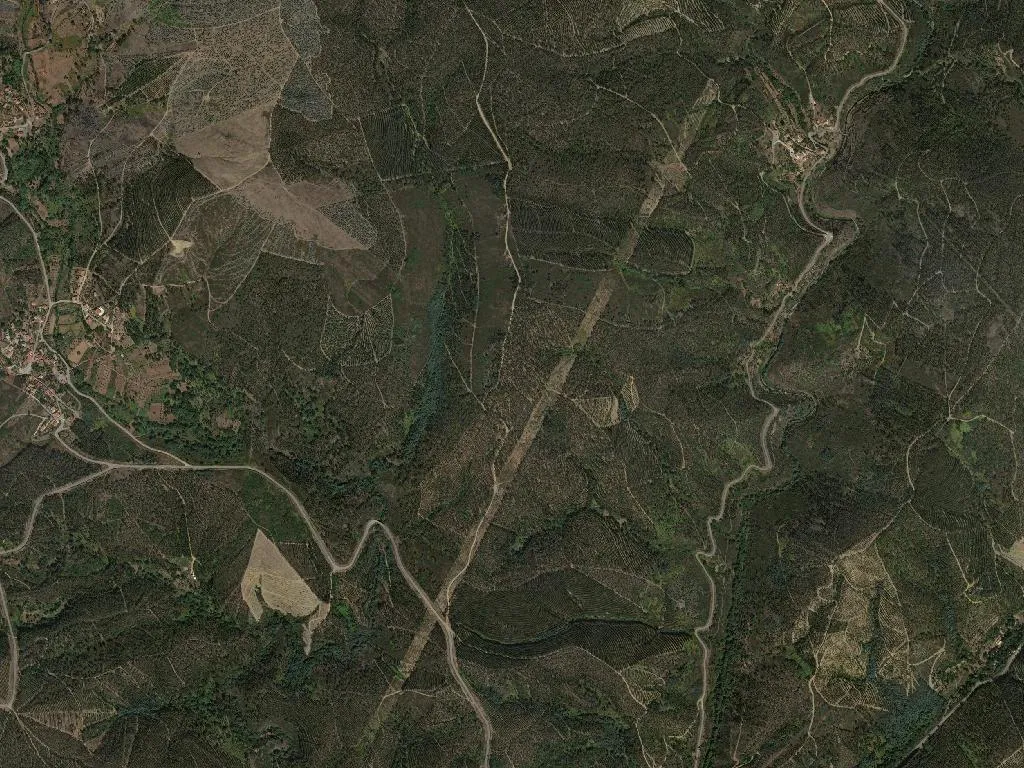
Alvares is not one village but a loose constellation – Povorais, Pomar, Vila Boa, Alhariz – each clamped to its own ridge, separated by a spur or a valley where the stream keeps up a summer-long chatter. The parish head-count is 686, yet numbers miss the point: at noon the silence is so dense you can hear cattle collars clink on the opposite mountain.
Houses were not “inserted” into the landscape; they were quarried from it. Slate is only half the story – granite blocks were levered from the same ground now planted with potatoes. Windows face south not because an architect decreed it, but because the winter sun skims the wall for a bare two hours and every photon is hoarded. Roofs are steeply pitched and stone-weighted for the March snow that in 2005 cut Alhariz off for four days – a statistic locals remember the way Londoners recall the 1987 storm.
The only listed monument is the 17th-century Igreja de São Pedro, yet the real heritage is unwritten: the wood-fired oven in Povorais still glowing on Saturday mid-mornings; the dry-stone wall dropping into Pomar whose sole purpose is to stop next-door’s goats pruning the vineyard; the granite threshing-floor where Dona Madalena beats swede turnips by moonlight – “sun-drying fades the colour,” she insists.
There are no hotels. Three family homes let spare rooms: one includes loaves still warm from the communal oven; another welcomes dogs; in the third, your host delivers coffee to the door at 7.30 because “the mountain won’t wait”. Menu? If someone offers chanfana – goat stewed in black pottery – it is because the animal was dispatched last weekend. Visit in autumn rain and you may find wild mushrooms on your plate; ask where they were picked and you will be waved vaguely upwards – “lá acima” – which always proves farther than it looks.
At five o’clock shadow floods uphill like rising water. The wind swings north, bringing the scent of cooling earth. Kitchen bulbs blink on first, then fireplaces punctually flare. Smoke rises straight, untroubled by cross-breeze. By eight the sky is so clear the Milky Way is mirrored in the village-tank. The church bell strikes nine; no one checks a watch – everyone knows the hour because Sr António’s dog always barks after the final toll.