Full article about Carapelhos: wheat-gold hush above Coimbra’s plain
656 souls, slow furrows, convent sweets—Mira’s quiet parish breathes land-time
Hide article Read full article
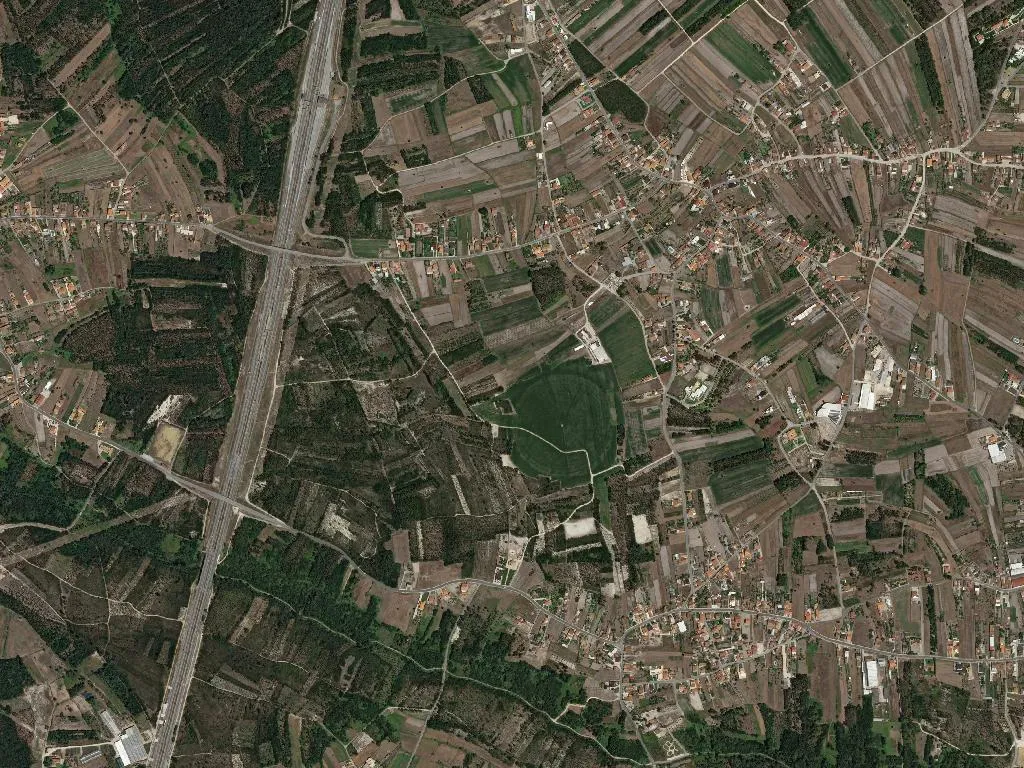
The lane into Carapelhos unrolls between open fields the colour of turned earth and young wheat, the palette shifting with the calendar. Morning light arrives almost sideways, lingering on the whitewash of single-storey houses. A cockerel sounds off somewhere beyond the hedgerows; boots scuff the uneven cobbles; a wrought-iron gate squeals shut. Nothing here is in a hurry. With 656 souls spread across barely four square kilometres, the parish reveals itself by degrees, the way furrows deepen only after countless passes of the plough.
Ordinary geography
At 56 m above sea level, Carapelhos offers no scenic theatrics. The land lies flat, pleated only by low swells that dissolve into heat haze. It is farmland first, last and always: rectangles of potatoes, maize and rye stitched together with knee-high stone walls. In April the shoots are an almost violent green; by late July the wheat ripens to parchment gold; after the combine has gone, the soil is rolled into neat, coffee-brown corduroy. Houses appear at polite intervals—low, tiled, half screened by loquat trees—never quite forming a village core.
Staying, leaving
Children: 84. Pensioners: 186. The arithmetic is familiar across Portugal’s littoral interior. Under-14s rattle around the primary school built for three times their number; over-65s still keep vegetable plots measured in alqueires, an imperial unit predating the euro. Summer evenings amplify the contrast: swings creak in the small play park while, on the adjacent bench, talk turns to diesel prices and WhatsApp messages from France. One generation tends the land; the other scrolls through images of Toulouse, Luxembourg, Swindon.
Convent-sweet
Though Aveiro’s lagoon lies 25 km north, Carapelhos falls within the legally mapped territory of Ovos Moles—those saffron-coloured yolk-and-sugar pods that once fuelled 15th-century nuns and now carry EU protected status. No factory outlets or neon signs here: the sweets surface only at baptisms, the annual parish supper, or when the village bakery takes a telephone order and folds the delicate wafers into wooden boxes lined with patterned tissue.
Coastal camino
The Portuguese Coastal Way to Santiago slips through the parish like a polite house guest. No souvenir stalls, no stamp-selling cafés—just the occasional yellow arrow daubed on a telegraph pole and, beside the church, a single three-bedroom albergue run by the parish council. Pilgrims arrive at dusk, boots powdered with sand from Mira’s beach 12 km west, and leave at sunrise, their multilingual chatter briefly replacing the swallows’ dawn chorus.
Dusk settles without ceremony. Wood smoke rises straight into a sky still holding the day’s last light. Carapelhos makes no pitch for your affection; it simply continues—fields ploughed, bread baked, seasons turned—an unshowy honesty that feels increasingly rare.