Full article about Carapinheira: dawn pewter paddies & pine-scented air
Rice fields mirror April sky above stone-pine village where herons croak and windmills sleep.
Hide article Read full article
The scent of wet earth at sunrise
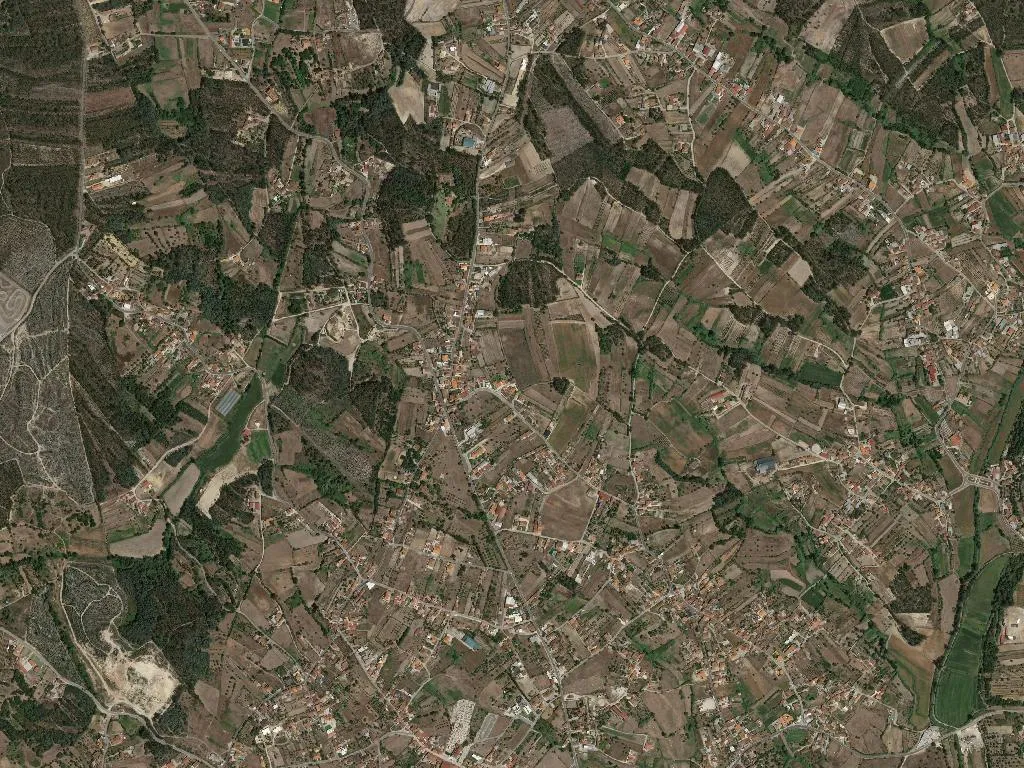
At first light the rice paddies exhale. April’s low sky is duplicated in the floodwater of the Baixo Mondego valley, turning Carapinheira into a horizontal sheet of pewter broken only by lone cork oaks and the darker green of alder that traces forgotten river channels. A purple heron lifts off the Pranto, its croak the single sound for miles.
The settlement owes its name to the stone pines that once stabilised these sandy flats; by 1229 King Sancho I had already granted a royal charter, confirmed two centuries later by Manuel I when the village’s communal statutes were set in stone. Memory here is sedimentary rather than displayed: the parish church, rebuilt in the 1500s on earlier foundations, keeps its Mannerist altarpieces quietly illuminated by tall morning windows, while the 1654 Chapel of St Sebastian wears blue-and-white azulejos that narrate how the saint once held the plague at bay.
Geometry of wind and water
On the edge of the settlement two stubby nineteenth-century windmills—vertical-axis, Mediterranean style—have stood mute since steam arrived. The granite village fountain, carved in the Manueline years, no longer flows, yet the lip is polished by generations of earthenware pitchers. Knock correctly at the Moinho do Meio and Sr António will show you the stone runners and press a paper twist of toasted pine-flour into your hand: “Take it, but don’t keep it long—the weevils have good taste.”
Rice, eel and mountain beef
Every pan in Carapinheira starts with Arroz Carolino do Baixo Mondejo IGP, the short-grain rice that absorbs the iron-pot flavour of the hearth. The local eel stew—arroz de enguias “à moda da Carapinheira”—owes its iodine edge to animals trapped at dawn by Zé Mário before the sun bakes the Mondego mud. Sarrabulho de leitão folds cubes of coagulated piglet blood through the same fat grains, scented with cumin that Dona Alda fetches from the Figueira market. North on the Serra da Carapinheira, Carne Marinhoa DOP cattle graze between heather and holm oak; their shoulder is braised with black-eyed beans or grilled and paired with asparagus migas. Grandmother Lurdes sets her flame to minimum: “Haste is the enemy of flavour.” Wedding trays carry bolinhos de noiva—heart-shaped egg-and-cinnamon biscuits—while orange-leaf parcels of pine-nougat, the so-called tijolos de pinhão, appear at Easter when the village choir still makes house-to-house calls and nativity scenes remain on display.
Ridge, flood-plain and clay pigeon
The ridge rises to only 140 m, yet it is enough to break the coastal clouds. From the top wild-boar tracks descend at dusk to nip new vine shoots, and the Atlantic appears as a silver filament where the Mondego meets the sea. Between dikes, unmarked footpaths trace five- to eight-kilometre circuits; come September the air is sweet with chaff dust and combine headlights sweep the fields long after midnight. Since 1978 the village has hosted the only clay-pigeon range in the municipality; on Sunday mornings the flat crack of shotguns rolls across the plain, answered by dogs from neighbouring farms.
A rhythm that lingers
The Feast of Our Lady of the Assumption, held on the nearest Sunday to 15 August, turns lanes into tunnels of pine bough and coloured paper. The procession inches along to a brass band, merging at sunset with the scent of grilled sardine and plastic cups of Bairrada white. In documented drought years—1786, 1865, 2017—the parish resurrects the St Sebastian procession, piling evergreen oak branches on the altar to plead for rain. Forty-two per cent of the 2,613 residents are over 65, yet the matraquilhos club clicks every afternoon and tai-chi classes fill the pensioners’ association hall. “No one sits in the dark here,” says Dona Otília.
Dusk doubles the sky in the flooded paddies. Stagnant water and turned earth mingle on the breeze. On the first Saturday of each month the Republic Square fills with a producer market: goat’s cheese still wearing a velvety rind, tomato sauce in warm jars. The miller’s pine flour dusts your palm like fine gold—proof of a landscape measured in hectares of water and silence, where time slackens and the pulse steadies.