Full article about Meãs do Campo: Rice Mirrors & Marinhoa Beef
Flat paddies flash sky, cattle roam river pastures—taste Coimbra’s quiet parish
Hide article Read full article
A landscape of ordered fields
The green of the leiras stretches in perfect squares to the edge of Rua do Moinho. Here, in the flatlands of the Baixo Mondego, the waters of the Mó canal, engineered by King D. Dinis over 700 years ago, carve out a territory where every inch has an owner and a purpose. Meãs do Campo lives by this ancient order, by the daily negotiation between earth and water that sets the rhythm of the seasons and the flavour of what ends up on the table.
The plain that is ploughed and flooded
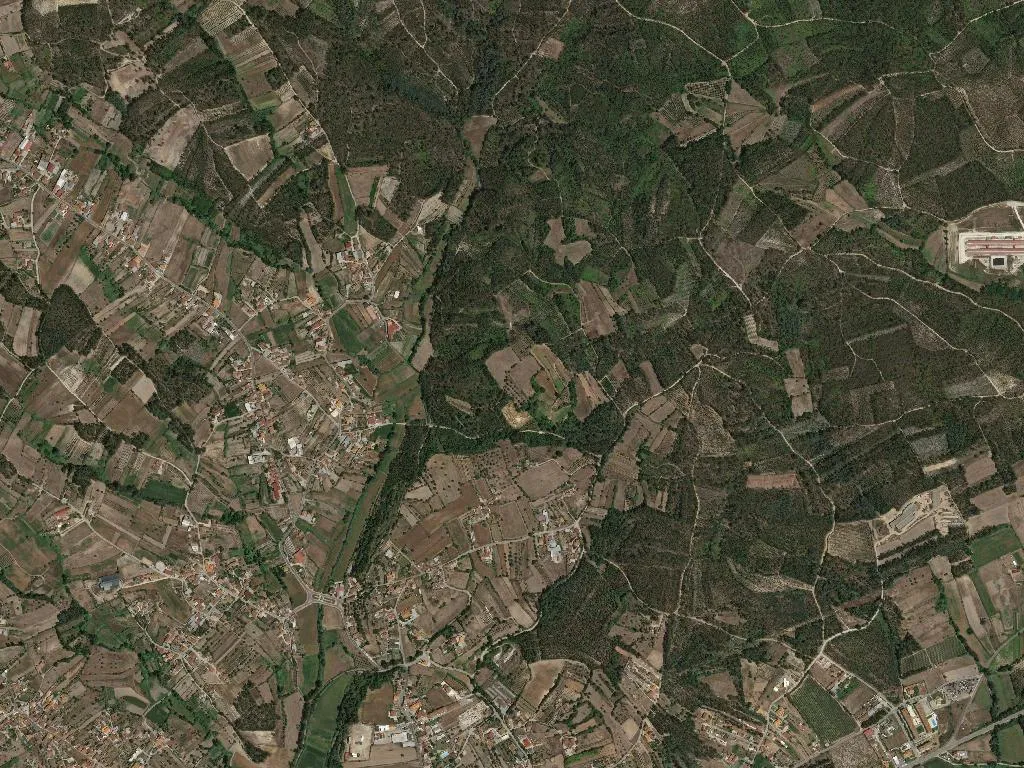
The parish covers 974 hectares at barely 63 metres above sea level. It is this flatness that makes rice possible, a crop that has shaped the landscape since 1926, when José Maria da Fonseca planted the first paddies beside the old station road. The fields follow one another in rectangular trays, separated by baked-earth paths that swallow your boots after rain. In summer, when the paddies are flooded, the sky mirrors itself in hundreds of green glass panels, and the buzz of insects merges with the constant murmur of moving water.
Baixo Mondego’s Carolino rice, IGP-protected since 2005, is the defining product of the land. The variety grown in the Quinta do Pinheiro plots drinks in the moisture and minerals of the alluvial soil, giving the grains their signature creaminess. At O Campino restaurant, the arroz de cabidela arrives almost sticky, clinging lightly to the fingers as you lift a steaming spoonful.
Beef that grazes free
But rice is only half the story. Carne Marinhoa, DOP-certified since 1996, comes from cattle that graze the natural pastures of the Herdade da Ribeira – animals that wander at will, feeding on indigenous grasses. The meat, short-fibred and well-marbled, is built for slow roasts that fill winter kitchens with aromatic smoke. Chanfana, cooked in a clay pot with Bairrada red wine and garlic, is a lesson in patience: the meat collapses unaided, the sauce darkens to a velvet thickness that demands a final mop of crusty bread.
A community growing old gracefully
The 2021 census sketches a demographic portrait familiar across Portugal’s rural centre: 1,703 inhabitants, 421 of them over 65, only 216 under 14. At 174 people per square kilometre the parish still has pulse, yet on Rua de Baixo you notice the gaps – empty houses between the Igreja de São Pedro and the former cooperative granary. The voices you hear belong to those who stayed, who know every bend in the lanes and every surname that ever turned this earth.
At day’s end, when low light ignites the gold of the un-flooded stubble fields, the air cools fast. The scent of damp soil mixes with hearth smoke as fires are lit. There are no grand monuments, no signed viewpoints – only the fragile balance between water and seed, between pasture and beast, between the memory of those who left and the stubbornness of those who remain.